
Spotfund logo
Spotfund logo
Start Fundraising
PricingHelp & SupportStart Fundraising

Fundraise for

  • Medical Fundraising
  • Emergency Fundraising
  • Memorial Fundraising
  • Education Fundraising
  • Nonprofit Fundraising
  • Animal Fundraising
  • Community Fundraising

Featured topics

  • Fundraising for Youth Sports and School AthleticsNEW
  • Easy Fundraising Ideas for Individuals
  • *spotfund for NIL Collective Fundraising
  • Raising Money for Medical Expenses
  • Giving Tuesday Fundraising 2026HOT

Trending in

  • Medical
  • Memorial
  • Emergency
  • Nonprofit
  • Family
  • Sports
  • Business

Featured topics

  • *spotfund as a Recurring Donation Solution
  • Matching Gift CampaignsPOPULAR
  • Why Recurring Donations Are Important for Nonprofits
  • Donating to Youth Sports and School Athletics TeamsNEW
  • How it works
  • Common questions
  • Success stories
  • For brands and nonprofits
  • How do I withdraw money?
  • *spotfund blog
  • Reviews from people like you
  • Compare *spotfund to others
Return to blog

How to Start a Thanksgiving Fundraiser in 7 Steps

Zhiyi Wu

Zhiyi Wu

Head of Content at *spotfund

November 16, 2026•10 min read
How to Start a Thanksgiving Fundraiser in 7 Steps
Plan, collect, and deliver Thanksgiving donations.

To start a Thanksgiving fundraiser, confirm the need, set a budget and deadline, choose how to collect donations, create a clear fundraising page, ask for support, coordinate delivery, and report the results. Begin with the people or organization you want to help so that your campaign collects support they can actually use.

You do not need a large event to make this happen. A neighborhood group can raise money for groceries, a school community can support a local pantry, or friends can help a family cover holiday essentials. The important part is connecting each donation to a specific, achievable plan.

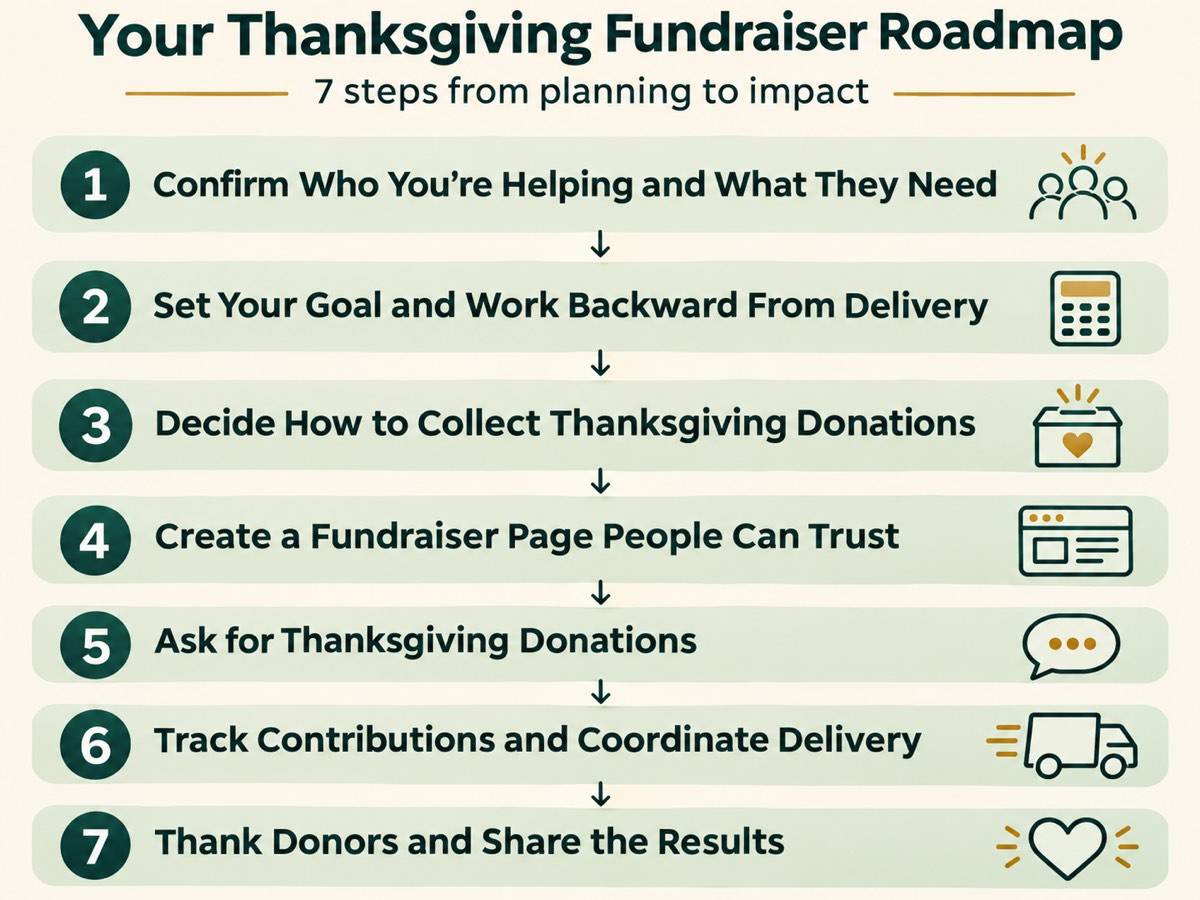
These seven steps take you from that first conversation to the final thank-you, with a budget example, a planning timeline, and messages you can adapt.
 

Step 1: Confirm Who You’re Helping and What They Need

Before asking anyone to donate, contact the person, pantry, school liaison, or community organization receiving the support. Ask what would be useful, how much they can accept, and when they need it. A pantry may prefer funds for its own purchases; a family may find grocery gift cards more practical than a preassembled meal.

If you are supporting a family directly, ask privately about dietary needs, preferred stores, and whether they can store and prepare the food. Let them decide which details, if any, may appear publicly. You can describe a practical need without publishing names, addresses, or personal financial circumstances.

Write a one-sentence purpose before moving on:

“We’re raising money to purchase the groceries requested by [community partner], with delivery scheduled for [date].”

Then assign one coordinator to confirm the plan with the recipient. This person should know who will receive the money or supplies and who will answer donor questions.

If you still need to choose an activity, match your available time and volunteers to suitable Thanksgiving fundraising ideas. Once you choose a format, keep the campaign focused on delivering that one plan.


Step 2: Set Your Fundraising Goal and Work Backward From Delivery

Your fundraising goal should come from the cost of the promised support. Check current local prices or ask your community partner for a purchase list before announcing a target.

Build a Simple Thanksgiving Fundraiser Budget

Use this example as a worksheet, replacing every amount with your own quotes. The figures below are hypothetical planning assumptions, not average Thanksgiving meal costs or a real campaign.

Budget Item

Illustrative Calculation

Amount

Requested groceries

20 grocery packages × $40

$800

Bags and packing materials

20 sets × $2

$40

Transport

Estimated local delivery expense

$35

Cost buffer

Allowance for price changes

$25

Total support costs

Groceries, packing, transport, and buffer

$900

Confirmed support already received

Cash available for these expenses

−$100

Remaining need before payment fees

$900 − $100

$800

Add any applicable payment processing costs before setting the public target. Distinguish the amount shown as donated from the net amount available to spend, and check the platform’s current fee terms.

If a business donates bags instead of cash, remove the covered bag expense from your remaining budget. Do not also subtract the same gift as money received. Keep unconfirmed pledges separate until the contribution arrives.

Set Collection, Purchase, and Delivery Deadlines

Begin with the date your recipient needs the support, then work backward. The donation deadline should leave enough time for funds to become available, shopping, packing, and transport.

Planning Stage

What to Complete

Before announcing the campaign

Confirm needs, recipient, costs, roles, and delivery arrangements

During the collection period

Share the request, track contributions, and update the remaining need

Before the purchase date

Check available funds, confirm donated supplies, and finalize quantities

Before delivery

Pack, check the order, and reconfirm the receiving contact and time

After delivery

Reconcile spending and share a final update

This is a sequence to adapt, not a guaranteed processing schedule. Confirm account verification and transfer requirements early; a donation arriving on Thanksgiving morning may be too late to fund purchases for that day.


Step 3: Decide How to Collect Thanksgiving Donations

Choose a primary way to contribute, then add an alternative only if you can manage it. Clear instructions help supporters give something useful without making the campaign harder to run.

Donation Type

When It May Fit

What to Confirm First

Money

You or a partner will buy the needed supplies

Who receives funds, spending responsibilities, fees, and timing

Requested food

A receiving organization has supplied a current wish list

Accepted items, packaging requirements, quantities, and drop-off arrangements

Grocery gift cards

Recipients want flexibility in choosing food

Accepted stores, preferred denominations, and a secure handoff method

For a food collection, publish the receiving organization’s actual list. Specify where to drop items off and when collection closes. Ask before collecting frozen turkeys, refrigerated items, or prepared dishes; the recipient needs appropriate arrangements to accept and distribute them.

Assign someone to check incoming supplies against the list so that donors can see which gaps remain. If you already have enough stuffing but still need other requested staples, update the request instead of continuing to collect everything.

If someone simply wants to make Thanksgiving donations locally, encourage them to check a nearby food bank, pantry, or community program’s official website for current needs and instructions. Avoid sending unrequested supplies to an organization without contacting it first.


Step 4: Create a Fundraiser Page People Can Trust

A clear fundraising story tells supporters who is organizing the effort, what their contributions will pay for, and when that help will reach its destination. Use a specific title, such as “Help [Community Group] Purchase Thanksgiving Groceries,” rather than a vague appeal to give back.

Include these details before sharing the link:

  • Organizer and recipient: Who is responsible, who will receive the support, and how you are connected.

  • Purpose and budget: What you will buy or fund, including any campaign expenses.

  • Goal and deadline: How much is needed and why the collection ends on that date.

  • Delivery plan: Who will purchase, pack, transport, or transfer the support.

  • Updates and changes: How donors will hear about progress, shortfalls, or money left over.

For online collection, *spotfund lets individuals and groups create a fundraising story, set a goal, and share their fundraiser with friends and supporters. It has 0% platform fees, while standard payment processing fees still apply. A dedicated page gives your Thanksgiving campaign one place to explain the need and direct people who want to contribute.

Start your Thanksgiving fundraiser and give your community a clear way to help.

Use an original photo you have permission to share, such as your volunteers preparing supplies. Do not make receiving assistance conditional on posing for a photo or sharing a personal story.

Before launch, ask someone unfamiliar with the campaign to read the page on their phone. Can they explain who benefits, how the money will be used, and when donations are needed? Address anything they find unclear.


Step 5: Ask for Thanksgiving Donations With a Specific Request

Start with people who know you or your group, then invite them to share the fundraiser with relevant friends and neighbors. When you ask for donations, give each message a clear purpose, deadline, and donation link. Suggest a contribution only when you can explain what it helps cover, and welcome other amounts without pressure.

Adapt the templates below using verified details. Replace every bracketed field before sending, and include only commitments you can fulfill.

A Message for Friends and Neighbors

Hi [name], we’re collecting Thanksgiving donations to help [recipient or community partner] with [specific need]. Our goal is [amount], based on [brief budget explanation], and we need contributions by [date] so we can [purchase or deliver] on time. If you’d like to help, you can donate here: [fundraiser link]. Any amount is welcome, and sharing the link with someone who may be interested would help too. Thank you for considering it.

An Email for Local Businesses

Subject: Thanksgiving Support Request for [Community/Group]

Hello [name],

I’m [name], organizing a Thanksgiving fundraiser for [recipient or purpose]. We’re preparing [specific support] for delivery on [date] and are looking for help with [exact items, quantities, or funding need].

Would [business] be able to contribute [specific request] by [date]? We can coordinate [pickup or delivery arrangement] and explain how the contribution will be used. The campaign details are here: [fundraiser link].

Please let me know what may be possible. Thank you for considering a way to support our neighbors.

[Name and contact information]

Ask for something that fits the business: requested groceries from a store, boxes from a packaging supplier, or help with an expense. If you offer public recognition, agree on the wording and obtain permission before using a business’s name or logo.

A Reminder Before the Deadline

A quick update on our Thanksgiving fundraiser: we’ve received [confirmed amount or supplies] and still need [specific remaining gap]. Contributions close on [date] so we can [next action]. If you’d like to take part, here’s the link: [fundraiser link]. Thank you to everyone who has donated, shared, or helped organize the effort.

Send reminders when there is useful news or a meaningful deadline. Keep the tone appreciative, avoid repeated personal pressure, and remove the urgent request once the stated need is met.


Step 6: Track Contributions and Coordinate Delivery

Keep a shared record that the people managing purchases and delivery can access. Record money, physical items, and gift cards separately. A pledge is not a received contribution, and received online funds may not yet be available for spending.
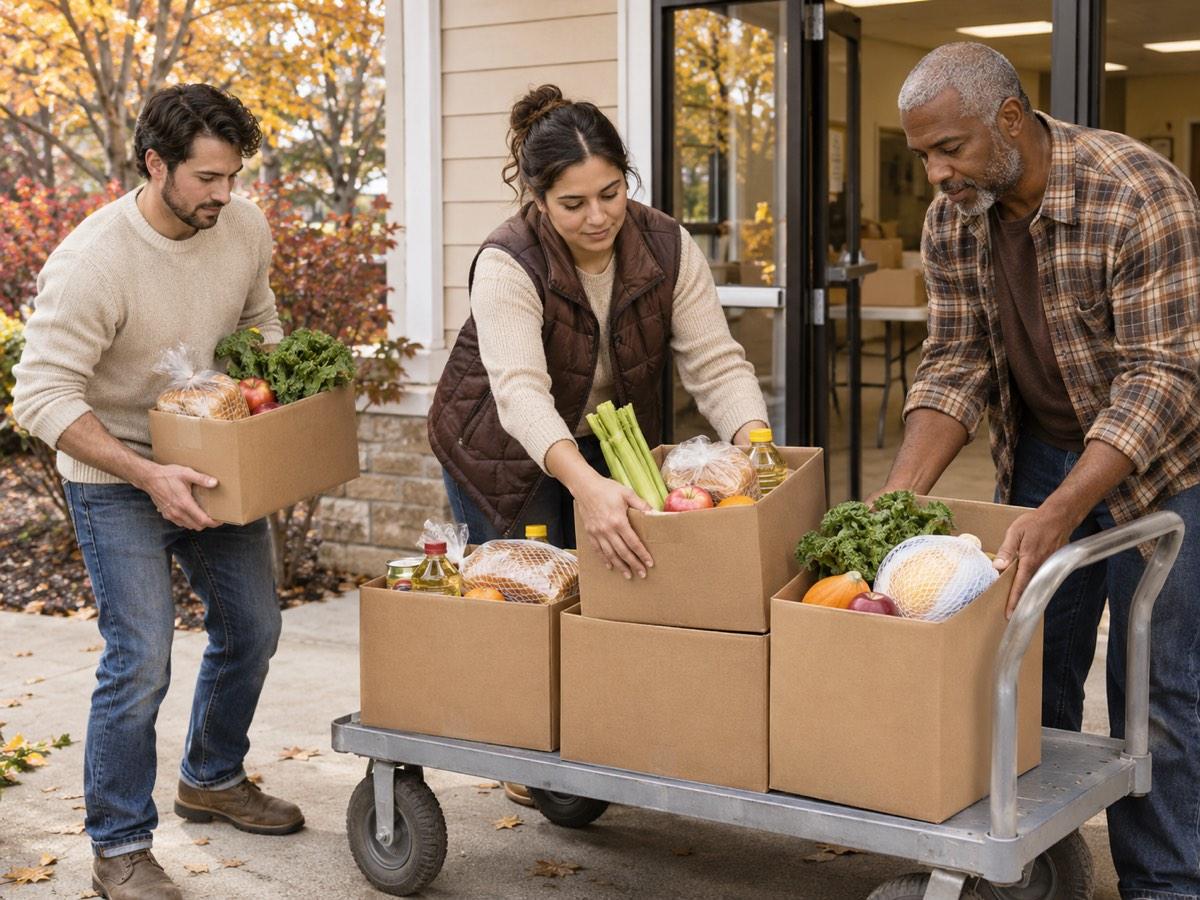
Volunteers loading Thanksgiving grocery boxes onto a cart for delivery.

A simple tracker can use the following fields:

Record

Details to Capture

Money

Date, source/reference, gross amount, fees, net amount, and availability

Physical supplies

Item, quantity requested, quantity pledged, quantity received, and storage location

Gift cards

Store, value, secure inventory reference, and handoff status

Purchases

Vendor, item, cost, purchaser, and receipt location

Delivery

Contents, coordinator, receiving contact, agreed time, and completion status

Keep donor contact details and recipient information private. Store gift card numbers securely rather than in a publicly shared sheet. Publish campaign totals and useful progress updates without exposing the underlying personal records.

Before purchasing, compare the latest inventory with the budget. Confirm any outstanding business contributions, then buy only the remaining supplies you can afford. If the available funds are lower than expected, agree on a smaller deliverable plan with the recipient and update supporters promptly.

Reconfirm the receiving location, contact, and time before loading a vehicle. Check quantities and packaging, and keep receipts or an acknowledgment of the handoff where appropriate. Delivery is complete when the intended recipient has received the support, not simply when everything leaves your collection point.


Step 7: Thank Donors and Share the Results

Send a personal thank-you to donors promptly when contributions arrive, then publish a final update after delivery and reconciliation. Tell supporters what was received, what was spent, and what their contributions made possible.

A useful closing update can follow this format:

Thank you for supporting our Thanksgiving fundraiser. Together, supporters contributed [gross amount] and [physical donations, listed separately]. After [fees and expenses], we used [amount] to provide [confirmed result], delivered on [date]. We have [remaining amount, if any], which will be handled according to [the plan explained to donors]. We’re grateful to everyone who contributed, shared the fundraiser, or helped with preparation and delivery.

If purchases, transfers, or delivery are still pending, say so and provide the next update date. Do not describe a planned result as completed.

Photographs of packed supplies or volunteers can help tell the story without identifying recipients. If you want to share someone’s name, photo, or words, ask permission first. Thank people for the specific support they offered, whether that was money, time, transport, or helping others find the campaign.


Put Your Thanksgiving Fundraiser Plan Into Action

A thoughtful Thanksgiving fundraiser starts with a clear need, a realistic goal, and a plan to deliver the promised help. With *spotfund, you can give friends, family, and neighbors a place to contribute and stay connected as your campaign progresses.

Here’s how *spotfund can support your Thanksgiving fundraiser:

  • Free fundraising with 0% platform fees: Start your campaign without a platform fee. Standard payment processing fees still apply, so account for them when budgeting for groceries and supplies.

  • AI help with your fundraising story: Use the free AI Writing Assistant to draft or rewrite your description from a short prompt about your cause. Review the draft and add your confirmed budget, deadline, and delivery plan before sharing it.

  • Shared campaign management: With collaborative fundraising, invite friends, family, or colleagues to co-manage the same campaign. Once they accept, they can help edit details, post updates, and promote your Thanksgiving fundraiser.

  • Team fundraising for a larger community effort: If several groups are running individual campaigns for the same cause, a team fundraiser page can bring those campaigns together and display the combined amount raised. Contact the *spotfund team to arrange setup.

  • A campaign you can share: Set your goal and share your fundraiser with friends, family, and neighbors so they can find the details and contribute through your campaign page.

  • Donor thank-yous and progress updates: Use thank-you notes and fundraiser updates to acknowledge supporters individually or in groups, share delivery progress, and explain what their contributions made possible.

Create your Thanksgiving fundraiser today and turn your community’s generosity into practical support.


Frequently Asked Questions

Can I Start a Thanksgiving Fundraiser at the Last Minute?

Yes, but reduce the scope to something you can reliably complete. Confirm the recipient’s needs and the time required to access funds before promising holiday delivery. If the deadline is too close, supporting an existing organization’s current appeal may be more practical than organizing a new collection.

What if We Don’t Reach Our Fundraising Goal?

Tell donors what you can provide with the available amount, and confirm the revised plan with the recipient. Do not make purchases against unreceived pledges. If you cannot carry out the stated purpose, contact the platform or receiving organization about the appropriate next steps and explain the situation to contributors.

What Should We Do if We Raise More Than We Need?

Follow the plan disclosed on your fundraiser page. Explain the remaining amount and its intended use in your final update. If you did not specify how extra funds would be handled, clarify the proposed use with the recipient and donors before redirecting the money; check applicable platform requirements when the purpose changes.

Tags:Fundraising Strategy
Return to blog

How to Start a Thanksgiving Fundraiser in 7 Steps

Zhiyi Wu

Zhiyi Wu

Head of Content at *spotfund

November 16, 2026•10 min read
How to Start a Thanksgiving Fundraiser in 7 Steps
Plan, collect, and deliver Thanksgiving donations.

To start a Thanksgiving fundraiser, confirm the need, set a budget and deadline, choose how to collect donations, create a clear fundraising page, ask for support, coordinate delivery, and report the results. Begin with the people or organization you want to help so that your campaign collects support they can actually use.

You do not need a large event to make this happen. A neighborhood group can raise money for groceries, a school community can support a local pantry, or friends can help a family cover holiday essentials. The important part is connecting each donation to a specific, achievable plan.

These seven steps take you from that first conversation to the final thank-you, with a budget example, a planning timeline, and messages you can adapt.


Step 1: Confirm Who You’re Helping and What They Need

Before asking anyone to donate, contact the person, pantry, school liaison, or community organization receiving the support. Ask what would be useful, how much they can accept, and when they need it. A pantry may prefer funds for its own purchases; a family may find grocery gift cards more practical than a preassembled meal.

If you are supporting a family directly, ask privately about dietary needs, preferred stores, and whether they can store and prepare the food. Let them decide which details, if any, may appear publicly. You can describe a practical need without publishing names, addresses, or personal financial circumstances.

Write a one-sentence purpose before moving on:

“We’re raising money to purchase the groceries requested by [community partner], with delivery scheduled for [date].”

Then assign one coordinator to confirm the plan with the recipient. This person should know who will receive the money or supplies and who will answer donor questions.

If you still need to choose an activity, match your available time and volunteers to suitable Thanksgiving fundraising ideas. Once you choose a format, keep the campaign focused on delivering that one plan.


Step 2: Set Your Fundraising Goal and Work Backward From Delivery

Your fundraising goal should come from the cost of the promised support. Check current local prices or ask your community partner for a purchase list before announcing a target.

Build a Simple Thanksgiving Fundraiser Budget

Use this example as a worksheet, replacing every amount with your own quotes. The figures below are hypothetical planning assumptions, not average Thanksgiving meal costs or a real campaign.

Budget Item

Illustrative Calculation

Amount

Requested groceries

20 grocery packages × $40

$800

Bags and packing materials

20 sets × $2

$40

Transport

Estimated local delivery expense

$35

Cost buffer

Allowance for price changes

$25

Total support costs

Groceries, packing, transport, and buffer

$900

Confirmed support already received

Cash available for these expenses

−$100

Remaining need before payment fees

$900 − $100

$800

Add any applicable payment processing costs before setting the public target. Distinguish the amount shown as donated from the net amount available to spend, and check the platform’s current fee terms.

If a business donates bags instead of cash, remove the covered bag expense from your remaining budget. Do not also subtract the same gift as money received. Keep unconfirmed pledges separate until the contribution arrives.

Set Collection, Purchase, and Delivery Deadlines

Begin with the date your recipient needs the support, then work backward. The donation deadline should leave enough time for funds to become available, shopping, packing, and transport.

Planning Stage

What to Complete

Before announcing the campaign

Confirm needs, recipient, costs, roles, and delivery arrangements

During the collection period

Share the request, track contributions, and update the remaining need

Before the purchase date

Check available funds, confirm donated supplies, and finalize quantities

Before delivery

Pack, check the order, and reconfirm the receiving contact and time

After delivery

Reconcile spending and share a final update

This is a sequence to adapt, not a guaranteed processing schedule. Confirm account verification and transfer requirements early; a donation arriving on Thanksgiving morning may be too late to fund purchases for that day.


Step 3: Decide How to Collect Thanksgiving Donations

Choose a primary way to contribute, then add an alternative only if you can manage it. Clear instructions help supporters give something useful without making the campaign harder to run.

Donation Type

When It May Fit

What to Confirm First

Money

You or a partner will buy the needed supplies

Who receives funds, spending responsibilities, fees, and timing

Requested food

A receiving organization has supplied a current wish list

Accepted items, packaging requirements, quantities, and drop-off arrangements

Grocery gift cards

Recipients want flexibility in choosing food

Accepted stores, preferred denominations, and a secure handoff method

For a food collection, publish the receiving organization’s actual list. Specify where to drop items off and when collection closes. Ask before collecting frozen turkeys, refrigerated items, or prepared dishes; the recipient needs appropriate arrangements to accept and distribute them.

Assign someone to check incoming supplies against the list so that donors can see which gaps remain. If you already have enough stuffing but still need other requested staples, update the request instead of continuing to collect everything.

If someone simply wants to make Thanksgiving donations locally, encourage them to check a nearby food bank, pantry, or community program’s official website for current needs and instructions. Avoid sending unrequested supplies to an organization without contacting it first.


Step 4: Create a Fundraiser Page People Can Trust

A clear fundraising story tells supporters who is organizing the effort, what their contributions will pay for, and when that help will reach its destination. Use a specific title, such as “Help [Community Group] Purchase Thanksgiving Groceries,” rather than a vague appeal to give back.

Include these details before sharing the link:

  • Organizer and recipient: Who is responsible, who will receive the support, and how you are connected.

  • Purpose and budget: What you will buy or fund, including any campaign expenses.

  • Goal and deadline: How much is needed and why the collection ends on that date.

  • Delivery plan: Who will purchase, pack, transport, or transfer the support.

  • Updates and changes: How donors will hear about progress, shortfalls, or money left over.

For online collection, *spotfund lets individuals and groups create a fundraising story, set a goal, and share their fundraiser with friends and supporters. It has 0% platform fees, while standard payment processing fees still apply. A dedicated page gives your Thanksgiving campaign one place to explain the need and direct people who want to contribute.

Start your Thanksgiving fundraiser and give your community a clear way to help.

Use an original photo you have permission to share, such as your volunteers preparing supplies. Do not make receiving assistance conditional on posing for a photo or sharing a personal story.

Before launch, ask someone unfamiliar with the campaign to read the page on their phone. Can they explain who benefits, how the money will be used, and when donations are needed? Address anything they find unclear.


Step 5: Ask for Thanksgiving Donations With a Specific Request

Start with people who know you or your group, then invite them to share the fundraiser with relevant friends and neighbors. When you ask for donations, give each message a clear purpose, deadline, and donation link. Suggest a contribution only when you can explain what it helps cover, and welcome other amounts without pressure.

Adapt the templates below using verified details. Replace every bracketed field before sending, and include only commitments you can fulfill.

A Message for Friends and Neighbors

Hi [name], we’re collecting Thanksgiving donations to help [recipient or community partner] with [specific need]. Our goal is [amount], based on [brief budget explanation], and we need contributions by [date] so we can [purchase or deliver] on time. If you’d like to help, you can donate here: [fundraiser link]. Any amount is welcome, and sharing the link with someone who may be interested would help too. Thank you for considering it.

An Email for Local Businesses

Subject: Thanksgiving Support Request for [Community/Group]

Hello [name],

I’m [name], organizing a Thanksgiving fundraiser for [recipient or purpose]. We’re preparing [specific support] for delivery on [date] and are looking for help with [exact items, quantities, or funding need].

Would [business] be able to contribute [specific request] by [date]? We can coordinate [pickup or delivery arrangement] and explain how the contribution will be used. The campaign details are here: [fundraiser link].

Please let me know what may be possible. Thank you for considering a way to support our neighbors.

[Name and contact information]

Ask for something that fits the business: requested groceries from a store, boxes from a packaging supplier, or help with an expense. If you offer public recognition, agree on the wording and obtain permission before using a business’s name or logo.

A Reminder Before the Deadline

A quick update on our Thanksgiving fundraiser: we’ve received [confirmed amount or supplies] and still need [specific remaining gap]. Contributions close on [date] so we can [next action]. If you’d like to take part, here’s the link: [fundraiser link]. Thank you to everyone who has donated, shared, or helped organize the effort.

Send reminders when there is useful news or a meaningful deadline. Keep the tone appreciative, avoid repeated personal pressure, and remove the urgent request once the stated need is met.


Step 6: Track Contributions and Coordinate Delivery

Keep a shared record that the people managing purchases and delivery can access. Record money, physical items, and gift cards separately. A pledge is not a received contribution, and received online funds may not yet be available for spending.

Volunteers loading Thanksgiving grocery boxes onto a cart for delivery.

A simple tracker can use the following fields:

Record

Details to Capture

Money

Date, source/reference, gross amount, fees, net amount, and availability

Physical supplies

Item, quantity requested, quantity pledged, quantity received, and storage location

Gift cards

Store, value, secure inventory reference, and handoff status

Purchases

Vendor, item, cost, purchaser, and receipt location

Delivery

Contents, coordinator, receiving contact, agreed time, and completion status

Keep donor contact details and recipient information private. Store gift card numbers securely rather than in a publicly shared sheet. Publish campaign totals and useful progress updates without exposing the underlying personal records.

Before purchasing, compare the latest inventory with the budget. Confirm any outstanding business contributions, then buy only the remaining supplies you can afford. If the available funds are lower than expected, agree on a smaller deliverable plan with the recipient and update supporters promptly.

Reconfirm the receiving location, contact, and time before loading a vehicle. Check quantities and packaging, and keep receipts or an acknowledgment of the handoff where appropriate. Delivery is complete when the intended recipient has received the support, not simply when everything leaves your collection point.


Step 7: Thank Donors and Share the Results

Send a personal thank-you to donors promptly when contributions arrive, then publish a final update after delivery and reconciliation. Tell supporters what was received, what was spent, and what their contributions made possible.

A useful closing update can follow this format:

Thank you for supporting our Thanksgiving fundraiser. Together, supporters contributed [gross amount] and [physical donations, listed separately]. After [fees and expenses], we used [amount] to provide [confirmed result], delivered on [date]. We have [remaining amount, if any], which will be handled according to [the plan explained to donors]. We’re grateful to everyone who contributed, shared the fundraiser, or helped with preparation and delivery.

If purchases, transfers, or delivery are still pending, say so and provide the next update date. Do not describe a planned result as completed.

Photographs of packed supplies or volunteers can help tell the story without identifying recipients. If you want to share someone’s name, photo, or words, ask permission first. Thank people for the specific support they offered, whether that was money, time, transport, or helping others find the campaign.


Put Your Thanksgiving Fundraiser Plan Into Action

A thoughtful Thanksgiving fundraiser starts with a clear need, a realistic goal, and a plan to deliver the promised help. With *spotfund, you can give friends, family, and neighbors a place to contribute and stay connected as your campaign progresses.

Here’s how *spotfund can support your Thanksgiving fundraiser:

  • Free fundraising with 0% platform fees: Start your campaign without a platform fee. Standard payment processing fees still apply, so account for them when budgeting for groceries and supplies.

  • AI help with your fundraising story: Use the free AI Writing Assistant to draft or rewrite your description from a short prompt about your cause. Review the draft and add your confirmed budget, deadline, and delivery plan before sharing it.

  • Shared campaign management: With collaborative fundraising, invite friends, family, or colleagues to co-manage the same campaign. Once they accept, they can help edit details, post updates, and promote your Thanksgiving fundraiser.

  • Team fundraising for a larger community effort: If several groups are running individual campaigns for the same cause, a team fundraiser page can bring those campaigns together and display the combined amount raised. Contact the *spotfund team to arrange setup.

  • A campaign you can share: Set your goal and share your fundraiser with friends, family, and neighbors so they can find the details and contribute through your campaign page.

  • Donor thank-yous and progress updates: Use thank-you notes and fundraiser updates to acknowledge supporters individually or in groups, share delivery progress, and explain what their contributions made possible.

Create your Thanksgiving fundraiser today and turn your community’s generosity into practical support.


Frequently Asked Questions

Can I Start a Thanksgiving Fundraiser at the Last Minute?

Yes, but reduce the scope to something you can reliably complete. Confirm the recipient’s needs and the time required to access funds before promising holiday delivery. If the deadline is too close, supporting an existing organization’s current appeal may be more practical than organizing a new collection.

What if We Don’t Reach Our Fundraising Goal?

Tell donors what you can provide with the available amount, and confirm the revised plan with the recipient. Do not make purchases against unreceived pledges. If you cannot carry out the stated purpose, contact the platform or receiving organization about the appropriate next steps and explain the situation to contributors.

What Should We Do if We Raise More Than We Need?

Follow the plan disclosed on your fundraiser page. Explain the remaining amount and its intended use in your final update. If you did not specify how extra funds would be handled, clarify the proposed use with the recipient and donors before redirecting the money; check applicable platform requirements when the purpose changes.

Tags:Fundraising Strategy
Start Fundraising

Share this article:

You'll also like:

20 Best Thanksgiving Activities for 2026

20 Best Thanksgiving Activities for 2026

The best Thanksgiving activities bring people together through easy games, shared food, creative projects, and small acts of kindness. A round of charades can get everyone laughing before dinner; a handwritten note or a thoughtful donation can give the day a little more meaning.

What to Say to a Veteran on Veterans Day: A Helpful Guide

What to Say to a Veteran on Veterans Day: A Helpful Guide

If you’re wondering what to say to a veteran on Veterans Day, a simple “Thank you for your service” is a thoughtful place to start. As Veterans Day approaches on Wednesday, November 11, 2026, you might be planning to text a friend, sign a card for a parent, or greet a coworker. Add a personal thought if you know them, then let them decide whether to continue the conversation.

10 Ways Nonprofits Use OpenClaw AI to Do More With Less

10 Ways Nonprofits Use OpenClaw AI to Do More With Less

Nonprofits run on passion — but passion alone doesn't write grant proposals at midnight, send 200 personalized thank-you emails, or generate quarterly impact reports.