
The best Thanksgiving activities bring people together through easy games, shared food, creative projects, and small acts of kindness. A round of charades can get everyone laughing before dinner; a handwritten note or a thoughtful donation can give the day a little more meaning.
In the United States, Thanksgiving falls on Thursday, November 26, 2026. Whether you're hosting relatives, planning Friendsgiving, or keeping things quiet, you don't need a packed schedule to celebrate well.
These 20 ideas offer a mix of indoor, outdoor, low-cost, and community activities. Choose a few that suit your guests, space, and energy. The time estimates below are planning suggestions, so feel free to shorten a game or linger over a conversation.
Thanksgiving Activities at a Glance
|
Activity |
Best For |
Suggested Time |
What You Need |
|---|---|---|---|
|
1. Thanksgiving charades |
Mixed-age groups |
15–20 minutes |
Paper prompts and a timer |
|
2. Homemade bingo |
Kids and families |
15–25 minutes |
Paper, pencils, and markers |
|
3. Family trivia |
Relatives and friends |
20–30 minutes |
Questions and answer sheets |
|
4. Fall scavenger hunt |
Families |
20–30 minutes |
A short checklist |
|
5. Photo corner |
Any gathering |
10–15 minutes |
Phone and simple backdrop |
|
6. Gratitude table runner |
Kids and adults |
15–30 minutes |
Kraft paper and colored pencils |
|
7. Mini pumpkin decorating |
Creative groups |
20–30 minutes |
Pumpkins, markers, and stickers |
|
8. Personalized place cards |
Kids and hosts |
15–20 minutes |
Cardstock and pens |
|
9. Thanksgiving time capsule |
Families and friends |
20–30 minutes |
A box, paper, and keepsakes |
|
10. Friendsgiving potluck |
Friends and neighbors |
1–3 hours |
A shared menu |
|
11. Pie-tasting party |
Dessert lovers |
20–30 minutes |
Small pie portions and scorecards |
|
12. Cook a family recipe |
Small groups |
45–90 minutes |
A recipe and ingredients |
|
13. Movie and board game night |
Relaxed gatherings |
1–3 hours |
A film or a familiar game |
|
14. Nature walk |
All ages |
20–45 minutes |
A suitable route and layers |
|
15. Backyard game |
Active groups |
15–30 minutes |
A soft ball or beanbags |
|
16. Local Turkey Trot |
Walkers and runners |
Varies by event |
Registration and suitable shoes |
|
17. Thank-you notes |
Anyone |
15–20 minutes |
Cards and pens |
|
18. Community volunteering |
Families and friends |
Varies by shift |
An advance reservation |
|
19. Requested donation box |
Small groups |
30–60 minutes |
A recipient's current wish list |
|
20. Support a cause together |
Families and friends |
15–30 minutes |
A phone or computer |
Fun Thanksgiving Activities for the Whole Family
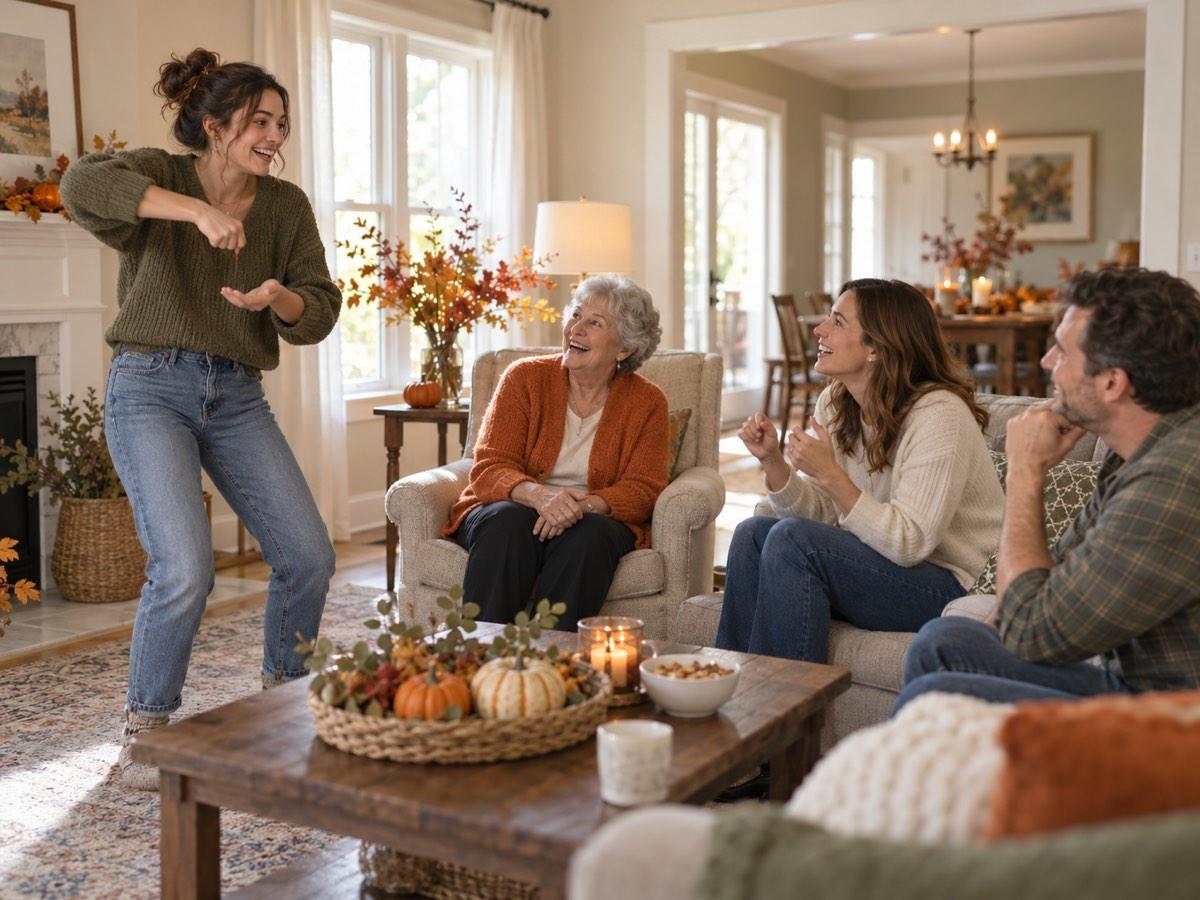
1. Play Thanksgiving Charades
Write holiday actions on slips of paper: stirring gravy, carrying a very heavy turkey, rolling pie dough, or falling asleep after dinner. Divide into teams and give each player one minute to act out a prompt without speaking.
Keep the first round easy so younger children can join. For a second round, let everyone contribute a prompt based on a funny family moment. A child can act with an adult, and anyone who prefers to remain seated can use hand gestures. Two short rounds usually work better than keeping a hungry group waiting for a winner.
2. Make Your Own Thanksgiving Bingo
Draw a three-by-three grid and fill it with nine pictures or words chosen from a shared list of twelve, such as pumpkin, pie, leaf, sweater, and corn. Write those twelve options on separate slips, shuffle them in a bowl, and draw one at a time.
Players mark a matching square; the first to complete a row calls bingo. Drawing rather than printing the cards becomes part of the activity. Use larger squares for young children, and play a second round for a full card if the group is enjoying it. No prizes are necessary—let the winner choose the next game.
3. Host a Family Trivia Challenge
Ask guests to send you one lighthearted fact before the gathering. Turn their answers into questions such as “Who once forgot the potatoes?” or “Whose favorite Thanksgiving food is actually the rolls?”
Mix family questions with easy food or autumn questions so newcomers aren't left guessing at every answer. Pair people who know each other less well, read each question aloud, and allow a short discussion before teams write their answers. Avoid embarrassing stories or private information. Finish by inviting the person behind each answer to tell the story, if they'd like to.
4. Plan a Fall Scavenger Hunt
Make a short checklist that works in your home or yard: something orange, something soft, a leaf with an unusual shape, and something that reminds you of a person you appreciate. Ask teams to find, point to, or photograph their discoveries.
Set clear boundaries and pair younger children with adults. You can also bring a basket of household objects to the table for a seated version. End with a quick show-and-tell rather than counting who collected the most. The personal prompts often lead to better conversations than a race to finish.
5. Set Up a Thanksgiving Photo Corner
Choose a spot near a window, move a chair into place, and use a plain wall or blanket as the backdrop. A few paper leaves or a small pumpkin are enough decoration.
Take one group photo, then try pairs, generations, or a deliberately silly pose. Set the phone on a stable surface and use its timer so the usual photographer gets included. Ask before posting pictures, especially photos of children. If everyone agrees, keep the images in a shared album and recreate the group photo next year as one of your Thanksgiving traditions.
Creative Thanksgiving Activities for Kids and Adults
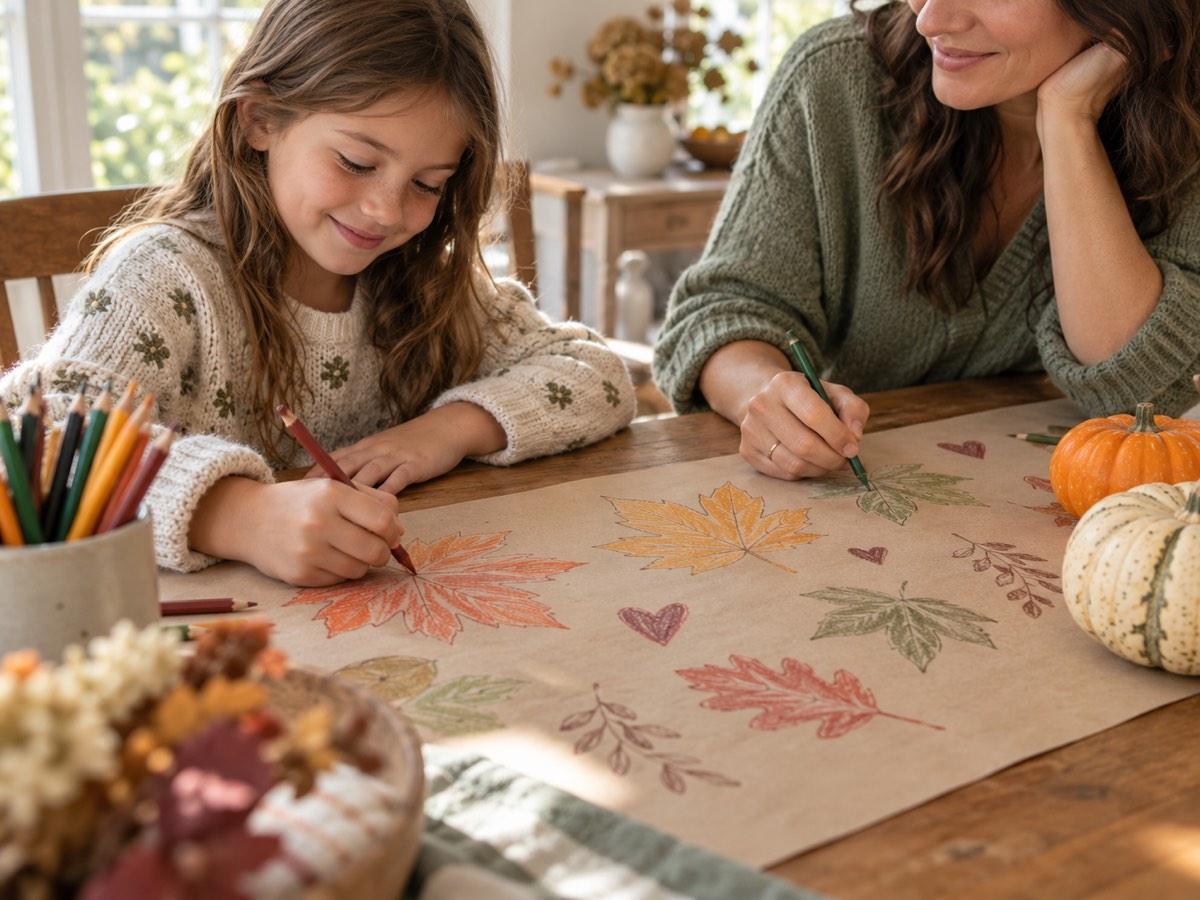
6. Create a Gratitude Table Runner
Cover part of the table with kraft paper and leave colored pencils within reach. Invite everyone to add a drawing or finish a simple prompt: “Someone who helped me this year…” or “A small thing I don't want to forget…”
Children can draw while adults write, and nobody needs to read their contribution aloud. Keep the runner away from serving dishes and candles while people are working. Before cleaning up, photograph it or cut out a favorite section to save. You can return to it at next year's gathering and see which memories still make everyone smile.
7. Decorate Mini Pumpkins
Set out small pumpkins, stickers, and suitable markers for an easy craft that doesn't require carving. Offer a few themes—autumn patterns, friendly faces, or favorite colors—then let people choose their own designs.
Cover the work surface and give everyone enough space to turn their pumpkin without bumping a neighbor's project. Younger children can use stickers while older participants add more detailed patterns. Display the finished pumpkins together, then let guests take theirs home. If pumpkins aren't available, cut pumpkin shapes from cardboard and decorate those instead.
8. Make Personalized Place Cards
Fold small pieces of cardstock into tents and write a guest's name on each one. Add a leaf drawing, a simple pattern, or a short message explaining why you're glad that person is joining you.
Give children manageable jobs such as choosing colors or adding stickers. Keep messages welcoming: “Happy you're here for your first Friendsgiving” feels more personal than a generic holiday greeting. Put the cards beside each place setting, or make welcome cards instead if your group prefers open seating. Guests can take them home as a small keepsake.
9. Build a Thanksgiving Time Capsule
Label a box or large envelope “Thanksgiving 2026—Open in November 2027.” Ask each person to add a note about something they enjoyed this year, one hope for the next year, and a small drawing or photograph.
Include the day's menu or a list of everyone's favorite songs. Keep contributions optional and let people seal private notes in their own envelopes. Choose one person to store the capsule and set a reminder for next November. Friends celebrating in different places can contribute a digital note for the host to print.
Thanksgiving Activities for Adults and Friends
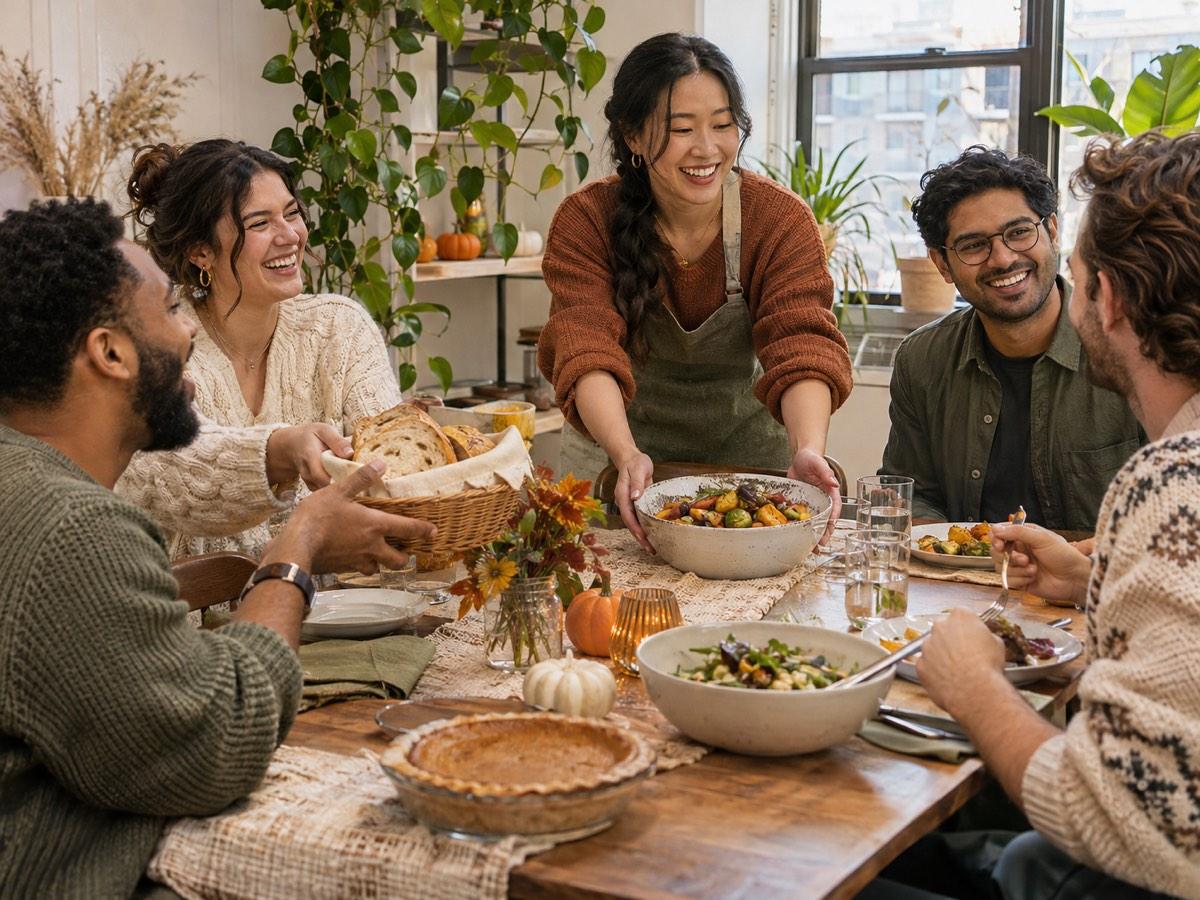
10. Host a Friendsgiving Potluck
Choose a date that works for your group; Friendsgiving can happen before or after November 26. Share a simple menu with categories for mains, sides, desserts, and drinks so everyone doesn't arrive with the same dish.
Ask about dietary needs in advance and make room for store-bought food. Someone who isn't cooking can bring ice, help set the table, or handle cleanup. Keep the gathering comfortable for different budgets. A relaxed meal with a few people can feel just as festive as a large dinner, especially when hosting doesn't become one person's entire job.
11. Hold a Pie-Tasting Party
Serve small portions of two or three pies and give everyone a simple scorecard for crust, filling, and overall favorite. Homemade and store-bought pies are equally welcome.
Keep ingredient information available so guests can choose suitable portions, and skip blindfolds. For a playful twist, include categories such as “best with coffee” or “most likely to disappear first.” Ask people to explain their choices rather than treating the tasting as a serious competition. If your gathering already has plenty of dessert, use what's on the table instead of buying extra food.
12. Cook a Family Recipe Together
Pick one manageable recipe and invite someone who knows it well to guide the group. Divide the work into jobs such as measuring, mixing, setting a timer, and writing down instructions.
Ask about the story behind the dish while you cook. Who usually made it? Has an ingredient changed over time? Record practical details that might be missing from the original recipe, such as how thick the mixture should look. Let beginners take a comfortable role, and have an adult handle hot equipment. Send everyone a copy of the finished recipe afterward.
13. Plan a Cozy Movie and Board Game Night
Let guests vote between a couple of films or familiar games before dinner, then have the choice ready when everyone settles down. Pick a game with a short explanation so nobody spends the evening studying rules.
Set up comfortable seating and let people join or leave without interrupting the whole group. A cooperative game works well when guests don't enjoy competing. For a small apartment, a card game or shared puzzle may be easier than a large board. Keep one quiet area available for anyone who would rather talk or rest.
Outdoor Thanksgiving Activities
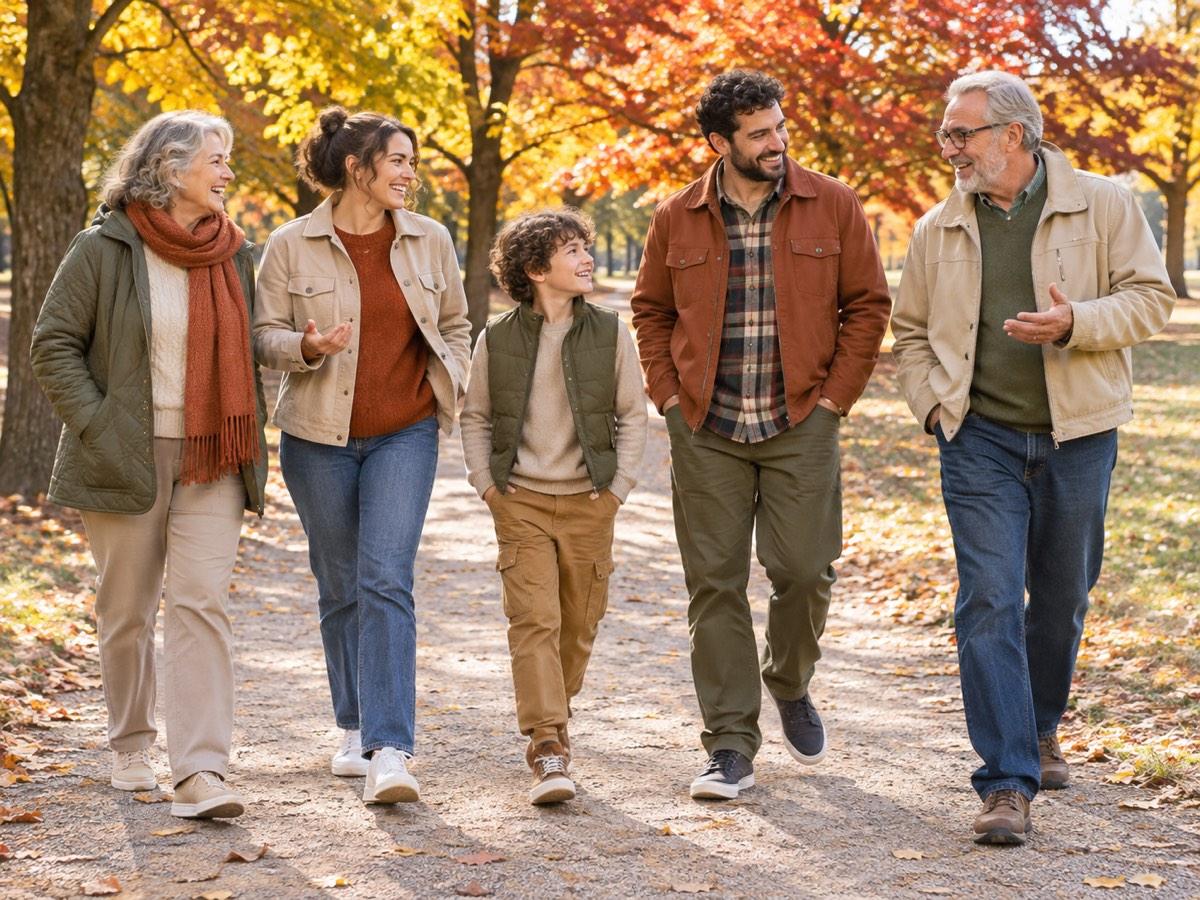
14. Take a Thanksgiving Nature Walk
Choose a nearby route with a length and surface that suit your group. Check the weather, bring appropriate layers, and agree on a turnaround point before leaving.
Give the walk a gentle theme: notice three autumn colors, find an interesting tree, or share a good memory from the year. Nobody needs to walk fast or cover a particular distance. If the weather changes, bring the conversation indoors and look through favorite outdoor photographs instead. The point is to spend time together, not complete a fitness challenge.
15. Play a Friendly Backyard Game
Use a soft ball for a passing game or toss beanbags toward a large target. Mark a comfortable throwing line and keep the rules simple: each person gets three turns, and the group tries to improve its combined score.
Move the line closer for younger children or anyone who wants an easier throw. Offer a seated option and check that the space is clear. If your group wants football, choose a non-contact version with agreed boundaries. Stop while the game is still fun rather than letting competition take over the gathering.
16. Join a Local Turkey Trot
Look for a Thanksgiving walk or run in your community and check the organizer's current 2026 event page. Confirm the date, route, registration fee, start time, and whether walkers or strollers are welcome before inviting others.
Register in advance if required, agree on a meeting spot, and choose a pace that suits each participant. Someone who doesn't want to enter can cheer from the sidelines. If no event fits your plans, arrange a short neighborhood walk instead. Don't assume an event supports a charity unless the organizer explains that connection.
Meaningful Thanksgiving Activities That Give Back
17. Write and Deliver Thank-You Notes
Set aside a few minutes to thank someone for a specific act of kindness. A useful starting point is: “Thank you for ____. It helped me ____.”
For example: “Thank you for checking in during my first week at work. It made a new place feel less intimidating.” Write to a friend, teacher, neighbor, colleague, or relative. Children can draw a picture and ask an adult to help with the message. Deliver the note in person, mail it, or send a thoughtful text if that suits the relationship. A private thank-you doesn't need a public post.
18. Volunteer Together in Your Community
Contact a food bank, community center, or local organization before Thanksgiving to ask what help is needed. Confirm available shifts, minimum ages, accessibility, and any orientation requirements.
Choose a task your group can reliably complete, whether that's sorting supplies, setting up a space, or helping with an approved delivery program. If Thanksgiving Day is fully booked, ask about the weeks before or after the holiday. Turn up on time and follow the organization's instructions. Afterwards, talk about what you learned without sharing identifying details or photographs of people receiving support.
19. Put Together a Requested Donation Box
Start a small Thanksgiving food drive with a recipient organization's current wish list rather than a general pantry clear-out. Divide requested items among willing participants, then gather to check and pack them for delivery.
Follow the organization's rules for packaging, dates, and drop-off times. Keep original labels intact; don't repackage food simply to make a box look more attractive. Ask whether supporting a food pantry fundraiser would be more useful than buying supplies, especially when the pantry needs funds for specific purchases. Let each person choose a comfortable level of participation, including helping with sorting or transport instead of purchasing items.
20. Choose a Cause to Support Together
Invite everyone to talk about a cause they care about, such as helping a family through an emergency, supporting a community project, or supporting animal charities. Choose a fundraiser to learn about together, without expecting every guest to contribute.
On *spotfund, people raise money for personal needs and causes, and supporters can read campaign stories before deciding whether to donate online. Its Spotlight page offers a starting point for exploring fundraisers. Look at who is organizing the campaign, what the money will support, and any updates available; ask the organizer about anything important that isn't clear.
Keep donation amounts private and participation optional. Someone who can't give money may prefer to share the campaign with an appropriate audience. If your group later wants to organize a Thanksgiving fundraiser, choose Thanksgiving fundraising ideas that match its time and capacity.
Find a cause on *spotfund and choose a fundraiser to support this Thanksgiving.
How to Plan Your Thanksgiving Activities in 2026
If you're deciding how to celebrate Thanksgiving, start with the people attending. Ask about travel times, dietary needs, mobility, and whether anyone would appreciate a quieter space. Pick two or three activities, then leave room for conversation and rest.
Here's one possible plan for Thursday, November 26:
|
Part of the Day |
A Simple Plan |
|---|---|
|
Morning |
Take a short walk or join a registered Turkey Trot. |
|
Before the Meal |
Set out bingo or place-card supplies while food is prepared. |
|
During the Meal |
Share the story behind a dish or add to the gratitude runner. |
|
After the Meal |
Explore a cause together, then settle into a movie or game. |
A week beforehand, confirm any volunteering or event reservations. A day or two before, gather materials and send guests the plan. On the day, treat that plan as flexible. If everyone is enjoying a conversation, there's no need to interrupt it just to move to the next activity.
Make Thanksgiving Meaningful in Your Own Way
The Thanksgiving activities worth repeating are the ones your group actually enjoys. That might be a lively game, a familiar recipe, a quiet walk, or a note that says something you haven't put into words before.
Choose a little fun, make space for gratitude, and include an act of generosity if it fits your day. You can enjoy your own celebration while making room for a person or cause that matters to you.
Explore *spotfund fundraisers and support a cause you care about this Thanksgiving.
Frequently Asked Questions
What Activities Can You Do for Thanksgiving?
Try a mix of games, food, creativity, and connection. Charades, homemade bingo, a shared recipe, and a gratitude table runner work well at home. A walk, volunteering shift, or thoughtful donation can add another dimension. Choose a few activities rather than filling every hour.
What Are Some Fun Activities for a Thanksgiving Party?
Choose activities that guests can join easily, such as trivia, a photo corner, pie tasting, or charades. For a group that doesn't know one another well, use mixed teams and easy prompts. Keep an alternative available for guests who prefer conversation to organized games.
What Are Some Free Thanksgiving Activities?
Write thank-you notes with supplies you already have, take a neighborhood walk, play charades, share family stories, or look through old photographs. Homemade bingo needs only paper and pencils. You can also call someone you miss or share a cause you care about without making a donation.
How Can You Enjoy Thanksgiving on Your Own?
Plan a day around what would feel good to you: cook a favorite meal, take a walk, watch a film, or schedule a call. If you want company, check for community gatherings or volunteering opportunities in advance. A quiet day is also a valid choice; you don't need a large group to mark the holiday.