
If you’re wondering what to say to a veteran on Veterans Day, a simple “Thank you for your service” is a thoughtful place to start. As Veterans Day approaches on Wednesday, November 11, 2026, you might be planning to text a friend, sign a card for a parent, or greet a coworker. Add a personal thought if you know them, then let them decide whether to continue the conversation.
You do not need a speech or a detailed understanding of their military background to express appreciation. The most meaningful words will fit your relationship. The examples below offer a starting point, along with ways to follow through when someone would welcome your support.
Find the Right Words for Your Relationship
Choose a message that sounds like something you would actually say. A brief greeting works for an acquaintance; someone close to you may appreciate a specific memory or an invitation to spend time together.
|
Who You Are Thanking |
A Message You Can Adapt |
|---|---|
|
Someone you have just met |
“Thank you for serving. I wanted to take a moment to acknowledge that today.” |
|
A friend |
“I thought of you this morning and wanted to send my thanks. Are you free for coffee sometime this week?” |
|
A parent or grandparent |
“Your years of service are an important part of our family’s story. I’m glad we have today to recognize them.” |
|
A coworker |
“I appreciate your military service, and I’m glad we get to work together.” |
|
A neighbor |
“Sending a little appreciation your way this Veterans Day. It’s good to have you in our neighborhood.” |
You can shorten any example. If the person replies with a nod or a quick thank-you, there is no need to fill the silence or ask another question. A warm acknowledgment can be complete on its own.
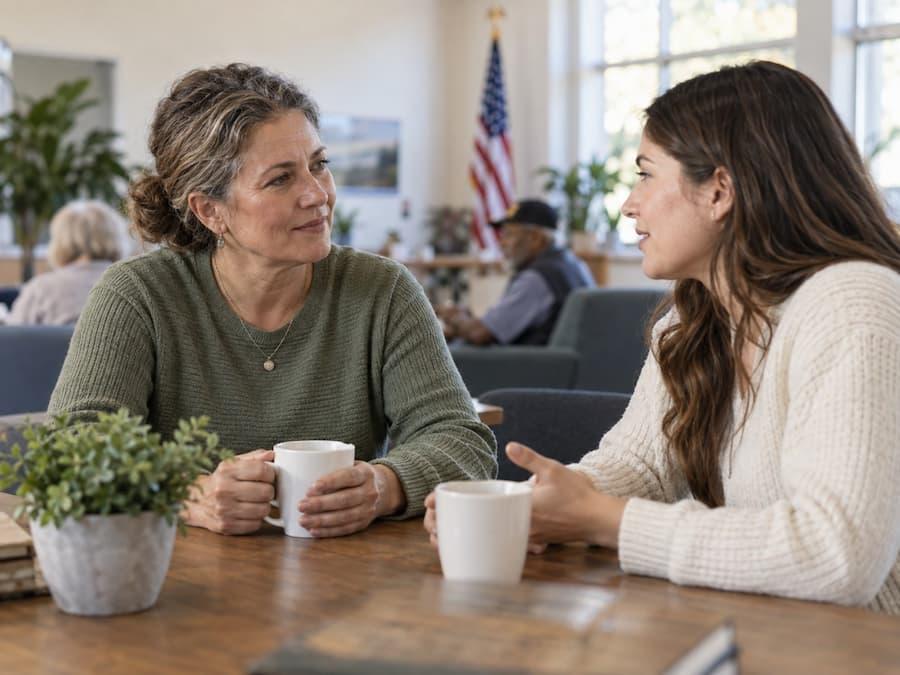
Make Your Veterans Day Message Personal
The Department of Veterans Affairs explains that Veterans Day honors those who served in wartime or peacetime. You do not need to know whether someone saw combat to thank them, and you do not need to bring up a deployment to make your message meaningful.
Start with something you know about the person. That might be a memory they have shared, a quality you admire, or simply the relationship you have now.
For a Family Member
A family message can connect their service with your relationship without claiming to understand every part of their experience. For example:
-
“Dad, I’m thinking about your time in the Navy today. I’d love to spend some time together this weekend if you’re up for it.”
-
“Grandma, I loved hearing about the friends you made while serving. Sending you an extra-big hug this Veterans Day.”
-
“I know there are parts of your service I haven’t heard about. You never have to explain them for me to appreciate you.”
Only use details you know are accurate. If someone has shared a story privately, keep it private unless they are comfortable with you repeating it.
For a Friend
Keep the tone familiar. If you usually send short, casual texts, a formal tribute may feel less personal than a few words in your own voice.
Try: “Hey, I wanted to check in and send some appreciation today. Want to grab lunch soon?” Or: “Thinking of you this Veterans Day. No need to text back right away—just wanted you to know.”
An invitation is most useful when it is one you intend to follow through on. Suggest a day or activity rather than making a vague promise to get together someday.
For a Coworker
A private note is a considerate starting point when you do not know how someone feels about public recognition. You could write: “I wanted to acknowledge your service today and say that I appreciate having you on our team.”
If you are organizing a workplace acknowledgment, ask whether the person wants to be included before sharing their name, photograph, or service history. Participation in a group photo, speech, or office collection should be optional.
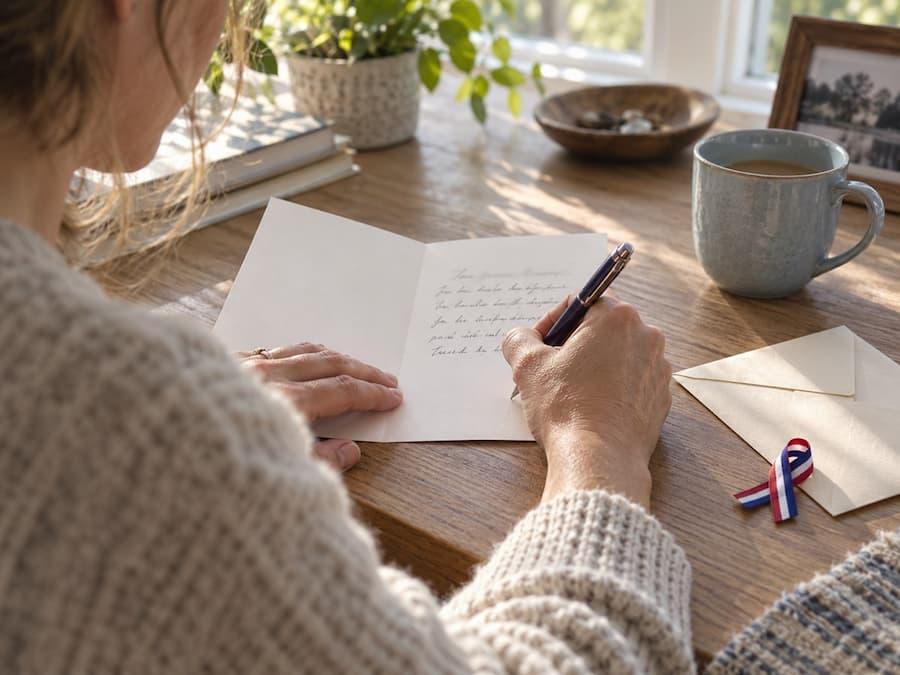
Write a Veterans Day Card That Sounds Like You
A card gives you room to be thoughtful without expecting an immediate response. Use this simple framework:
-
Address the person by name. Write to them as an individual.
-
Add one specific thought. Mention a shared memory, their service, or something you appreciate about your relationship.
-
Close with a genuine wish or invitation. Offer your time only if you can give it.
Here is a customizable example:
Dear [Name],
I wanted to send a note on Veterans Day to recognize your time in the [branch, if known]. I still think about [a memory they are comfortable sharing], and I’m grateful that you shared it with me. I’d love to catch up over [coffee/lunch/a phone call] when it suits you.
With appreciation, [Your name]
If you do not know the recipient personally, leave out the memory and branch. A sincere general note is better than a guessed detail: “I’m writing to recognize your military service this Veterans Day and to send my warm wishes from our community.”
For children writing cards, encourage their own words and drawings. An adult can explain the occasion and help with spelling without turning the message into a formal speech.
Let the Veteran Set the Tone
There is no single response you should expect. Some people enjoy talking about their service; others prefer a short exchange. Mission Roll Call’s guidance on thanking veterans recognizes both the value of appreciation and the importance of respecting whether someone wants to talk.
Is “Happy Veterans Day” Okay?
It can work as a friendly greeting, particularly with someone who welcomes it. If you are unsure, a straightforward expression of thanks avoids assuming how the person feels about the day.
You could say, “I wanted to recognize your service today,” and leave room for their response. If they tell you they would rather keep the day low-key, accept that without trying to persuade them to celebrate.
Keep Questions Comfortable
Follow the subject the person chooses to discuss. If they mention a close friend from their service, you might ask whether they still keep in touch. If they change the subject, move with them.
Avoid asking for combat details, medical information, or an account of the hardest thing they experienced. Similarly, do not assume that every veteran was deployed, has an injury, or shares the same political views. Those details are not prerequisites for expressing thanks.
Know When to Leave It There
If your greeting seems to land awkwardly, you can simply say, “Of course—good to see you,” and return to the conversation you were having. You do not need to ask whether you said the right thing or seek reassurance about your intentions.
For social posts, the same courtesy applies. Ask before tagging a person or publishing a service photograph, even if the accompanying message is positive.
Turn Appreciation Into Support They Would Welcome
Sometimes a thank-you leads to a useful conversation about a goal or practical need. Ask what would help before deciding on someone else’s behalf. They may welcome a professional introduction, a ride, a shared meal, or help with a project. They may also be doing well and simply enjoy your company.
If a veteran in your life wants help covering a specific expense, *spotfund is a free online fundraising platform with 0% platform fees. You can create a campaign and share it with friends and family so they can contribute; standard payment processing fees still apply. If you need help putting the request into words, its AI writing assistant can turn a short prompt about the cause into a draft fundraiser description. You can use that draft as a starting point, then make the wording personal and check that every detail is accurate.
Before creating the page, agree on what can be shared, what the money will cover, and who will organize the effort. Keep the person’s preferences at the center of the campaign.
For example, imagine a friend has asked for help paying for tools needed for a new job. With their permission, a short message accompanying the fundraiser could read:
“With Jordan’s permission, we’re helping cover the tools needed for their new role. The fundraiser explains the equipment and costs. If you’d like to contribute or share the link, we’d appreciate it.”
This is an illustrative message, not a real campaign. Replace the details with accurate information, and let the recipient review the wording before you share it. You can mention their military service if they want that included; it does not have to become the entire story.
For a larger group effort, veterans fundraiser ideas can help you choose an activity after you have identified the purpose and recipient. If someone already has a fundraiser, contributing to or sharing that existing page may be more useful than starting a second one.
Let Your Thanks Carry Beyond November 11
The best Veterans Day message fits the person receiving it. Choose a few honest words, respect their response, and follow through on any help you offer. A later phone call or a kept invitation can give your appreciation staying power.
When that support includes an agreed-upon fundraising goal, *spotfund can be part of the next step. Keep the purpose clear and the invitation considerate.
Create a fundraiser on *spotfund.
Frequently Asked Questions
What If I Do Not Know Which Military Branch Someone Served In?
You can thank them without naming a branch. Use their name and a general acknowledgment of their service. If they choose to tell you more, listen; there is no need to investigate their background to prepare a greeting.
Can I Send a Veterans Day Message After November 11?
Yes. You can write, “I meant to reach out earlier this week, but I still wanted to send my appreciation.” Keep the focus on the person rather than a long apology for missing the date.
What Should I Say to Someone Whose Veteran Parent Has Died?
If you know they welcome remembering their parent, acknowledge the relationship gently: “I’m remembering your dad today and thinking of you.” Avoid assuming how they feel or using a cheerful greeting if it does not fit your relationship.
Do I Need to Donate Money to Show Appreciation?
No. A personal note, time together, or practical help can be meaningful. Financial support is one option when it is wanted and appropriate; it should not be a condition of expressing gratitude.