
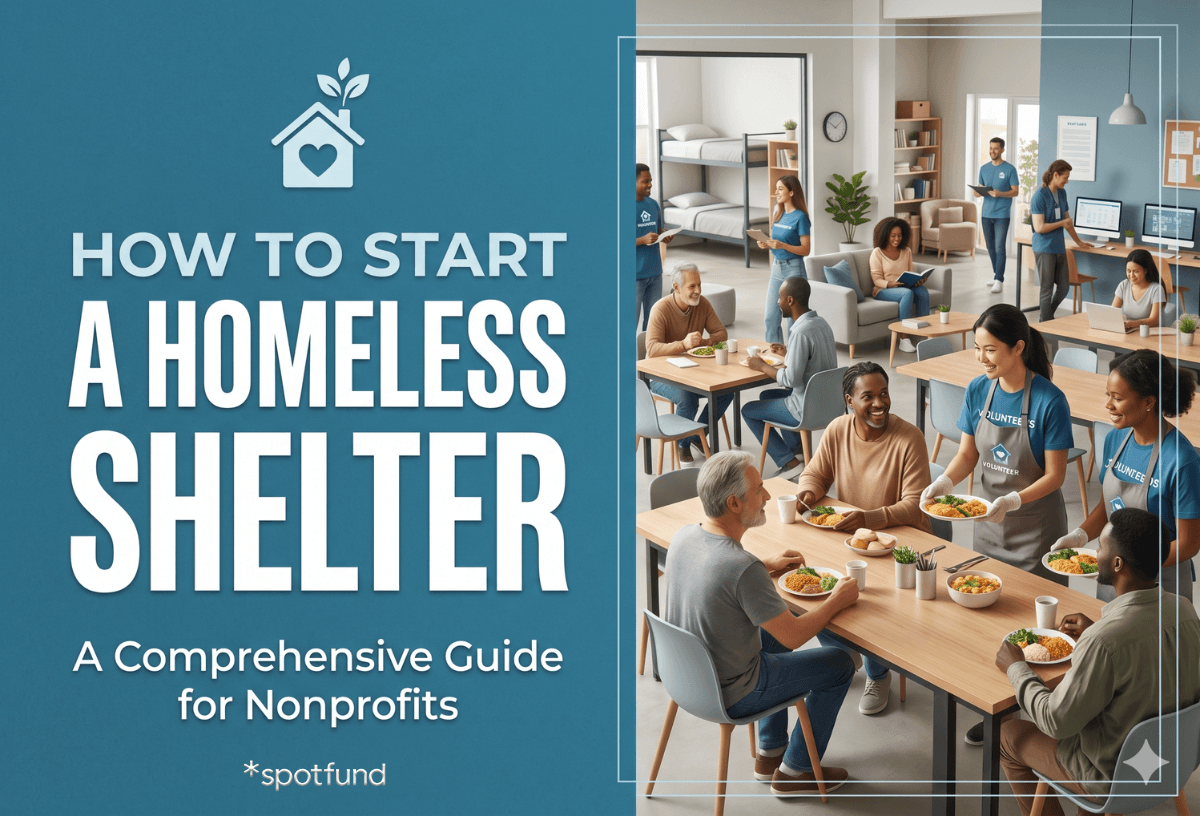
As we navigate 2026, homelessness remains one of the most complex humanitarian challenges facing our communities. Shifting economic landscapes, rising housing costs, and systemic gaps in mental healthcare have left hundreds of thousands of individuals facing daily housing insecurity. If you are researching how to start a homeless shelter, you are stepping up to answer a critical calling.
However, wanting to help is only the first step. Starting a shelter is a massive, multi-year undertaking that requires deep compassion combined with rigorous business acumen. A modern shelter does much more than provide a cot and a warm meal; it acts as a centralized hub for trauma recovery, healthcare access, and transition into permanent housing.
Whether you aim to open a small emergency warming center or a large-scale transitional housing facility, this comprehensive guide will walk you through the four crucial phases of opening a homeless shelter from the ground up.
Phase 1: Planning and Legal Foundation
Before you look at real estate or ask for donations, you must build a bulletproof legal and strategic foundation.
1. Identify Your Target Population and Shelter Type
Homelessness affects people from all walks of life, and different demographics require highly specialized care environments. Attempting to serve everyone in a single facility is a common mistake that can lead to safety hazards and operational burnout.
Decide exactly who your shelter will serve and what type of shelter you will operate:
|
Shelter Type |
Target Population & Focus |
Typical Length of Stay |
|
Emergency Shelter |
Adults needing immediate, short-term safety from the streets or severe weather. |
1 to 90 days |
|
Transitional Housing |
Individuals or families needing structured support to bridge the gap to permanent housing. |
6 to 24 months |
|
Youth Shelter |
Unaccompanied minors and young adults focusing on education, life skills, and family reunification. |
Variable |
|
Domestic Violence |
Survivors needing high-security, confidential locations with intense trauma counseling. |
30 to 120 days |
2. Draft a Mission, Vision, and Business Plan
Your mission statement is the heartbeat of your organization. It tells donors, grant-makers, and local governments exactly what you do.
A strong mission statement must be action-oriented. For example: "To provide secure transitional housing, career training, and mental health advocacy for homeless veterans in [Your City], empowering them to achieve lasting independence."
Once your mission is set, draft a formal nonprofit business plan. This document should outline your organizational structure, first-year operating budget, long-term sustainability goals, and a community needs assessment proving that your specific shelter is required in your area.
3. Form a Board of Directors and File for 501(c)(3) Status
To operate legally and accept tax-deductible donations, you must register your shelter as a nonprofit organization. This requires a governing body.
Recruit a Board of Directors with diverse expertise. Look for community members with backgrounds in real estate, nonprofit law, clinical social work, and finance. Once your board is established and your bylaws are drafted, complete the following legal steps:
-
Incorporate your nonprofit at the state level.
-
Obtain an Employer Identification Number (EIN) from the federal government.
-
File Form 1023 with the IRS to officially gain your 501(c)(3) tax-exempt status.

Phase 2: Location and Logistics
Finding a building is consistently cited as the most difficult hurdle in learning how to start a homeless shelter.
4. Navigate Zoning Laws and Overcome "NIMBY" Resistance
You cannot simply buy a large commercial building and turn it into a shelter. Most municipalities have incredibly strict zoning regulations regarding congregate living facilities.
Consult your local city planning office immediately. You will likely need to apply for a "Special Use Permit" or a zoning variance. This process requires public hearings, which brings up the challenge of NIMBYism (Not In My Back Yard).
Local residents and business owners frequently push back against proposed shelters due to concerns about property values and neighborhood safety. To overcome this, host community town halls early in the process. Present clear data, introduce your security protocols, and show how your facility will actually reduce street homelessness in their neighborhood.
5. Secure and Renovate the Right Facility
When evaluating properties, prioritize accessibility. Your shelter should be located near public transportation hubs, social service offices, and hospitals.
Once secured, you will face significant renovation costs. By 2026 standards, modern shelters must adhere to stringent public health codes. Upgrades often include:
-
Installing commercial-grade HVAC systems with high-efficiency air filtration.
-
Upgrading plumbing to support multiple high-capacity commercial showers and restrooms.
-
Adding ADA-compliant ramps, elevators, and accessible bed spaces.
-
Installing robust security systems, including cameras and secure keycard entry points.
Phase 3: Operations and Programs
A bed and a meal keep people alive, but comprehensive programming helps them thrive.
6. Design Essential Resident Programs
Your operational budget must account for wrap-around services. The most successful shelters partner with local agencies to provide these services on-site, reducing the burden on residents to travel across the city. Core programs should include:
-
Case Management: One-on-one guidance to help residents obtain state IDs, navigate government benefits, and create a roadmap to permanent housing.
-
Physical and Mental Healthcare: Partnerships with local clinics to provide on-site health screenings, substance abuse counseling, and medication management.
-
Job Readiness: Access to high-speed internet, resume-building workshops, and interview preparation.
-
Life Skills Training: Financial literacy, conflict resolution, and nutritional cooking classes.
7. Hire Compassionate Staff and Train Volunteers
Operating a shelter requires a mix of highly trained professionals and dedicated community volunteers. Key staff roles include a Shelter Executive Director, certified Case Managers, overnight resident supervisors, and facility maintenance staff.
Because shelter residents frequently experience severe trauma, mandatory staff training is crucial. Ensure all personnel and volunteers undergo certifications in:
-
Trauma-Informed Care (TIC) practices.
-
Non-violent crisis intervention and verbal de-escalation.
-
First Aid, CPR, and Narcan administration.

Phase 4: Funding and Sustainability
A shelter cannot survive on good intentions alone. Securing initial capital and maintaining monthly operational funds requires a diversified strategy.
8. Implement Data Tracking and Maintain Compliance
To qualify for major government funding in 2026, you must track your data. The Department of Housing and Urban Development (HUD) requires shelters receiving federal funds to use the Homeless Management Information System (HMIS).
Implementing HMIS allows you to securely collect client-level data on the services provided, demographic information, and housing outcomes. This data is essential for proving your shelter's effectiveness when applying for annual grant renewals.
9. Build Strategic Community Partnerships
Partnering with existing community organizations reduces your operational costs and expands your resource network.
-
Food Banks: Establish recurring deliveries from local food rescue organizations to stock your commercial kitchen.
-
Corporate Partners: Ask local businesses for in-kind donations. Hardware stores can donate maintenance supplies; hotels can donate linens and bulk hygiene products.
-
Law Enforcement: Build proactive relationships with local community policing units so they understand your facility’s protocols and can assist safely during emergencies.
10. Launch a Multi-Channel Fundraising Strategy
Opening a mid-sized facility today typically requires between $1,500,000 and $3,000,000 in startup capital, with hundreds of thousands needed annually for operations. You must diversify your revenue streams:
-
Government Grants: Apply for local, state, and federal HUD grants. These are highly competitive but offer the largest payouts.
-
Private Foundations: Research philanthropic organizations dedicated to poverty alleviation and housing equity.
-
Digital Crowdfunding: For immediate needs—like replacing broken beds, buying winter coats, or covering a sudden spike in utility bills—launching an online fundraiser is the fastest way to engage the public. A well-crafted nonprofit fundraising campaign on a free platform like *spotfund empowers your community to take immediate financial action without losing your hard-earned donations to platform fees.

Start Your Free Fundraiser Today
Learning how to start a homeless shelter is an incredible administrative journey, but securing the necessary funds is where your vision truly comes to life. Whether you are raising money to cover your initial 501(c)(3) filing fees, purchasing commercial kitchen equipment, or running an emergency fundraising drive for winter blankets, community support is your most powerful tool.
With *spotfund, you can launch a beautiful, mobile-friendly crowdfunding campaign in minutes. Enjoy 0% platform fees, meaning every dollar you raise goes directly toward helping those in need in your community. Not sure how to ask for donations? Use our built-in AI Fundraising Tool to craft a compelling, empathetic story in seconds. Plus, with quick QR codes, text-to-donate features, and next-day payouts, you'll have the funds in your bank account right when your shelter needs them most.
👉 Create your free fundraiser on *spotfund
Frequently Asked Questions (FAQ)
Can I start a homeless shelter with no money?
Starting a standalone shelter from scratch with zero capital is nearly impossible due to real estate, zoning, and licensing costs. However, you can begin by partnering with an existing church or community center that already owns a building, relying entirely on donated supplies and volunteer labor to launch a small-scale seasonal warming center.
How much does it cost to run a homeless shelter annually?
Operational costs depend heavily on the size of the facility and the depth of services provided. A small 30-bed emergency shelter might operate on $300,000 to $500,000 a year, while a comprehensive 100-bed transitional facility with full-time medical and psychiatric staff can cost upwards of $2,000,000 annually in operating expenses.
Are homeless shelters profitable?
No. By definition, a 501(c)(3) nonprofit homeless shelter reinvests every single dollar it receives back into the organization’s mission. Success is measured by the number of individuals successfully transitioned into stable, permanent housing, not by financial profit.
What qualifications do I need to run a homeless shelter?
While no specific degree is legally required to start the nonprofit entity itself, having a background in social work, public administration, or business management is highly recommended. Most successful shelters are run by an Executive Director with experience in nonprofit leadership, supported by clinical staff who hold advanced degrees in social work (MSW) or psychological counseling.
How do I get government funding for a homeless shelter?
Government funding typically flows through the Department of Housing and Urban Development (HUD) and your local Continuum of Care (CoC) program. To qualify, your shelter must be a registered 501(c)(3), demonstrate a clear community need, comply with strict fair housing standards, and actively log client data into the Homeless Management Information System (HMIS).
Can a homeless shelter turn someone away?
Yes, shelters frequently have to turn individuals away, most commonly due to reaching maximum bed capacity. Additionally, many shelters have strict intake policies to protect the safety of other residents and staff. High-barrier shelters may deny entry due to active substance use or previous violent behavior, while low-barrier shelters have more lenient requirements to get vulnerable populations off the streets immediately.
Do nonprofit homeless shelters pay property taxes?
In most jurisdictions, registered 501(c)(3) organizations are exempt from local property taxes on buildings they own and use exclusively for their charitable mission. However, this exemption is not automatic. You must formally apply for property tax exemption through your local county or city tax assessor's office after acquiring the facility.