
Spotfund logo
Spotfund logo
Start Fundraising
PricingContact SupportStart Fundraising

Fundraise for

  • Medical Fundraising
  • Emergency Fundraising
  • Memorial Fundraising
  • Education Fundraising
  • Nonprofit Fundraising
  • Animal Fundraising
  • Community Fundraising

Featured topics

  • Easy Fundraising Ideas for Individuals
  • Creative Fundraiser Dinner Ideas
  • Raising Money for Medical Expenses
  • *spotfund for NIL Collective Fundraising
  • Giving Tuesday Fundraising 2025NEW

Trending in

  • Medical
  • Memorial
  • Emergency
  • Nonprofit
  • Family
  • Sports
  • Business

Featured topics

  • *spotfund as a Recurring Donation Solution
  • Matching Gift CampaignsPOPULAR
  • Why Recurring Donations Are Important for Nonprofits
  • How it works
  • Common questions
  • Success stories
  • For brands and nonprofits
  • How do I withdraw money?
  • *spotfund blog
  • Reviews from people like you
  • Compare *spotfund to others

GetDanBackUpAndRunning

GetDanBackUpAndRunning

Fundraising for

Daniel Levinsohn

Fundraising forDaniel Levinsohn
Daniel Levinsohn

Daniel Levinsohn

pasadena, CA

$70of $26,200 goal
2
Donors
1
Comments
2Share Arrow
Shares
Donation protected
👍 0% fee

I'm too stupid to give up on my dreams.

I raced at least ten marathons in 7 years, in which I stupidly attempted to outrun my outsized ambitions; completed an Ironman 70.3 -- 1.2 miles of swimming, 56 miles of cycling, 13.1 miles of running -- in Lake Placid, whose 1980 Olympics hosted the Miracle on Ice but where I failed to drown, derail, trip, or otherwise cripple my dumb brain's indominable need to succeed; produced multimedia articles previewing and recapping a variety of sports for NBCOlympics.com -- working 16-hour shifts for the 2016 Rio, 2020 Tokyo, and 2024 Paris Games in which I pumped out pieces that tested the limits of the human mind and the author's thesaurus by detailing tedious tournaments (tennis) and analyzing events in which the risk a participant suffered internal organ damage was statistically similar to non-Olympic athletes who successfully completed the Tide Pod Challenge (luge) -- helping my digital team score three Sports Emmy wins, 

Perhaps you're unfamiliar with the demonic, jagged face of Complete and Utter Failure -- with whom I've become : his lava-colored eyes; flaming skull; impeccably trimmed goatee, under which his angular, fang-infested smile booms derisive laughter: "YOU! ... FOOL!" he intermittently bellows, clearly enuncianting each word:

"YOU! ... FAIL! ... YOU! ... FOOL! ... YOU! ... FAIL!" 

"Dad," I ask while suppressing a yawn as the clock ticks past 3 A.M. I rub my crusty eyelids and notice the soft indentations of crows' feet, like sagging, fleshy lightning bolts, smush against my nose. "Can't this wait until, I don't know, the second hour of The TODAY Show? If I don't hit the sack soon, I won't have enough time for those dreams of you in the tractor -- "

"CATERPILLAR! ... YOU! ... FOOL!"

"-- yeah, those dreams of you in the Caterpillar, dumping mounds of soil onto my casket as I'm screaming, pleading, begging you not to bury me alive -- which makes you laugh even harder, so hard the earth itself quakes, and a flood of dirt just -- like, pours into the grave, swallows the casket -- the earth basically consumes my body -- and I'm trapped beneath an avalanche of debris and discarded Gatorade bottles and CVS bags -- and, yeah, if I don't sleep soon, you won't get to laugh in my face as I wake up from those -- those dreams --" 

"YOU! ... FAIL! ... CRUSHED! ... BY! ... DREAMS!" 

" -- yeah, literally -- "

"YOU! ... FOOL! ... NOT! ... LITERAL! ... SYMBOLICAL!" 

But even if I  I'm also far too anxious, and possibly autistic (POSSIBLY autistic; definitely deeply depressed; severely traumatized; likely obsessive-compulsive, especially concerning the Oxford comma; may have a UTI, I don't know, it takes a few minutes to get the pee out), to return to my Norman Rockwell-esque home in Oradell, New Jersey, without at least three Academy Award nominations; one Oscar statuette; and a thorough list of clever, impressive retorts and remarks cocked, locked, and ready to pop at any family member or frienemy for any potential insults and/or incisive "jokes" my far more successful, financially stable family members may slice at me.     

"The strikingly successful groups in America today share three traits that, together, propel success,"

It turns out that for all their diversity, the strikingly successful groups in America today share three traits that, together, propel success. The first is a superiority complex — a deep-seated belief in their exceptionality. The second appears to be the opposite — insecurity, a feeling that you or what you’ve done is not good enough. The third is impulse control.

Externalizing and shedding my failures, fears, and frustrations; reiterating my intentions while reflecting on pitfalls and roadblocks I hadn't anticipated; and, through my childish outbursts, rekindling the fiery passion that all but forced me to transform an obsessive idea into reality. 

It's not worth complaining about something trivial. Silence signifies a dream is truly dead, forever doomed to fantasy: When an idea remains locked behind your lips, the rest of your body will never act on its behalf. 

I was training for the New York City Marathon on Labor Day, 2017, when a sedan nailed me in a Brooklyn crosswalk and launched me skyward. The impact hurled my body some 20 feet across an intersection, shattered my shoulder, and busted 10 other bones -- proving free airfare isn't always a good thing. 

Exactly two months later, I ran the 26.2-mile race anyway -- in 4 hours, 6 minutes, and 14 seconds.
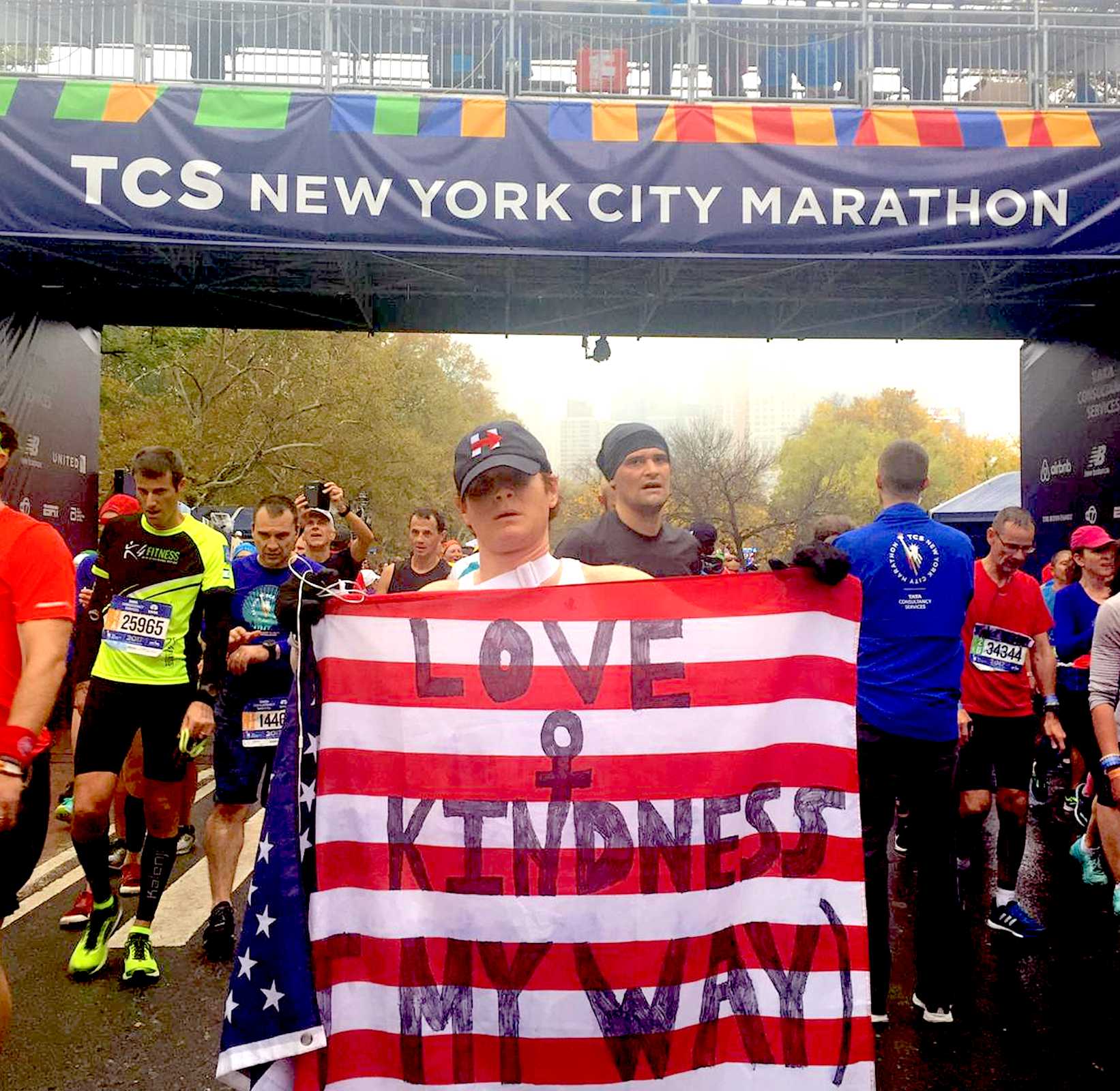
I've told the story to Patch. I appeared in at least two news segments, and penned an op-ed, for ABC News. I even featured in a marketing campaign for NewYork-Presbyterian -- the pièce de resistance a 60-foot tall billboard that loomed over the Mets's Citi Field parking lot. 

I wasn't compelled to share my story to elicit pity or prove my accomplishments in the face of adversity; I wasn't even particularly proud whenever a new article or news clip released. It took me years to understand why I felt ashamed of the publicity: Because regardless of the resilience I had demonstrated, all of the effort and training and mental and physical strength it took to prepare for and run each of my six consecutive New York City Marathons from 2017 through 2022, I was still focused on a dream denied, the race I never had the opportunity to run.

On September 3rd, 2017, I was an able-bodied 27-year-old in the best shape of his life. I had led a spartan, saintly lifestyle -- had spent an entire year abstaining from alcohol and parties and sweets and even Coca-Cola -- as I devoted my body and soul and time and effort to this singular test of endurance held in what I still consider the world's most remarkable city. And I was confident I would realize a dream I'd held for the better part of a decade: I'd complete the race with a personal best marathon finish time, likely blitzing past the Staten Island starting line through the Central Park finish line in less than three hours and 30 minutes.

I don't discuss that dream much anymore. Nor do I talk much about my other, larger life dream -- the one that had inspired me to move 3000 miles from my beloved New York and its annual marathon; forsake my friends and family and New Jersey childhood home; and force me to start from scratch personally and professionally in my mid-30s.

After the pandemic, I reconsidered the time I'd been afforded on Earth and the talents I possessed; I wanted to lead the most meaningful life possible -- to actualize my dreams, advocate for social causes, help others speak up for themselves to reach their potential. I possessed tremendous faith in my writing abilities; my unique and informed perspective on people and the world they inhabit; and my indomitable work ethic.

Professional screenwriting no longer felt like an outrageous fantasy; years of relevant professional experience, my voracious appetite for reading, and my insatiable passion for writing added up to a viable,  logical next step as I entered a more seasoned stage of my career.

In summer 2023, I made the jump -- or, rather, flight -- from LGA to LAX.

It's certainly been a unique endurance test, one set against the backdrop of a heightened world heavily inspired by Terminator 2, Idiocracy, and Veep.  

Since 2010, I'd dreamed of running the New York City Marathon: Those who completed the race were superheroes capable of conquering all five boroughs using only their feet, a snug pair of sneakers, and their indomitable spirit / iron-clad mental fortitude -- especially if they managed the feat in under four hours.

Though I'd successfully completed the course in 2017 -- exactly two months after my skull landed six inches from a concrete curb, nearly splattering like a watermelon -- those additional 374 seconds meant I'd only half-completed my dream. So, naturally, I signed up for the 2018 edition of the marathon when submissions opened the following January.

Twelve months after my initial blitz through the five boroughs, I zipped past the 2018 New York City Marathon's Central Park finish line in 3:53:07 (three hours, 53 minutes, seven seconds). A nearby volunteer draped me in my finisher's poncho when the unofficial race results appeared on my phone. My eyes welled with tears: I instinctively hugged the woman and bawled. She returned my embrace and rubbed my shoulder for what felt like hours as I processed something far more than a dream come true: I hadn't just run a race -- I won my life back.   

In retrospect, this wasn't entirely true, either -- just two weeks into the New Year, I learned my life would never be the same. Less than 18 months after my brush with mortality, my mother underwent an MRI that winter following an audiologist's ominous "incidental finding" in December. Oncologists then ordered a biopsy to test and identify an abnormal cellular cluster.

By March 2019, my mother had been diagnosed with an insidious form of brain cancer called an anaplastic astrocytoma grade III. As a 35-year veteran care coordinator at NewYork-Presbyterian -- the same hospital where I'd had my shoulder surgery, where Mom underwent her cranial biopsy -- my mother must've known she'd been hit with a death sentence.

In essence, a diagnosis is simply a label — a medical confirmation of a condition or disease. But the casual cruelty intrinsically linked to my mother's diagnosis still feels like a gut punch: Mom was only six months short of retirement. She had spent decades sacrificing sleep and time with her loved ones, earning overtime by working weekends in the hospital's pediatric and oncology units -- saving patients' lives by ensuring predatory insurance companies would commit to covering extended hospital stays. 

Now, Mom needed someone to care for her -- to ensure she received the most innovative, novel treatments and procedures, costs be damned. She accepted the diagnosis, but seemed to reject the prognosis: On the rare occasion she and I discussed her cancer, Mom wasn't just determined to fight the disease -- she was convinced she'd defeat it.

Mom lost her battle on the rainy morning of June 14, 2021. That January, the tumor recurred as a glioblastoma -- one of the most lethal diseases known to humankind. Over the following five harrowing, heartbreaking, sleepless months -- when it was nearly impossible to recruit trained home health aides due to pandemic protocols -- my father and I served as Mom's primary, and overwhelmingly underprepared, caregivers.

After radiation "treatment" in April, Mom could not speak, move independently, and had doubled her body weight; she split the remainder of her life between a cot in our living room-turned-hospice and a "deluxe" wheelchair with foot rests. Communicating with Mom was impossible; steering her to the bathroom, or the patio picnic table for macaroni, only slightly less challenging.

Mom passed just as COVID-19 Pandemic restrictions began lifting in early summer 2021; I am proud she received her vaccination shots and managed to avoid the disease, despite her precarious circumstances. But Mom never had the opportunity to see the world reawaken, to catch up with her friends without social distancing protocols or a K-95 mask.

Her torch had been extinguished; her life had become only a memory. 

That fall, I completed my fifth consecutive New York City Marathon. ("Run" is too generous a verb.) I crossed the finish line in an abysmal, yet unsettlingly appropriate, six hours and 14 minutes flat.

I underwent carpal tunnel surgery in spring 2022 to reduce pain, regain function and sensation in my right hand. As the year came to a close, I completed my sixth -- and, as of this writing, most recent -- New York City Marathon in about four and a half hours on a brutally warm November morning. 

As my legs propelled me across Staten Island, Queens, Brooklyn, the Bronx, and finally Manhattan, my mind became increasingly fixated on Los Angeles. Both my crash and the pandemic underscored life's brevity and fragility, how easy it is to take our daily blessings -- our loved ones, our routines, our jobs, our individual sense of purpose -- for granted.

As I trudged across the Willis Avenue Bridge into the Bronx, around 20 miles into the race, I hit the infamous "wall": My calves became bricks; lifting my legs required so much effort, I felt like I was running inside a space suit. I saw a mounted digital clock in the near distance and told myself I'd walk up until that point, then get back to hustling; a little rest, after all, could prove the most viable strategy in the long run -- although I didn't want to set a precedent for laziness with six-plus miles to go.

I knew complacency was the enemy of ambition. The path forward always requires action: Consider the benefits and potential pitfalls of all conceivable options; commit to the best overall plan, and focus on the specific goal regardless of whatever challenges life throws your way; and recognize your strengths and limitations -- when to double-down on an opportunity, when to take a breath, when to ask for help. 

Like racing across the five boroughs to cross the finish line as quickly as possible, my forthcoming move to Los Angeles involved one irrefutable objective: I needed to write professionally. 

To do that, I'd need -- among other things -- a functioning arm. Just before I swapped coasts in spring 2023, I endured a third major surgery: a partial shoulder replacement. Avascular necrosis had disintegrated my humeral head. I now required an operation that would remove the titanium plate and nine pins that had bolted the bone together for over five years, and replace the dead head with a prosthesis. After a successful surgery and some rest, I'd return to 

hen followed my dreams to Culver City, where I moved into a series of sublets with my brand-new bride, Antonia. 

The lease lasted longer than our marriage, as I struggled to find healthcare and support on the West Coast. My pain returned in earnest by winter 2024; before the year's end, I experienced agony -- physical and mental -- daily. My shoulder hurt as bad as it ever had, but my entire spine felt like it had been pancaked. 

What I had envisioned as a new lease on life, an attempt to relocate and redefine myself despite a compromised body, quickly mutated into a series of sick punchlines: a historic Hollywood double-strike involving the WGA, SAG, and the AMPTP; a debilitating fear of cars in a city with virtually no reliable public transportation; chronic unemployment as the City of Angels struggled through the worst job market in nearly half a century; constant isolation, a bleeding bank account, waves of grief and regret and dread and a pervading sense of hopelessness. There was so much pain -- and so little relief. 

It's been two years since I touched down at LAX with nothing but half a dozen suitcases, a Google Doc of professional contacts, and a head full of ill-fated plans and a few brilliant, yet still unrealized, ideas. 

As of this very moment -- 7:17 PM PT on July 24, 2025 -- my heart, mind, and body are finally aligned. I'm motivated; I'm ready to work; I'm excited to write; I possess identifiable, tangible goals; my medical conditions are finally being addressed by excellent doctors -- 

-- and I'm ready to start running again. Metaphorically, of course, but also literally. I plan to relocate to a quiet area where I can focus on work, exercise, and building community while rebuilding my career and body. I have scripts to write and job applications to submit; contacts with whom I need to reconnect so I can capitalize on professional and personal opportunities; and -- some 15 months from now -- I will run the 2026 New York City Marathon on behalf of a worthy nonprofit whose work will ensure no one else finds their dreams and bodies tossed to the winds by a 3000-pound machine.

I end this story with a pledge to start anew. But I need you -- your help -- whether via physical assistance or a job opportunity or financial donation.

Will you please help me begin again?

With love,

Dan

Anonymous

Anonymous

$50 • Recent donation

Anonymous

Anonymous

$50 • Top donation

Christian de Luna

Christian de Luna

$20 • First donation

Organizer

Daniel Levinsohn

Daniel Levinsohn is the organizer of this fundraiser

GetDanBackUpAndRunning
Daniel Levinsohn

Daniel Levinsohn

pasadena, CA

Fundraising for

Daniel Levinsohn

Fundraising forDaniel Levinsohn
Donation protected
👍 0% fee

I'm too stupid to give up on my dreams.

I raced at least ten marathons in 7 years, in which I stupidly attempted to outrun my outsized ambitions; completed an Ironman 70.3 -- 1.2 miles of swimming, 56 miles of cycling, 13.1 miles of running -- in Lake Placid, whose 1980 Olympics hosted the Miracle on Ice but where I failed to drown, derail, trip, or otherwise cripple my dumb brain's indominable need to succeed; produced multimedia articles previewing and recapping a variety of sports for NBCOlympics.com -- working 16-hour shifts for the 2016 Rio, 2020 Tokyo, and 2024 Paris Games in which I pumped out pieces that tested the limits of the human mind and the author's thesaurus by detailing tedious tournaments (tennis) and analyzing events in which the risk a participant suffered internal organ damage was statistically similar to non-Olympic athletes who successfully completed the Tide Pod Challenge (luge) -- helping my digital team score three Sports Emmy wins, 

Perhaps you're unfamiliar with the demonic, jagged face of Complete and Utter Failure -- with whom I've become : his lava-colored eyes; flaming skull; impeccably trimmed goatee, under which his angular, fang-infested smile booms derisive laughter: "YOU! ... FOOL!" he intermittently bellows, clearly enuncianting each word:

"YOU! ... FAIL! ... YOU! ... FOOL! ... YOU! ... FAIL!" 

"Dad," I ask while suppressing a yawn as the clock ticks past 3 A.M. I rub my crusty eyelids and notice the soft indentations of crows' feet, like sagging, fleshy lightning bolts, smush against my nose. "Can't this wait until, I don't know, the second hour of The TODAY Show? If I don't hit the sack soon, I won't have enough time for those dreams of you in the tractor -- "

"CATERPILLAR! ... YOU! ... FOOL!"

"-- yeah, those dreams of you in the Caterpillar, dumping mounds of soil onto my casket as I'm screaming, pleading, begging you not to bury me alive -- which makes you laugh even harder, so hard the earth itself quakes, and a flood of dirt just -- like, pours into the grave, swallows the casket -- the earth basically consumes my body -- and I'm trapped beneath an avalanche of debris and discarded Gatorade bottles and CVS bags -- and, yeah, if I don't sleep soon, you won't get to laugh in my face as I wake up from those -- those dreams --" 

"YOU! ... FAIL! ... CRUSHED! ... BY! ... DREAMS!" 

" -- yeah, literally -- "

"YOU! ... FOOL! ... NOT! ... LITERAL! ... SYMBOLICAL!" 

But even if I  I'm also far too anxious, and possibly autistic (POSSIBLY autistic; definitely deeply depressed; severely traumatized; likely obsessive-compulsive, especially concerning the Oxford comma; may have a UTI, I don't know, it takes a few minutes to get the pee out), to return to my Norman Rockwell-esque home in Oradell, New Jersey, without at least three Academy Award nominations; one Oscar statuette; and a thorough list of clever, impressive retorts and remarks cocked, locked, and ready to pop at any family member or frienemy for any potential insults and/or incisive "jokes" my far more successful, financially stable family members may slice at me.     

"The strikingly successful groups in America today share three traits that, together, propel success,"

It turns out that for all their diversity, the strikingly successful groups in America today share three traits that, together, propel success. The first is a superiority complex — a deep-seated belief in their exceptionality. The second appears to be the opposite — insecurity, a feeling that you or what you’ve done is not good enough. The third is impulse control.

Externalizing and shedding my failures, fears, and frustrations; reiterating my intentions while reflecting on pitfalls and roadblocks I hadn't anticipated; and, through my childish outbursts, rekindling the fiery passion that all but forced me to transform an obsessive idea into reality. 

It's not worth complaining about something trivial. Silence signifies a dream is truly dead, forever doomed to fantasy: When an idea remains locked behind your lips, the rest of your body will never act on its behalf. 

I was training for the New York City Marathon on Labor Day, 2017, when a sedan nailed me in a Brooklyn crosswalk and launched me skyward. The impact hurled my body some 20 feet across an intersection, shattered my shoulder, and busted 10 other bones -- proving free airfare isn't always a good thing. 

Exactly two months later, I ran the 26.2-mile race anyway -- in 4 hours, 6 minutes, and 14 seconds.

I've told the story to Patch. I appeared in at least two news segments, and penned an op-ed, for ABC News. I even featured in a marketing campaign for NewYork-Presbyterian -- the pièce de resistance a 60-foot tall billboard that loomed over the Mets's Citi Field parking lot. 

I wasn't compelled to share my story to elicit pity or prove my accomplishments in the face of adversity; I wasn't even particularly proud whenever a new article or news clip released. It took me years to understand why I felt ashamed of the publicity: Because regardless of the resilience I had demonstrated, all of the effort and training and mental and physical strength it took to prepare for and run each of my six consecutive New York City Marathons from 2017 through 2022, I was still focused on a dream denied, the race I never had the opportunity to run.

On September 3rd, 2017, I was an able-bodied 27-year-old in the best shape of his life. I had led a spartan, saintly lifestyle -- had spent an entire year abstaining from alcohol and parties and sweets and even Coca-Cola -- as I devoted my body and soul and time and effort to this singular test of endurance held in what I still consider the world's most remarkable city. And I was confident I would realize a dream I'd held for the better part of a decade: I'd complete the race with a personal best marathon finish time, likely blitzing past the Staten Island starting line through the Central Park finish line in less than three hours and 30 minutes.

I don't discuss that dream much anymore. Nor do I talk much about my other, larger life dream -- the one that had inspired me to move 3000 miles from my beloved New York and its annual marathon; forsake my friends and family and New Jersey childhood home; and force me to start from scratch personally and professionally in my mid-30s.

After the pandemic, I reconsidered the time I'd been afforded on Earth and the talents I possessed; I wanted to lead the most meaningful life possible -- to actualize my dreams, advocate for social causes, help others speak up for themselves to reach their potential. I possessed tremendous faith in my writing abilities; my unique and informed perspective on people and the world they inhabit; and my indomitable work ethic.

Professional screenwriting no longer felt like an outrageous fantasy; years of relevant professional experience, my voracious appetite for reading, and my insatiable passion for writing added up to a viable,  logical next step as I entered a more seasoned stage of my career.

In summer 2023, I made the jump -- or, rather, flight -- from LGA to LAX.

It's certainly been a unique endurance test, one set against the backdrop of a heightened world heavily inspired by Terminator 2, Idiocracy, and Veep.  

Since 2010, I'd dreamed of running the New York City Marathon: Those who completed the race were superheroes capable of conquering all five boroughs using only their feet, a snug pair of sneakers, and their indomitable spirit / iron-clad mental fortitude -- especially if they managed the feat in under four hours.

Though I'd successfully completed the course in 2017 -- exactly two months after my skull landed six inches from a concrete curb, nearly splattering like a watermelon -- those additional 374 seconds meant I'd only half-completed my dream. So, naturally, I signed up for the 2018 edition of the marathon when submissions opened the following January.

Twelve months after my initial blitz through the five boroughs, I zipped past the 2018 New York City Marathon's Central Park finish line in 3:53:07 (three hours, 53 minutes, seven seconds). A nearby volunteer draped me in my finisher's poncho when the unofficial race results appeared on my phone. My eyes welled with tears: I instinctively hugged the woman and bawled. She returned my embrace and rubbed my shoulder for what felt like hours as I processed something far more than a dream come true: I hadn't just run a race -- I won my life back.   

In retrospect, this wasn't entirely true, either -- just two weeks into the New Year, I learned my life would never be the same. Less than 18 months after my brush with mortality, my mother underwent an MRI that winter following an audiologist's ominous "incidental finding" in December. Oncologists then ordered a biopsy to test and identify an abnormal cellular cluster.

By March 2019, my mother had been diagnosed with an insidious form of brain cancer called an anaplastic astrocytoma grade III. As a 35-year veteran care coordinator at NewYork-Presbyterian -- the same hospital where I'd had my shoulder surgery, where Mom underwent her cranial biopsy -- my mother must've known she'd been hit with a death sentence.

In essence, a diagnosis is simply a label — a medical confirmation of a condition or disease. But the casual cruelty intrinsically linked to my mother's diagnosis still feels like a gut punch: Mom was only six months short of retirement. She had spent decades sacrificing sleep and time with her loved ones, earning overtime by working weekends in the hospital's pediatric and oncology units -- saving patients' lives by ensuring predatory insurance companies would commit to covering extended hospital stays. 

Now, Mom needed someone to care for her -- to ensure she received the most innovative, novel treatments and procedures, costs be damned. She accepted the diagnosis, but seemed to reject the prognosis: On the rare occasion she and I discussed her cancer, Mom wasn't just determined to fight the disease -- she was convinced she'd defeat it.

Mom lost her battle on the rainy morning of June 14, 2021. That January, the tumor recurred as a glioblastoma -- one of the most lethal diseases known to humankind. Over the following five harrowing, heartbreaking, sleepless months -- when it was nearly impossible to recruit trained home health aides due to pandemic protocols -- my father and I served as Mom's primary, and overwhelmingly underprepared, caregivers.

After radiation "treatment" in April, Mom could not speak, move independently, and had doubled her body weight; she split the remainder of her life between a cot in our living room-turned-hospice and a "deluxe" wheelchair with foot rests. Communicating with Mom was impossible; steering her to the bathroom, or the patio picnic table for macaroni, only slightly less challenging.

Mom passed just as COVID-19 Pandemic restrictions began lifting in early summer 2021; I am proud she received her vaccination shots and managed to avoid the disease, despite her precarious circumstances. But Mom never had the opportunity to see the world reawaken, to catch up with her friends without social distancing protocols or a K-95 mask.

Her torch had been extinguished; her life had become only a memory. 

That fall, I completed my fifth consecutive New York City Marathon. ("Run" is too generous a verb.) I crossed the finish line in an abysmal, yet unsettlingly appropriate, six hours and 14 minutes flat.

I underwent carpal tunnel surgery in spring 2022 to reduce pain, regain function and sensation in my right hand. As the year came to a close, I completed my sixth -- and, as of this writing, most recent -- New York City Marathon in about four and a half hours on a brutally warm November morning. 

As my legs propelled me across Staten Island, Queens, Brooklyn, the Bronx, and finally Manhattan, my mind became increasingly fixated on Los Angeles. Both my crash and the pandemic underscored life's brevity and fragility, how easy it is to take our daily blessings -- our loved ones, our routines, our jobs, our individual sense of purpose -- for granted.

As I trudged across the Willis Avenue Bridge into the Bronx, around 20 miles into the race, I hit the infamous "wall": My calves became bricks; lifting my legs required so much effort, I felt like I was running inside a space suit. I saw a mounted digital clock in the near distance and told myself I'd walk up until that point, then get back to hustling; a little rest, after all, could prove the most viable strategy in the long run -- although I didn't want to set a precedent for laziness with six-plus miles to go.

I knew complacency was the enemy of ambition. The path forward always requires action: Consider the benefits and potential pitfalls of all conceivable options; commit to the best overall plan, and focus on the specific goal regardless of whatever challenges life throws your way; and recognize your strengths and limitations -- when to double-down on an opportunity, when to take a breath, when to ask for help. 

Like racing across the five boroughs to cross the finish line as quickly as possible, my forthcoming move to Los Angeles involved one irrefutable objective: I needed to write professionally. 

To do that, I'd need -- among other things -- a functioning arm. Just before I swapped coasts in spring 2023, I endured a third major surgery: a partial shoulder replacement. Avascular necrosis had disintegrated my humeral head. I now required an operation that would remove the titanium plate and nine pins that had bolted the bone together for over five years, and replace the dead head with a prosthesis. After a successful surgery and some rest, I'd return to 

hen followed my dreams to Culver City, where I moved into a series of sublets with my brand-new bride, Antonia. 

The lease lasted longer than our marriage, as I struggled to find healthcare and support on the West Coast. My pain returned in earnest by winter 2024; before the year's end, I experienced agony -- physical and mental -- daily. My shoulder hurt as bad as it ever had, but my entire spine felt like it had been pancaked. 

What I had envisioned as a new lease on life, an attempt to relocate and redefine myself despite a compromised body, quickly mutated into a series of sick punchlines: a historic Hollywood double-strike involving the WGA, SAG, and the AMPTP; a debilitating fear of cars in a city with virtually no reliable public transportation; chronic unemployment as the City of Angels struggled through the worst job market in nearly half a century; constant isolation, a bleeding bank account, waves of grief and regret and dread and a pervading sense of hopelessness. There was so much pain -- and so little relief. 

It's been two years since I touched down at LAX with nothing but half a dozen suitcases, a Google Doc of professional contacts, and a head full of ill-fated plans and a few brilliant, yet still unrealized, ideas. 

As of this very moment -- 7:17 PM PT on July 24, 2025 -- my heart, mind, and body are finally aligned. I'm motivated; I'm ready to work; I'm excited to write; I possess identifiable, tangible goals; my medical conditions are finally being addressed by excellent doctors -- 

-- and I'm ready to start running again. Metaphorically, of course, but also literally. I plan to relocate to a quiet area where I can focus on work, exercise, and building community while rebuilding my career and body. I have scripts to write and job applications to submit; contacts with whom I need to reconnect so I can capitalize on professional and personal opportunities; and -- some 15 months from now -- I will run the 2026 New York City Marathon on behalf of a worthy nonprofit whose work will ensure no one else finds their dreams and bodies tossed to the winds by a 3000-pound machine.

I end this story with a pledge to start anew. But I need you -- your help -- whether via physical assistance or a job opportunity or financial donation.

Will you please help me begin again?

With love,

Dan

Organizer

Daniel Levinsohn

Daniel Levinsohn is the organizer of this fundraiser

$70of $26,200 goal
2Donors
1Comments
2Share ArrowShares
Anonymous

Anonymous

$50 • Recent donation

Anonymous

Anonymous

$50 • Top donation

Christian de Luna

Christian de Luna

$20 • First donation

★★★★★ Trustpilot Reviews

Ready to start?

Join the thousands like you finding help on *spotfund.

Start FundraisingHow it works
Spotfund Balloons