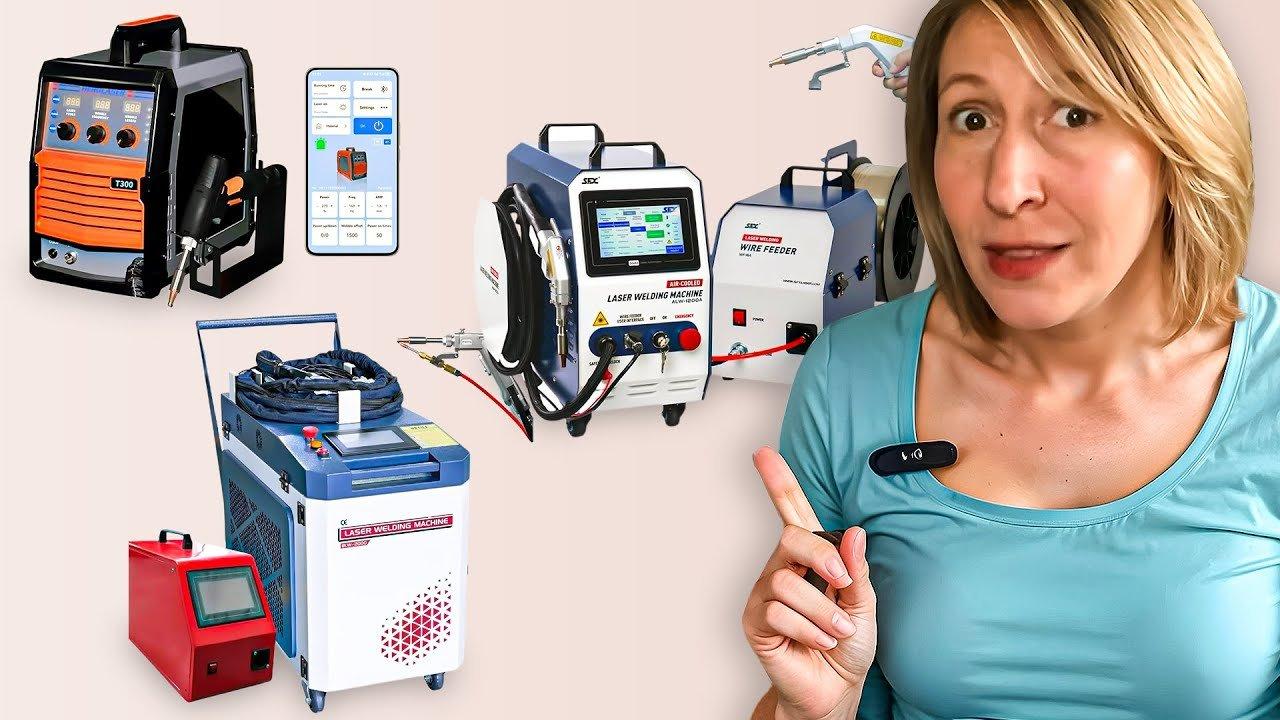

How Handheld Laser Welding Machine Technology Is Making Difficult Repair Jobs More Practical
Not every welding project begins with a clean workbench and a perfectly prepared component. Repair technicians often deal with machinery that is already assembled, damaged parts that cannot easily be removed, or metal structures that are too large to move into a conventional welding area. In these situations, access can become just as important as welding performance. A handheld laser welding machine offers a different approach by allowing the welding process to be brought closer to the component instead of always requiring the component to be transported to a fixed station.
Repair work also creates a different set of challenges from standard manufacturing. A replacement component may need to match an existing structure, an old assembly may have limited access, or a damaged section may require careful restoration rather than complete replacement. The technician has to consider the condition of the existing metal, surrounding components, available space, and the required finish. Modern welding equipment can support this type of work, but only when the technology is selected and operated according to the specific repair requirements.
The growing interest in portable and handheld welding solutions therefore reflects a broader change in industrial maintenance. Businesses are increasingly looking for ways to reduce unnecessary dismantling, improve access to difficult areas, and make repair operations more adaptable. The technology does not remove the need for skilled technicians, but it can change how certain repair challenges are approached.
When Moving the Component Is the Biggest Problem
Large metal structures can be surprisingly difficult to relocate. Industrial frames, machinery housings, storage equipment, architectural components, and heavy assemblies may require cranes, additional workers, or partial dismantling before they can reach a welding station. Every additional handling step introduces time and logistical complications.
A handheld welding setup can provide another option when the component can remain in position. Instead of reorganizing the entire workspace around the damaged part, the technician can establish a controlled working area around the component. This can be especially useful for maintenance environments where equipment downtime needs to be carefully managed.
Repair Work Requires Careful Assessment
Before welding begins, the damaged area needs to be examined properly. A visible crack or broken section may not reveal the full extent of the problem. Corrosion, previous welds, contamination, deformation, or hidden structural damage can all affect the repair strategy.
This makes inspection an important part of the process. Technicians need to understand what caused the failure and whether welding is an appropriate solution. Simply adding a new weld over a damaged area does not necessarily restore the original performance. The repair method should match the condition and function of the component.
Access Can Influence the Entire Repair Process
Some welding jobs are difficult not because the joint itself is complicated, but because the operator cannot comfortably reach it. Corners, narrow sections, internal frames, machinery components, and awkwardly positioned assemblies can limit the available working angle.
A handheld system can provide more freedom in how the operator approaches the joint. This can make certain difficult locations more accessible than they would be with a rigid setup. However, accessibility should never be confused with unrestricted operation. The area still needs to provide sufficient visibility, operator control, ventilation, and safety clearance.
Less Dismantling Can Simplify Maintenance
Industrial repairs can become expensive when a small damaged component requires extensive dismantling. Removing guards, panels, connected equipment, or surrounding structures may take considerably longer than the actual welding operation.
When the repair can safely be performed without removing the entire component, a more flexible welding system may help reduce unnecessary preparation. The benefit is not simply measured in welding time. It can also involve reduced handling, fewer disconnected components, less workspace disruption, and faster return of equipment to service.
Whether this is possible depends entirely on the repair situation. Some components will still need to be removed for inspection or safety reasons, and technicians should never compromise access or protection simply to avoid dismantling.
Heat Control Matters During Repairs
Repair welding often takes place near existing welds, finished surfaces, or components that should not be exposed to unnecessary heat. Excessive thermal input can contribute to distortion or affect nearby areas.
Laser welding technology is known for concentrating energy into a relatively controlled area, which can be useful in applications where managing heat is important. The actual result depends on machine settings, material properties, joint design, and operator technique. Careful testing and parameter selection remain necessary when working on valuable or sensitive components.
Restoring Appearance Can Be Part of the Job
Some repairs are performed on components that remain visible after installation. Metal furniture, architectural structures, stainless steel equipment, display fixtures, and finished commercial products may require both functional repair and acceptable visual results.
A repair that is structurally sound but leaves extensive visible marks may still require additional work. Controlled welding can help reduce unnecessary surface damage in appropriate applications, although post-weld cleaning or finishing may still be required depending on the material and expected appearance.
Repair Technicians Need More Than Welding Skill
Modern equipment can provide precise control, but successful repair work depends on broader technical knowledge. The operator needs to understand why the component failed, how the material behaves, what type of joint is appropriate, and whether the repair will restore the required function.
This is particularly important when working on machinery or structural components. A technician should not treat every crack, break, or damaged section as a simple welding problem. Inspection, measurement, preparation, and verification all contribute to a responsible repair process.
Useful in Maintenance Departments
Factories and industrial facilities often have their own maintenance teams because waiting for an external repair service can extend equipment downtime. Having suitable welding equipment available can give trained technicians another option when dealing with compatible repair tasks.
A handheld system can be attractive in such environments because maintenance work is rarely limited to one type of component. The same team may work on frames, covers, brackets, machine housings, fixtures, and other metal parts. A flexible tool can therefore become part of a wider maintenance toolkit rather than being dedicated to one repetitive manufacturing process.
Workshops With Limited Floor Space
Not every repair workshop has the space for multiple large welding stations. Smaller businesses may need equipment that can be stored efficiently and brought into a prepared work area when needed.
This can make handheld technology relevant to compact workshops. Instead of permanently allocating substantial floor space to a large fixed arrangement, businesses can organize their workspace around the jobs being performed. The machine still requires suitable operating conditions, but its format can make space planning more flexible.
Supporting Emergency and Time Sensitive Repairs
Some repairs cannot wait for a convenient production window. A machine breakdown may interrupt operations, or a damaged metal component may need attention before the next scheduled production cycle. In these situations, repair teams often focus on restoring functionality as efficiently as possible while maintaining proper safety and quality standards.
Flexible welding equipment can become useful when the damaged component is difficult to transport or when a fixed workstation would require unnecessary preparation. The objective should still be controlled and properly assessed repair work rather than simply completing the weld as quickly as possible.
Choosing the Right Machine for Maintenance Work
Maintenance teams should evaluate welding equipment according to the materials and repairs they actually encounter. Important considerations can include compatible metals, thickness ranges, control options, operating environment, accessories, safety requirements, and available technical support.
The machine should also fit the skill level of the team. Training, manufacturer guidance, maintenance procedures, and access to replacement components can influence how useful the equipment becomes over time. A technically advanced machine is only valuable when the team can operate and maintain it correctly.
The Future of Flexible Metal Repair
Industrial maintenance is gradually becoming more focused on reducing unnecessary downtime and making better use of available resources. Repair teams are looking for tools that allow them to respond to problems without automatically moving every component through a lengthy repair process.
A handheld laser welding machine can support this direction by bringing a modern welding process into situations where mobility and access are important. Its value is particularly relevant when large components, restricted spaces, repair requirements, and limited workshop capacity make conventional arrangements less convenient.
Conclusion
Repair welding is fundamentally different from repetitive production welding because every damaged component brings its own conditions and limitations. The ability to reach the work area, understand the existing material, control the process, and minimize unnecessary disruption can all influence the success of a repair.
Handheld laser welding technology provides another option for technicians working in these environments. It can support repairs involving difficult access, large components, maintenance departments, and compact workshops when the application is suitable. The strongest results still come from combining appropriate equipment with careful inspection, proper preparation, operator training, and responsible safety practices.
Frequently Asked Questions
Can handheld laser welding be used for machinery repairs?
It may be suitable for certain compatible metal repair applications, depending on the material, damage, component design, and machine capabilities. The repair should be assessed before welding begins.
Why is handheld equipment useful for large components?
Large components can be difficult or expensive to move. A handheld setup can allow the operator to work closer to the component when the repair environment is suitable.
Can laser welding reduce the need for dismantling?
In some situations, it may reduce unnecessary dismantling because the welding equipment can be brought to the component. However, safety and inspection requirements may still make removal necessary.
Is heat control important during repair welding?
Yes. Excessive heat can affect surrounding material and contribute to distortion. Suitable parameters and operator technique are important for controlling the welding process.
Does repair welding require special preparation?
Yes. The damaged area should be inspected, cleaned, prepared, and assessed before welding. The appropriate repair method depends on the component and the nature of the damage.
Can small workshops use handheld laser welding equipment?
Potentially. Its compact and flexible format can be useful where floor space is limited, provided the workshop can meet the required safety, electrical, ventilation, and operating conditions.
What should maintenance teams consider before purchasing?
They should examine the metals and thicknesses they commonly repair, expected workload, accessibility requirements, operator training, safety arrangements, maintenance support, and the machine's compatibility with their actual repair tasks.