

What Is a Riser Desk? A Complete Guide to Standing Desk Converters
If you've spent any time researching home or office ergonomics, you've probably come across the term "riser desk." It's one of the simplest, most affordable ways to break up long stretches of sitting — and it's become a go-to solution for remote workers, students, and anyone who spends hours in front of a screen.
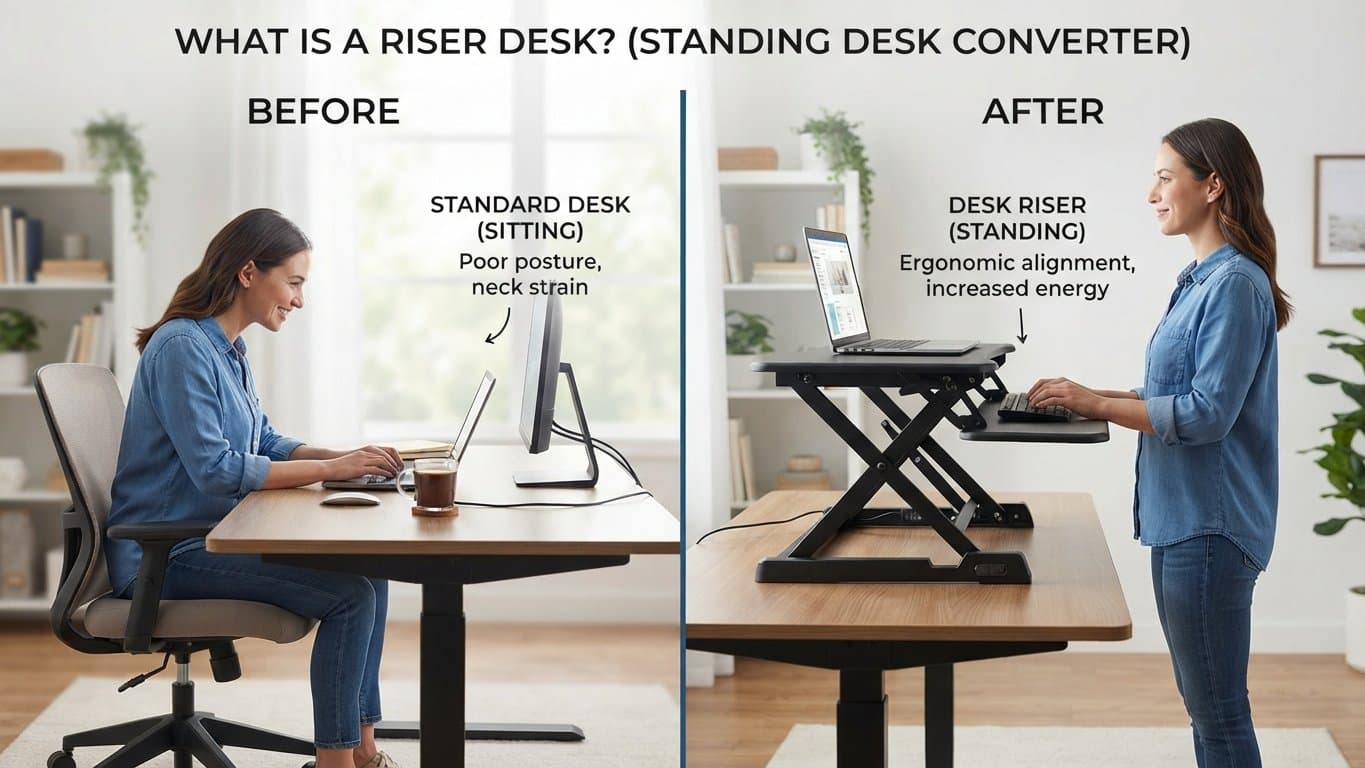
A riser desk is a raised platform or frame that sits directly on top of an existing desk or table. It lifts your monitor, keyboard, and mouse up to a comfortable standing height, letting you switch between sitting and standing without buying a brand-new desk. Most models adjust up and down, so you can move from a seated position back to sitting whenever you want a break from standing.
Unlike a full electric standing desk — which replaces your entire desk and adjusts the whole surface — a riser desk works with the furniture you already own. That makes it a popular first step for people who want the health benefits of standing more often without the cost or hassle of a full desk replacement.
How Does a Riser Desk Work?
Most riser desks fall into a few common categories:
Manual crank or lever risers – You turn a handle or pull a lever to raise or lower the platform. Simple, durable, and usually the most affordable option.
Pneumatic or spring-assisted risers – A gas spring helps lift the platform with minimal effort; you release a lever to adjust height.
Electric risers – A motor raises and lowers the desk at the push of a button, often with memory presets for your preferred sitting and standing heights.
Single-tier vs. two-tier designs – Single-tier risers lift everything on one flat surface. Two-tier designs put your keyboard and mouse on a lower shelf and your monitor on a higher one, which often creates a more ergonomic typing angle.
Why People Use a Riser Desk
1. Reduces prolonged sitting. Extended sitting has been linked to poor posture, back and neck strain, and general low energy throughout the day. A riser desk makes it easy to stand for part of your workday without disrupting your setup.
2. Improves posture and comfort. Many risers let you position your monitor at eye level, which reduces the neck and shoulder strain that comes from hunching over a laptop.
3. Boosts energy and focus. Alternating between sitting and standing can help reduce the mid-afternoon sluggishness that comes from staying in one position too long.
4. Budget-friendly. A riser desk typically costs a fraction of a full electric standing desk, making it an easy entry point for anyone curious about a sit-stand routine.
5. No installation or desk replacement needed. Since it sits on top of your current desk, setup usually takes just a few minutes — no tools, no rearranging your office.
What to Look for When Choosing a Riser Desk
Weight capacity – Make sure it can support your monitor(s), keyboard, and any accessories with room to spare.
Height range – Check that the platform raises high enough for your height and lowers enough to sit comfortably.
Desk space required – Some risers are compact for small desks; others need more surface area.
Stability – Look for reviews mentioning wobble at full height, especially if you type frequently while standing.
Monitor setup – If you use dual monitors or a monitor arm, confirm the riser's surface and weight limit can handle it.
Adjustment mechanism – Decide whether a manual crank, spring-assist, or electric motor fits your budget and how often you plan to switch positions.
Tips for Using a Riser Desk Effectively
A riser desk works best as part of a routine, not an all-or-nothing switch:
Start with 20–30 minutes of standing per hour and build up gradually.
Keep your elbows at roughly a 90-degree angle and your monitor at eye level.
Use an anti-fatigue mat if you'll be standing on a hard floor for extended periods.
Alternate between sitting and standing throughout the day rather than standing continuously — comfort and circulation matter more than "standing all day."
Final Thoughts
A riser desk is one of the easiest upgrades you can make to a home or office workspace. It offers many of the ergonomic benefits of a full standing desk — better posture, more movement, and improved focus — at a lower cost and without replacing your existing furniture. Whether you're working from home, managing a small office, or just looking for a healthier way to get through the workday, a riser desk is a practical place to start.