




Sophia Harnew-Spradley
Contributing Writer
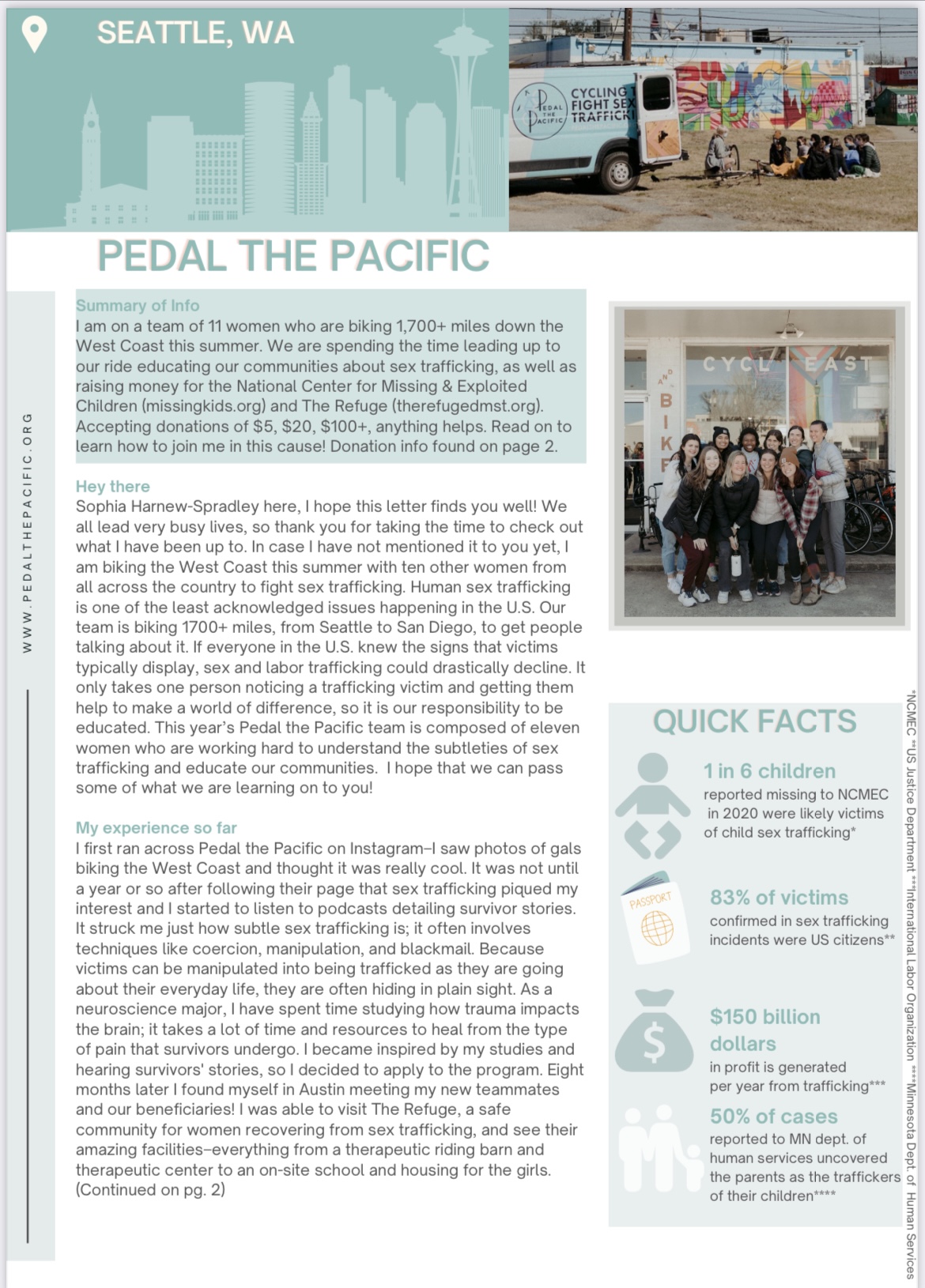
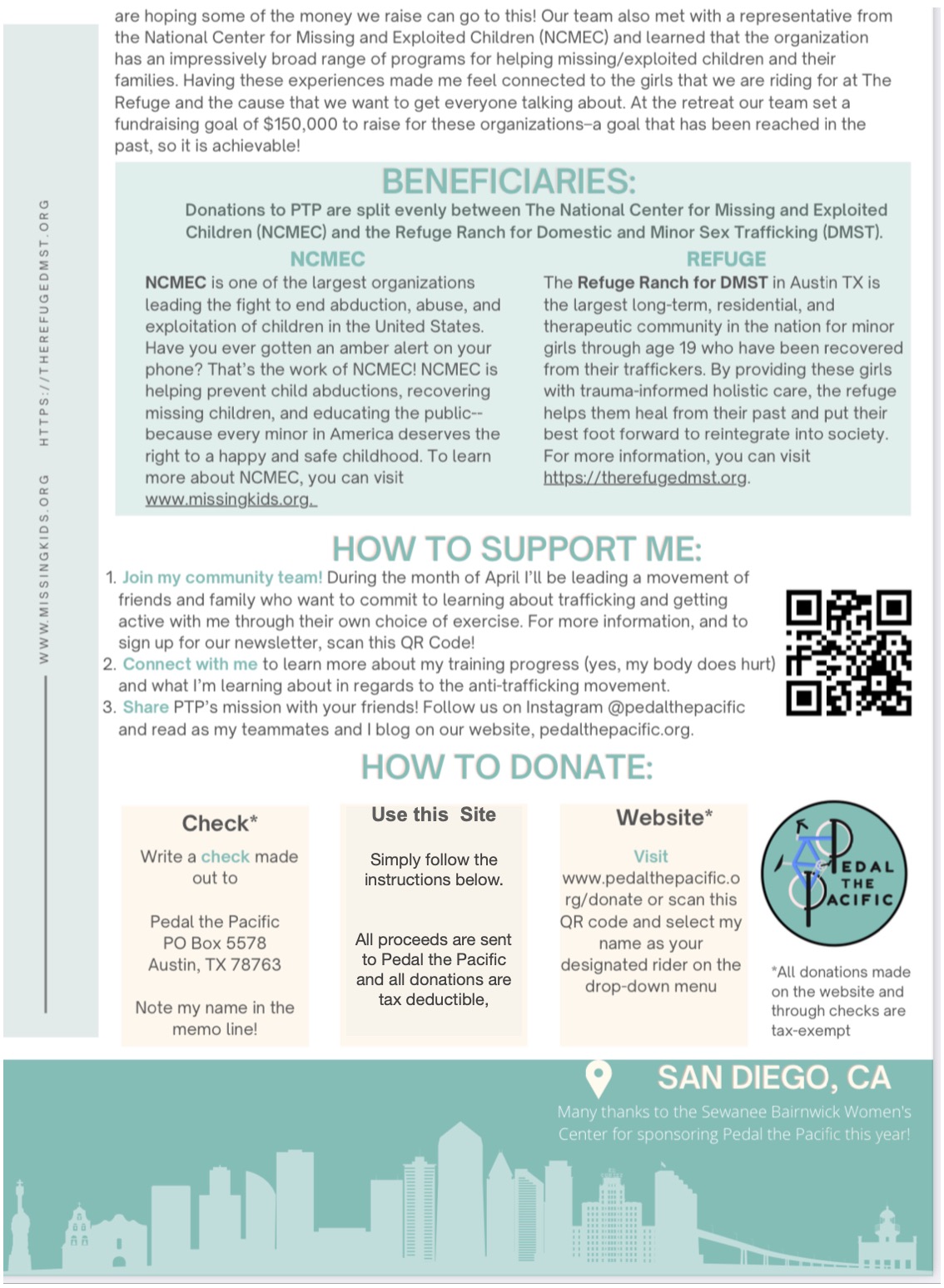
This summer, I will be biking with a team of 11 women down the West Coast to raise money and awareness to fight sex trafficking. Our team has spent the last 4 months educating ourselves on what sex trafficking looks like.
If you had asked me a few years ago what sex trafficking looks like in the U.S., I would not have had a specific answer; like many Americans, I thought being sex trafficked was some sort of dramatic and obvious event. Like a young girl going for a run in the evening and being abruptly snatched off the streets. Many people think of conspiracies like Pizzagate and Wayfair, of underground criminals plotting intricate ways to exploit children. In reality, less than 10 percent of trafficking victims are kidnapped, and victims often know their traffickers before they are trafficked, according to The Polaris Project. Often they are even being trafficked by a family member or boyfriend.
One of the biggest takeaways our team has had is that traffickers prey on the human need to feel loved. When I listen to survivors’ stories, they often talk about how they were a child running away from an abusive family, a woman living in poverty, someone living with a disability, a minority being pushed to the edge of society and taught that they were not worthy of love. Traffickers target individuals who are in need of acceptance and support. For example, for a runaway, child traffickers might offer shelter, stability, and even the semblance of family life. For a woman coming out of an abusive relationship, a trafficker might buy her nice dinners, get her nails done, “take care of her” like he is her boyfriend. This process is called grooming: traffickers fill whatever need they see in their targeted individuals, gain their trust, and manipulate them into dependence. They take care of their victim in a way that keeps them from leaving, while slowly working toward getting the victim to do favors to make the trafficker money.
This method is what makes sex trafficking hard to pin down in the U.S. – often the individual being targeted does not realize that they are a victim. According to statistics from the National Center for Missing and Exploited Children (NCMEC), 1 in 6 children who run away from home likely end up in sex trafficking, and that is only when we take into account the children who have been reported missing to NCMEC. There are plenty of children who are never reported to NCMEC, and there are many people trafficked who are not children.