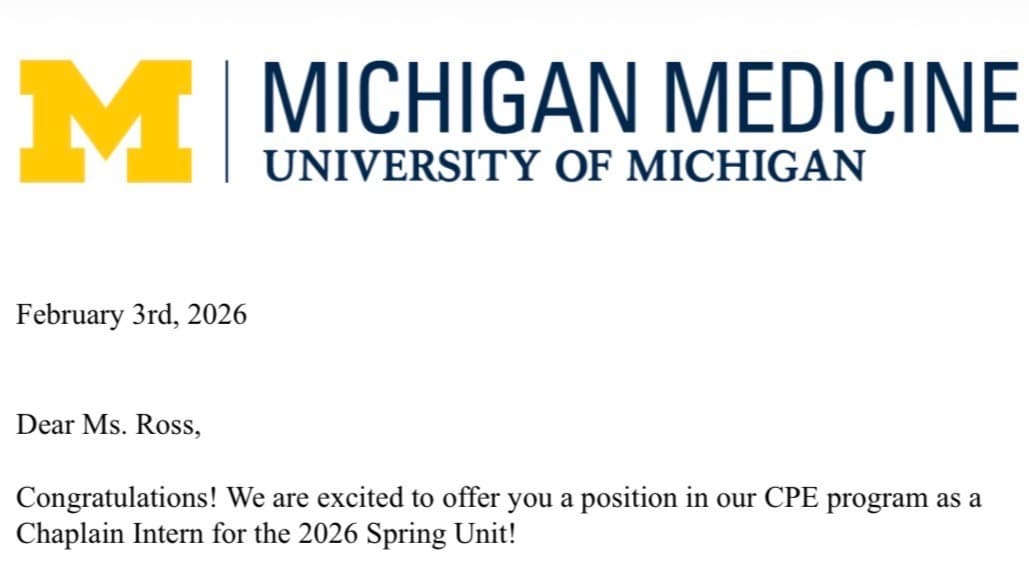



Hi. I’m Jamie and I need your help in order to become an Intern Chaplain at University of Michigan Health (U-M Health) in Ann Arbor, Michigan, starting the first week of March, 2026. You read that right—in just a few weeks. I only received notice of my acceptance on February 3, so things are moving quickly. Read on to learn about this vocation, the journey I took to get here (including my recovery from a Traumatic Brain Injury), and how you can help, because my ability to become a chaplain relies entirely on your financial support.
About Me and My Traumatic Brain Injury
It’s been quite a journey to get to this place in my life. I grew up Mennonite near the Ozarks, worked with local churches in Central Asia, served as an administrator at an Interfaith School in Israel and Palestine, completed my Master of Divinity, and then became Co-Editor of a peer-reviewed theological journal. I was also an athlete. In 2017, however, that all changed when I had a bicycle accident and suffered a Traumatic Brain Injury (TBI). In a flash I was thrust from being at the peak of my career and personal life into an unfamiliar place. Not only did I spend years focusing on my physical recovery, but then also had to navigate what I perceived as a new identity. Trying to find meaning and value when I could no longer be a good friend or spouse, work to pay the bills, or really produce anything of value was a difficult and lonely experience. It took me a very long time to realize that my worth comes not from what I produce or have to offer others, but because I exist. While I do not believe that all of this happened for a reason, I do believe that God is giving me the opportunity to use this journey and what I learned so I can be of service to others. A dear friend sensed that I should consider chaplaincy and I realized she was right. So here I am.

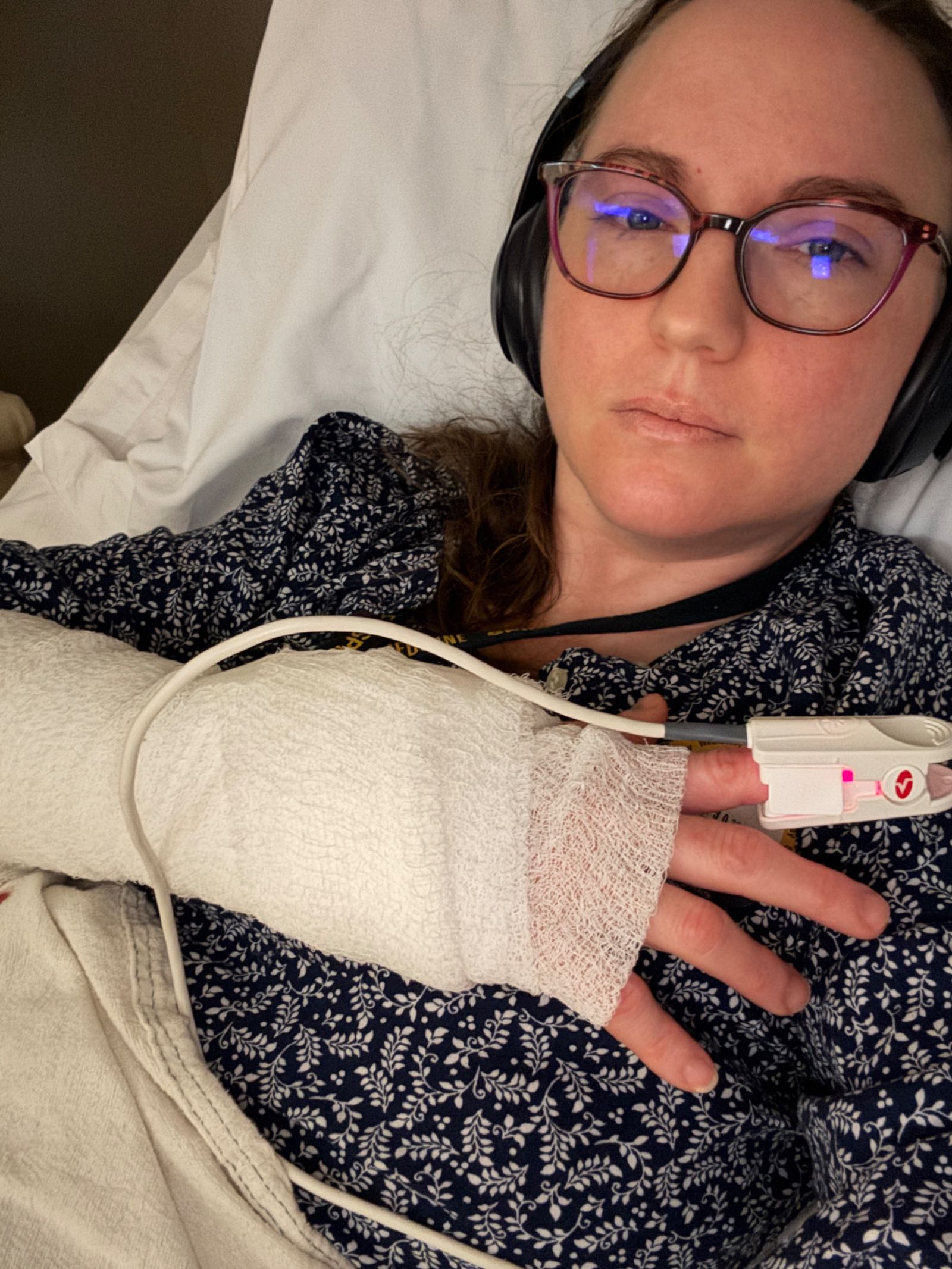
Just a few hours after my bicycle accident and Traumatic Brain Injury—after I was conscious and cleaned up, but before the swelling set in.

A journal entry made a week after my TBI reads: "Sunday, October 24. I was in a bad accident. My right hand is broken and I am suffering from a concussion. Learning to be still and rest is very difficult, but I must learn."
What's a Chaplain?
“What’s a chaplain?” you might ask. Good question. Chaplains offer spiritual care to all patients, their families and caregivers, and staff, and reflective of the diverse spiritual and religious traditions they honor. We assist people of all faiths and no faith as they face life and death. In the midst of a medical team caring for a person's body, someone needs to be available to assist with the emotional and spiritual side effects, and that’s where a chaplain steps in. U-M Health is enormous and has entire wards that do not yet have chaplains The difference between some patients having access to on-site spiritual and emotional care depends on growing their team of chaplains and continuing to offer training for those new to the job. You can help make this happen.

An image painted on a wall at Mar Elias Educational Institutions—the interfaith school I worked at near Nazareth.
Why I Need Your Help
Almost all chaplains must complete at least a minimum of one unit of what is called Clinical Pastoral Education (CPE). CPE at U-M Health is an interfaith program that takes place during or after the completion of a Master of Divinity, which I finished 2012. I and few other chosen Intern Chaplains will engage in clinical work with additional time dedicated to deep theological- and self-reflection for 25 hours a week for 26 weeks. Though I will make rounds with patients throughout the week (and independently), this position is unpaid until hopefully hired as a full-time Resident Chaplain in September. But therein lies the problem. I’m not sure about you, but even after I secure a part-time job, I still can’t afford the cost of the move from Illinois, tuition, the high cost of living in Ann Arbor, and the ability to work and train half-time for six-months. Student loans do not cover this type of professional training so I need your help. My ability to become a chaplain depends entirely on your financial support. Will you consider donating?
How You Can Help
Below you will find a breakdown of expenses needed for the move and the first two weeks as I settle in to Ann Arbor. If we can meet that goal, then there is an extended goal that will help—assuming I work a second job—ensure that I can pay the bills through the remainder of the program until completion in August.
This page will remain active throughout my time as an Intern Chaplain. Though my initial goal of $4,895 is needed immediately, the other expenses are ongoing from the start of March through the end of August. Will you donate $25 now and then $25 each month thereafter?
While still honoring HIPPA, I will post updates and photos to this page throughout my internship so that you can see the impact of your donation. Please join me on this journey and give now at the link provided. I'm grateful for any help you can offer.
Learn More
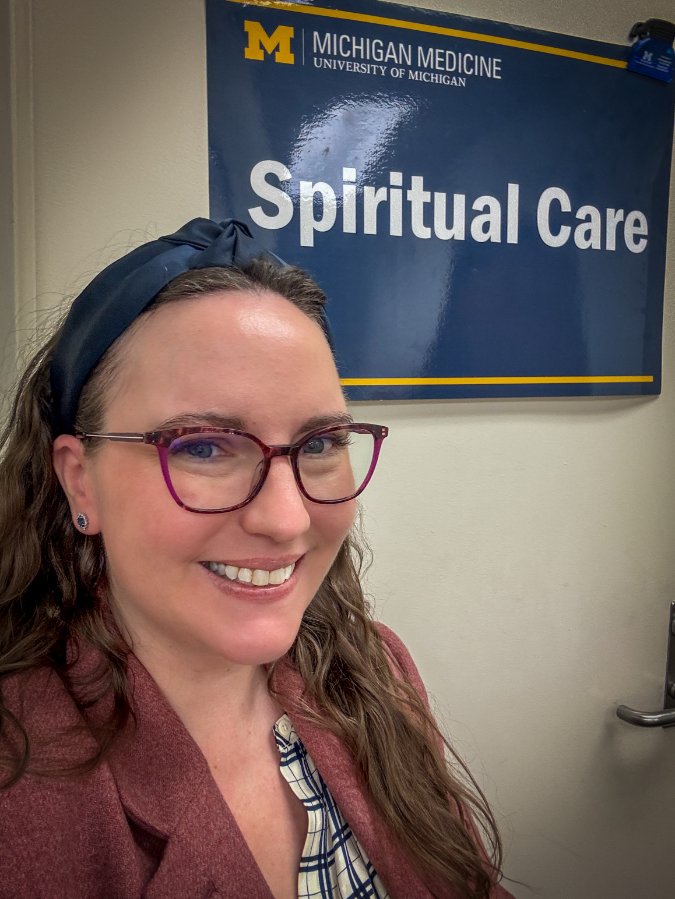
Learn more about University of Michigan Health’s Department of Spiritual Care at:
University of Michigan Health Department of Spiritual Care
------------------------
Financials
Initial Goal: $5,000
- $550 tuition due immediately.
- $3,000 for moving expenses.
- rental truck
- rental trailer
- gas
- return gas and rental for my friend who helped me move
- and other related moving expenses like tolls, unexpected fees, packing materials, and etc.
- $1,450 to get me settled in Ann Arbor while I look for a part-time job to help offset costs.
Secondary Goal, starting April 1: $13,750
- This assumes I work a part-time job at 20 hours a week, leaving me with 25 hours per week of unpaid work and training as a Chaplain Intern. The first four weeks will be covered by the initial fundraising goal, leaving 22 weeks of working as an Intern without any income.
- $25 per hour is considered the cost of living in Ann Arbor for a single person with no dependents. This amount will still require that I find a roommate or other creative housing arrangement in addition to holding a part-time job.
- Because I cannot drive due to the long-term consequences of my TBI, I must live within walking distance or a short Uber distance from the hospital. The further away I live, the cheaper the rent, but then my transportation costs will go up dramatically.

The two loves of my life, Peaty and Oban.