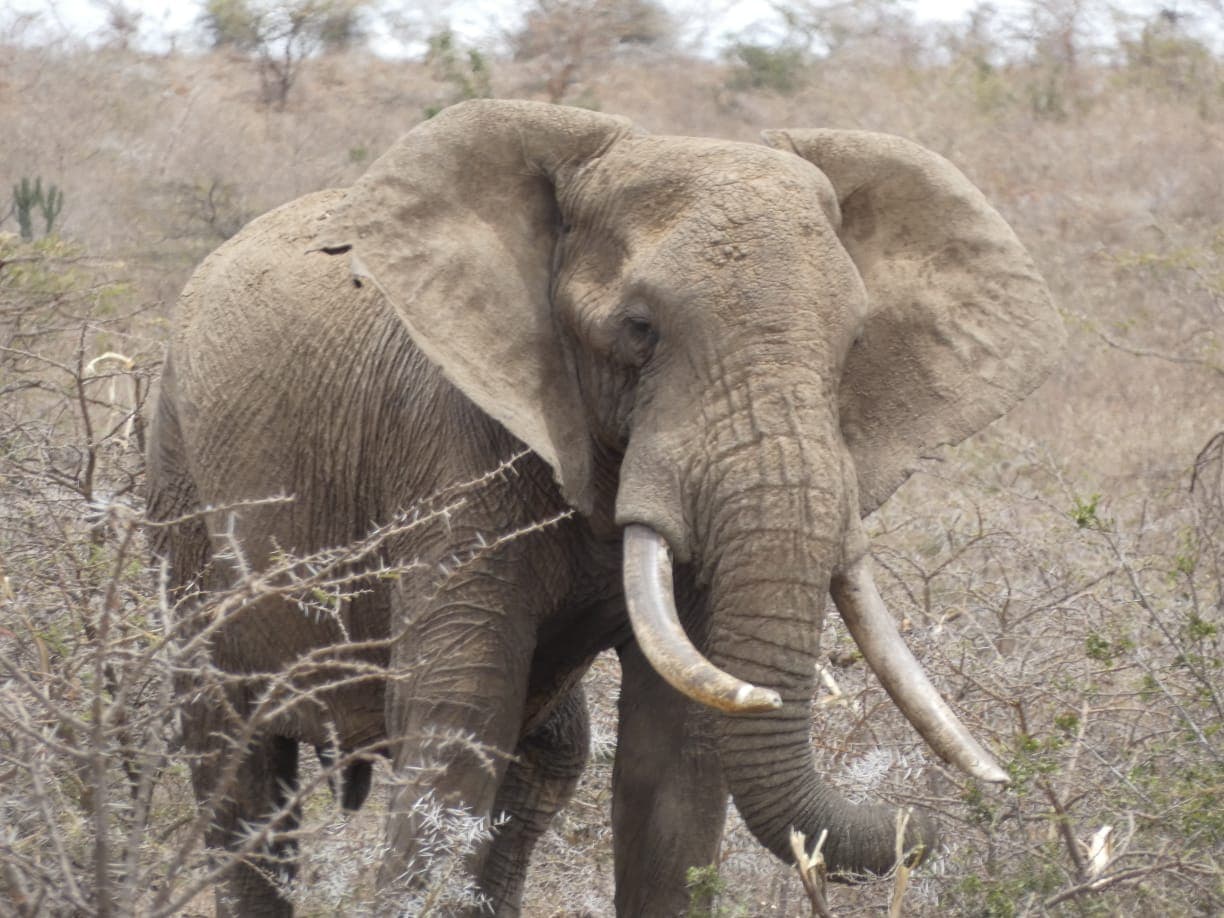


Mrefu is a male first identified in Suyian. His name translates to “tall one”, attributed to the fact that he is the tallest bull amongst all known elephants in Laikipia. His estimated date of birth is 1980.
Identifying features:
- Appears taller than most elephants
- Both tusks are present: right tusk is worn while the left tusk is broken at about three-quarters of the length
Space for Giants Human/Elephant Co-Existence program ensure Popote is kept safe by specialist electric fences that protect his natural landscape whilst simultaneously deterring him from land that is inhabited by local people and their crops.
CLICK A SPONSOR PACKAGE BELOW TO SUPPORT MREFU WITH A MONTHLY DONATION
CHARGE | $10 per month - ($120 a year)
- Monthly smart phone charges to record crop raiding incidents
REPAIR | $25 per month - ($300 a year)
- Monthly repairs of flat tires
GAS | $50 per month - ($600 a year)
- Monthly gas for motorbike
TRACK | $100 per month - ($1200 a year)
- Monthly costs to track the elephant
SCOUT | $500 per month - ($6000 a year)
- Monthly salary of 1 scout to monitor this elephant
ONE OFF DONATION OPTIONS
- Buys a new camera for scout monitoring elephants
- Pays for 2 years of satellite tracking data coverage
- Pays for a replacement collar
- Support the program with a one-time donation of any amount!
ABOUT SPACE FOR GIANTS
Africa's landscapes are changing rapidly, and as human populations increase farmers and wildlife are increasingly coming into conflict as their worlds and needs collide. In some parts of Africa, such as in northern Kenya, Human-elephant conflict is now the leading cause of elephant mortality today, devastating local livelihoods as well as undermining support for broader conservation efforts. The management of human-wildlife conflict poses a major challenge for the future survival of many species of large mammals, particularly for elephants in Africa.
With people and wildlife increasingly sharing these natural spaces, we need to move from conflict to coexistence. There are a range of tools that have been experimented with to address the complexity of this problem. Based on over 15 years of experience in researching and understanding human-wildlife conflict in rural Africa, Space for Giants' approach is focused on landscape-level interventions, using land use planning, electrified fences and intensive monitoring of those elephants responsible for crop-raiding behavior.
In northern Kenya's Laikipia region, Space for Giants has collared approximately 50 elephants in the past 10 years, many of whom were and are crop-raiding elephants. The data provided by this intervention has been instrumental for understanding elephant behavior, movement strategies in increasingly human dominated landscapes and to evaluate the performance of electrified fences to reduce conflict with farmers.
Bull elephants live lives of great adventure but also great risk. Young male elephants are ejected from the matriarchal herd once they reach sexual maturity after which they seek out more experienced bulls to latch onto. In time bachelor groups are created and depending on the leaders within those groups they can end up having very interesting lives. Some bulls are risk-takers and have developed very clear habits that place them in danger, such as crop raiding. There is a very real chance that the elephant could be injured or killed while crop raiding by farmers protecting their crops, but if he succeeds then he will have a very nutritious meal in the form of maize, tomatoes, onions and watermelons.
Currently, there are a number of bull elephants who are repeatedly targeting farms with ripe crops. Space for Giants employs local scouts to monitor these individuals and track them on a daily basis reporting their movements to the local authorities so that they can intervene before they crop raid. They also identify weaknesses in electric fence alignments and report these to our electric fencing Department to make the necessary fixes. Without funding - keeping these scouts mobile on the ground and keeping these elephants alive is extremely challenging and we need your support.