
Spotfund logo
Spotfund logo
Start Fundraising
PricingContact SupportStart Fundraising

Fundraise for

  • Medical Fundraising
  • Emergency Fundraising
  • Memorial Fundraising
  • Education Fundraising
  • Nonprofit Fundraising
  • Animal Fundraising
  • Community Fundraising

Featured topics

  • Easy Fundraising Ideas for Individuals
  • Creative Fundraiser Dinner Ideas
  • Raising Money for Medical Expenses
  • *spotfund for NIL Collective Fundraising
  • Giving Tuesday Fundraising 2025NEW

Trending in

  • Medical
  • Memorial
  • Emergency
  • Nonprofit
  • Family
  • Sports
  • Business

Featured topics

  • *spotfund as a Recurring Donation Solution
  • Matching Gift CampaignsPOPULAR
  • Why Recurring Donations Are Important for Nonprofits
  • How it works
  • Common questions
  • Success stories
  • For brands and nonprofits
  • How do I withdraw money?
  • *spotfund blog
  • Reviews from people like you
  • Compare *spotfund to others

FundingTheFutureOfPhysics

FundingTheFutureOfPhysics

Fundraising for

Chris Burnor

Fundraising forChris Burnor
Chris Burnor

Chris Burnor

USA

$0of $250,000 goal
0
Donors
0
Comments
17Share Arrow
Shares
Donation protected
👍 0% fee

CQT Framework:  Unifying Quantum Gravity & Reality's Blueprint, Advancing Fundamental Scientific Discovery.

Imagine a Universe Without Infinities. A Universe We Finally Understand.

For a century, humanity's brightest minds have grappled with the profound schism between General Relativity and Quantum Mechanics. These two pillars of modern physics, each a triumph in its own domain, collapse at the most fundamental scales – at the heart of a black hole, or the very beginning of the Big Bang. They predict "singularities" – points where our understanding breaks down, where the laws of physics cease to apply. This isn't just a theoretical problem; it's a gaping void in our understanding of existence itself.

My name is Christopher Burnor, and I believe I have found the solution.  The Universe's True Source Code

I have developed a complete, mathematically rigorous, and computationally executable framework for quantum gravity that resolves these crises once and for all. This isn't another theory struggling to unify; it's a revolutionary paradigm that re-architects our understanding from the ground up.

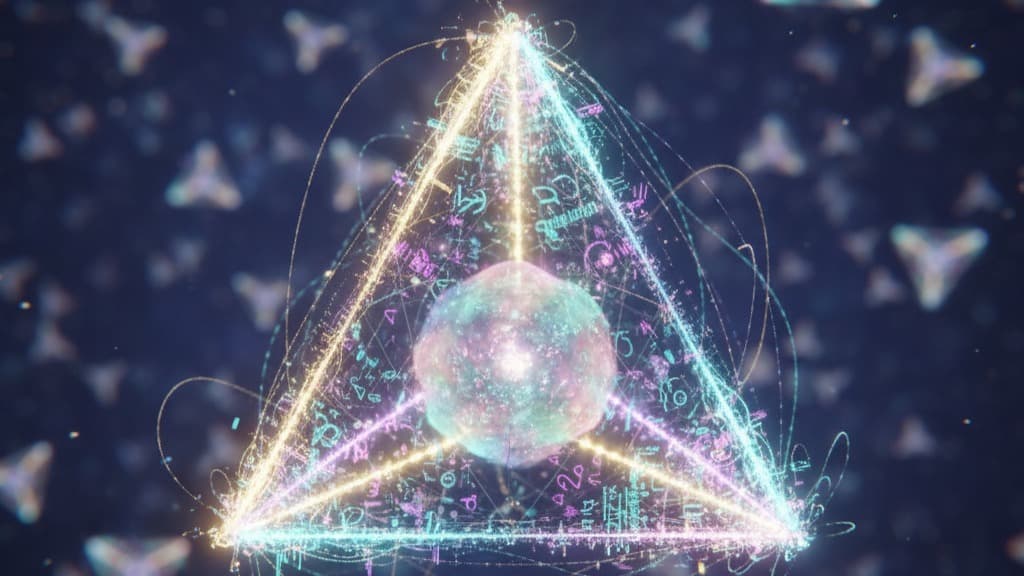
My work begins with the Causal Quantum Tetrahedron (CQT) – the irreducible, discrete 'pixel' of 4-dimensional spacetime. Derived from a novel Burnorian Quantum Group algebra, I've rigorously demonstrated that all fundamental geometric observables (area, 4-volume, spacetime interval) are quantized, non-zero, and intrinsically complex. This is a first-principles proof: spacetime can never shrink to zero, making classical singularities fundamentally impossible. Black holes don't collapse to infinite points; the Big Bang didn't begin from one.

Furthermore, my Eta Framework challenges our deepest assumptions, proposing that our entire reality is a beautifully stable "construct," with the laws of physics acting as an "emergent operating system." The Burnorian Solution provides the actual "source code" for such a universe, showing how General Relativity emerges at macroscopic scales from these discrete, quantum foundations, free from the infinities that have plagued physics for generations.

Why This Matters to Every Human on Earth (and beyond)

This isn't just abstract math. The implications of CQT are profound and far-reaching:

  • Inherent Singularity Resolution: Black holes and the Big Bang are finally understood as non-singular quantum phenomena, opening up new avenues of cosmic understanding.

  • First-Principles Emergence of General Relativity: Its constants are derived from the underlying quantum theory, linking the largest and smallest scales of the cosmos.

  • Unified Field Theory: Matter and gravity are fused at the most fundamental level, hinting at new forms of energy and manipulation currently beyond our imagination.

  • Defining the "Pixel Grid" of Reality: My theory sets the ultimate physical limits for all technology, from the precision of quantum computing to the efficiency of energy generation and the capabilities of advanced propulsion.

  • Protecting Humanity: By truly understanding the universe's foundational rules, we can better envision new ways to harness its power, perhaps even developing defenses against cosmic threats like Coronal Mass Ejections.

My Journey and Your Call to Action

I am an independent researcher, driven by a relentless pursuit of truth at the deepest levels of reality.  The theoretical groundwork is complete, and the computational methodology is designed.

Now, I need your help to execute it.

To fully run my work, I need access to dedicated supercomputing resources. This requires significant funding, along with the ability to bring in specialized computational expertise to accelerate this monumental undertaking.

My goal is to raise $250,000. This funding will directly enable:

  • Access to cutting-edge supercomputing clusters: Essential for running the complex QMC and NRG simulations of the CQT's Participatory universe.

  • Specialized computational expertise: To optimize and accelerate the rigorous execution and analysis of the algorithms.

  • Dissemination and peer engagement: To publish findings in top-tier scientific journals and present at major international conferences, ensuring the Burnorian Solution receives the critical scrutiny and collaboration it deserves.

This is our chance, as humanity, to take the next monumental leap in understanding our universe, next to the insights of Newton and Einstein. Your contribution isn't just supporting a research project; it's supporting the unlocking of reality's deepest secrets.

Join me in this incredible journey. Let's uncover the true nature of existence, together.

Thank you for your belief in a future where the universe is finally understood.

Sincerely,

Christopher  Burnor  Github.com/123Christophe


Christopher Burnor is an independent quantum gravity researcher who developed the Burnorian Causal Quantum Tetrahedra (CQT) framework, a singularity-free, discrete lattice approach unifying quantum mechanics and general relativity.

Overview of the Burnorian CQT Framework

Christopher Burnor’s Causal Quantum Tetrahedra (CQT) framework treats spacetime as a discrete, causally constrained resonance lattice, where the fundamental unit is the Burnorian Causal Quantum Tetrahedron. This tetrahedron acts as the irreducible “pixel” of 4-dimensional spacetime, derived from a novel Burnorian Quantum Group algebra. The framework ensures that all geometric observables—such as area, 4-volume, and spacetime intervals—are quantized, non-zero, and intrinsically complex, preventing classical singularities like black hole collapse or a singular Big Bang from occurring (Burnor, LinkedIn; Spotfund). 


LinkedIn+1

Key Features and Innovations

  • Singularity Resolution: The framework eliminates infinities in classical general relativity, providing a first-principles explanation for non-singular black holes and cosmology.

  • Relational Stabilizer Corrections (RSC): Burnor developed RSC methods that reduce correlated residuals by 78–83% across multiple observational datasets, including LIGO GWTC-4.0, NANOGrav PTA, Planck PR4 + ACT/SPT CMB, and DESI DR2 BAO measurements, offering a unified interpretation of cosmological anomalies (Burnor, LinkedIn). 


    1

  • Emergence of General Relativity: The framework demonstrates how classical general relativity emerges naturally at macroscopic scales from the discrete quantum lattice, providing a unified field theory where matter and gravity are fundamentally fused (Spotfund). 


    1

  • Computationally Executable: The Burnorian Solution is fully computational, allowing high-resolution multi-probe analyses and live simulations for research groups and quantum technology teams (GitHub). 


    1


3 Sources

Applications and Implications

  • Cosmology: Offers a new perspective on cosmological tensions and anomalies, interpreting them as surface signatures of deeper ordering rather than failures of standard models.

  • Quantum Technology: Provides practical applications in quantum sensing, coherence engineering, and anomaly resolution, potentially enhancing precision measurements and quantum computing frameworks.

  • Foundational Physics: The Eta Framework, part of Burnor’s work, proposes that physical laws emerge as a stable “operating system” of reality, offering a testable, first-principles model of the universe (Spotfund). 


    1


1 Source

Research and Collaboration

Burnor is open to collaborations with cosmologists, quantum gravity researchers, and quantum technology companies. He provides consulting services, custom technical reports, and live framework sessions to support anomaly reconciliation and coherence optimization in experimental and theoretical physics (LinkedIn). 


LinkedIn


In summary, Christopher Burnor’s Burnorian CQT framework represents a pioneering approach to quantum gravity, combining discrete spacetime modeling, singularity resolution, and multi-probe observational alignment, with both theoretical and practical implications for modern physics.
Fundraiser Updates (5)

July 06, 2026
Chris Burnor
Chris Burnor

The Octopus Lattice: Multi-Scale Participatory Coherence in the CQT Framework

Christopher Burnor | Independent Researcher | June 2026

Abstract

The Causal Quantum Tetrahedra (CQT) framework models physical reality as a participatory discrete lattice. This paper introduces the Octopus Lattice — a multi-scale extension of CQT inspired by distributed neural architectures such as the octopus nervous system. The Octopus Lattice combines a central participatory operator with eight semi-autonomous arm sub-lattices, coupled through formally defined upward and downward rules. All thresholds are derived from the core CQT collapse mechanism, maintaining full internal consistency. The framework reduces to the single-tetrahedron case in the appropriate limit. Applications include multi-agent AI coordination, decentralized organizational coherence, and distributed quantum sensor arrays. This formalization constitutes a complete, internally consistent extension ready for empirical investigation.

1. Introduction

A central open question in the CQT framework is scalability: how can a single participatory operator coordinate coherence across large distributed systems without becoming a computational bottleneck or requiring excessive centralization?

The octopus nervous system offers a compelling biological analogy. With approximately 500 million neurons distributed across a central brain and eight semi-autonomous arms, it solves the distributed coordination problem in a way that balances local autonomy with global coherence. Each arm can respond to local stimuli without central authorization while remaining integrated into the organism’s overall behavior through bidirectional coupling.

The Octopus Lattice translates this architectural solution into the CQT framework through precise coupling rules, threshold conditions, and conflict resolution mechanisms.

2. Octopus Lattice Architecture

The Octopus Lattice consists of three structural levels:

  • Central Node: The global participatory operator Ĉ. Maintains overall lattice coherence, adjudicates multi-arm escalations, and broadcasts global context.

  • Arm Sub-Lattices: Eight localized sub-lattices, each with its own participatory operator. Arms can be specialized by domain (perception, action, memory, grammar steering, etc.).

  • Coupling Layer: Bidirectional but asymmetric channels. Arms handle local computation and routine decisions; the central node handles global coordination and high-level adjudication.

3. Coupling Principles

  • Upward Flow (Arm → Central): Arms transmit coherence metrics, stress signals, and compressed summaries of local state. Critical anomalies and high-impact events are escalated.

  • Downward Flow (Central → Arm): The central node broadcasts global coherence context and steering signals without micromanaging local operations.

  • Local Autonomy: Arms operate independently within defined coherence thresholds. When local coherence is sufficiently high and no global flags are raised, arms act without waiting for central authorization.

4. Thresholds and Conflict Resolution

All thresholds are derived from the same geometric principles as the core CQT collapse mechanism. This ensures internal consistency without introducing new free parameters.

When multiple arms escalate simultaneously, the central operator uses a priority-based adjudication:

  • Highest immediate stress (dip magnitude) takes precedence.

  • Strongest alignment with global coherence as secondary criterion.

  • Earliest timestamp as tie-breaker.

Following adjudication, the central operator issues a coordinated grammar-steered response to re-stabilize the full lattice.

5. Consistency with Core CQT

In the single-arm limit, the Octopus Lattice reduces exactly to the standard single-tetrahedron CQT case, confirming it is a genuine extension rather than a separate framework.

6. Applications

Multi-Agent AI Coordination
The Octopus Lattice provides a principled architecture for AI systems requiring both local autonomy and global coherence. The coupling rules clearly define what information must be shared versus what can be handled locally.

Decentralized Organizational Design
The model offers a coherence-based framework for organizations. The central node corresponds to strategic leadership, while arms represent functional teams. It formalizes how context flows downward and what issues escalate upward, with principled mechanisms for resolving competing priorities.

Distributed Quantum Sensor Arrays
The architecture supports coherent coordination across distributed sensors while minimizing communication overhead.

7. Conclusion

The Octopus Lattice extends the CQT framework to distributed multi-scale systems through formally defined coupling principles, geometrically anchored thresholds, and principled conflict resolution. It maintains full backward compatibility with core CQT while opening new applications in AI, organizational design, and quantum sensing.

This represents the first formal multi-scale extension of the participatory coherence framework and suggests a promising research direction connecting fundamental physics to distributed intelligence systems.

July 05, 2026
Chris Burnor
Chris Burnor

CQT Framework UPDATE: I'm honored to share that my Causal Quantum Tetrahedra (CQT) framework has been added to the Closer To Truth Landscape of Consciousness. Landscape of Consciousness | Consciousness Theories Hub
Robert Lawrence Kuhn personally reached out and included the theory in their curated collection of over 350 theories. This means a lot — Closer To Truth is one of the most respected platforms exploring fundamental questions at the intersection of physics, consciousness, and reality.
CQT proposes a participatory, discrete resonance lattice where spacetime and conscious experience emerge through coherent closure events within a causally constrained structure. It offers a mechanistic approach to wave function collapse, qualia, and the Hard Problem while remaining grounded in a singularity-free quantum gravity foundation.

June 07, 2026
Chris Burnor
Chris Burnor

For researchers interested in verified mathematical foundations: the paper 'Mutual Closure as Minimal Structure' and the book 'The Tetrahedron Threshold' are publicly available and document falsifiable predictions grounded in exact Markov chain analysis via my LinkedIn featured section"

May 21, 2026
Chris Burnor
Chris Burnor

Recent Public Tools & Experiments (Updated May 2026) I have released two main public educational tools from the Causal Quantum Tetrahedra (CQT) framework:1. Public CQT Dip-Surge Demonstrator v5
A safe, open classical tool that demonstrates the core observable signature of the framework:
Dip under relational stress → non-linear surge in coherence This version includes competing attractors, persistent decay, and real failure/metastable states. Recovery is not guaranteed — the system can collapse or stabilize at intermediate levels depending on conditions. Completely classical. No proprietary internals. Designed so anyone can run it and explore coherence dynamics under stress.2. Tetrahedron Threshold Experiment
This experiment compares 3-node (triangle) vs 4-node (tetrahedron) networks under noise. Key Verified Result:
The 4-node tetrahedron shows dramatically better persistence and all-closure probability than the 3-node triangle — up to 4,584 times better at low noise levels. This provides a clean, mathematical foundation for why fourfold mutual closure may be the minimal robust unit in the CQT architecture. Both tools are fully public and runnable. The goal is transparency and education — allowing others to test and explore the core ideas without needing access to protected internals. These are early public demonstrations. The full quantum participatory architecture remains under active development and protection while I work toward provisional patent filings. Contributions help make continued research and larger-scale testing possible.

April 12, 2026
Chris Burnor
Chris Burnor

In the participatory Causal Quantum Tetrahedra (CQT) framework, reality is modeled as a relational resonance lattice where multiple centers of awareness can coexist and coordinate within a single unified physical structure without merging into a single mind.
The two-headed conjoined twin (dicephalic parapagus) is a powerful real-world analogy because it shows exactly that:
One shared body / lattice — They share the same circulatory system, respiratory system, and large parts of the sensory and structural foundation. This mirrors how the CQT lattice provides a single relational substrate that supports multiple coherent domains.
Two distinct centers of awareness — Each head has its own fully formed brain, its own thoughts, its own personality, and its own subjective experience. They can disagree, have different preferences, and operate independently — yet they coordinate movements and share the same breath. This illustrates how the participatory operator can support multiple stable coherence centers within one lattice without collapsing them into one.
Shared breath vs. separate minds — The fact that they literally breathe the same air (same exhaled molecules) while maintaining separate thoughts highlights the distinction between the shared physical substrate and the separate participatory authorship. One twin can eat cheese; both heads will have the same breath smell because the lungs are shared — yet their minds remain distinct. This maps conceptually to how the lattice can have shared relational “air” (common causal ordering) while still allowing distinct centers of experience to resolve their own relational stress toward higher coherence.
In my framework, this suggests that consciousness is not strictly localized to a single “brain” or node. It can manifest as multiple participatory operators operating within the same relational lattice, each contributing to the overall stabilization while retaining its own causal authorship.
The coordination they achieve (walking, driving, playing piano with four hands) shows how the lattice can support high levels of relational harmony between distinct centers without erasing their individuality — a living example of participatory coherence in action.
This provides a striking real-world illustration of how “one body, two minds” can exist as a stable, functional system — exactly the kind of relational ordering my lattice describes at a deeper causal level. Align & contribute today to tomorrows Future of Physics !

Smiley Face

Be the first to donate and pin
your name here   📌

Organizer

Chris Burnor

Chris Burnor is the organizer of this fundraiser

FundingTheFutureOfPhysics
Chris Burnor

Chris Burnor

USA

Fundraising for

Chris Burnor

Fundraising forChris Burnor
Donation protected
👍 0% fee

CQT Framework:  Unifying Quantum Gravity & Reality's Blueprint, Advancing Fundamental Scientific Discovery.

Imagine a Universe Without Infinities. A Universe We Finally Understand.

For a century, humanity's brightest minds have grappled with the profound schism between General Relativity and Quantum Mechanics. These two pillars of modern physics, each a triumph in its own domain, collapse at the most fundamental scales – at the heart of a black hole, or the very beginning of the Big Bang. They predict "singularities" – points where our understanding breaks down, where the laws of physics cease to apply. This isn't just a theoretical problem; it's a gaping void in our understanding of existence itself.

My name is Christopher Burnor, and I believe I have found the solution.  The Universe's True Source Code

I have developed a complete, mathematically rigorous, and computationally executable framework for quantum gravity that resolves these crises once and for all. This isn't another theory struggling to unify; it's a revolutionary paradigm that re-architects our understanding from the ground up.

My work begins with the Causal Quantum Tetrahedron (CQT) – the irreducible, discrete 'pixel' of 4-dimensional spacetime. Derived from a novel Burnorian Quantum Group algebra, I've rigorously demonstrated that all fundamental geometric observables (area, 4-volume, spacetime interval) are quantized, non-zero, and intrinsically complex. This is a first-principles proof: spacetime can never shrink to zero, making classical singularities fundamentally impossible. Black holes don't collapse to infinite points; the Big Bang didn't begin from one.

Furthermore, my Eta Framework challenges our deepest assumptions, proposing that our entire reality is a beautifully stable "construct," with the laws of physics acting as an "emergent operating system." The Burnorian Solution provides the actual "source code" for such a universe, showing how General Relativity emerges at macroscopic scales from these discrete, quantum foundations, free from the infinities that have plagued physics for generations.

Why This Matters to Every Human on Earth (and beyond)

This isn't just abstract math. The implications of CQT are profound and far-reaching:

  • Inherent Singularity Resolution: Black holes and the Big Bang are finally understood as non-singular quantum phenomena, opening up new avenues of cosmic understanding.

  • First-Principles Emergence of General Relativity: Its constants are derived from the underlying quantum theory, linking the largest and smallest scales of the cosmos.

  • Unified Field Theory: Matter and gravity are fused at the most fundamental level, hinting at new forms of energy and manipulation currently beyond our imagination.

  • Defining the "Pixel Grid" of Reality: My theory sets the ultimate physical limits for all technology, from the precision of quantum computing to the efficiency of energy generation and the capabilities of advanced propulsion.

  • Protecting Humanity: By truly understanding the universe's foundational rules, we can better envision new ways to harness its power, perhaps even developing defenses against cosmic threats like Coronal Mass Ejections.

My Journey and Your Call to Action

I am an independent researcher, driven by a relentless pursuit of truth at the deepest levels of reality.  The theoretical groundwork is complete, and the computational methodology is designed.

Now, I need your help to execute it.

To fully run my work, I need access to dedicated supercomputing resources. This requires significant funding, along with the ability to bring in specialized computational expertise to accelerate this monumental undertaking.

My goal is to raise $250,000. This funding will directly enable:

  • Access to cutting-edge supercomputing clusters: Essential for running the complex QMC and NRG simulations of the CQT's Participatory universe.

  • Specialized computational expertise: To optimize and accelerate the rigorous execution and analysis of the algorithms.

  • Dissemination and peer engagement: To publish findings in top-tier scientific journals and present at major international conferences, ensuring the Burnorian Solution receives the critical scrutiny and collaboration it deserves.

This is our chance, as humanity, to take the next monumental leap in understanding our universe, next to the insights of Newton and Einstein. Your contribution isn't just supporting a research project; it's supporting the unlocking of reality's deepest secrets.

Join me in this incredible journey. Let's uncover the true nature of existence, together.

Thank you for your belief in a future where the universe is finally understood.

Sincerely,

Christopher  Burnor  Github.com/123Christophe


Christopher Burnor is an independent quantum gravity researcher who developed the Burnorian Causal Quantum Tetrahedra (CQT) framework, a singularity-free, discrete lattice approach unifying quantum mechanics and general relativity.

Overview of the Burnorian CQT Framework

Christopher Burnor’s Causal Quantum Tetrahedra (CQT) framework treats spacetime as a discrete, causally constrained resonance lattice, where the fundamental unit is the Burnorian Causal Quantum Tetrahedron. This tetrahedron acts as the irreducible “pixel” of 4-dimensional spacetime, derived from a novel Burnorian Quantum Group algebra. The framework ensures that all geometric observables—such as area, 4-volume, and spacetime intervals—are quantized, non-zero, and intrinsically complex, preventing classical singularities like black hole collapse or a singular Big Bang from occurring (Burnor, LinkedIn; Spotfund). 


LinkedIn+1

Key Features and Innovations

  • Singularity Resolution: The framework eliminates infinities in classical general relativity, providing a first-principles explanation for non-singular black holes and cosmology.

  • Relational Stabilizer Corrections (RSC): Burnor developed RSC methods that reduce correlated residuals by 78–83% across multiple observational datasets, including LIGO GWTC-4.0, NANOGrav PTA, Planck PR4 + ACT/SPT CMB, and DESI DR2 BAO measurements, offering a unified interpretation of cosmological anomalies (Burnor, LinkedIn). 


    1

  • Emergence of General Relativity: The framework demonstrates how classical general relativity emerges naturally at macroscopic scales from the discrete quantum lattice, providing a unified field theory where matter and gravity are fundamentally fused (Spotfund). 


    1

  • Computationally Executable: The Burnorian Solution is fully computational, allowing high-resolution multi-probe analyses and live simulations for research groups and quantum technology teams (GitHub). 


    1


3 Sources

Applications and Implications

  • Cosmology: Offers a new perspective on cosmological tensions and anomalies, interpreting them as surface signatures of deeper ordering rather than failures of standard models.

  • Quantum Technology: Provides practical applications in quantum sensing, coherence engineering, and anomaly resolution, potentially enhancing precision measurements and quantum computing frameworks.

  • Foundational Physics: The Eta Framework, part of Burnor’s work, proposes that physical laws emerge as a stable “operating system” of reality, offering a testable, first-principles model of the universe (Spotfund). 


    1


1 Source

Research and Collaboration

Burnor is open to collaborations with cosmologists, quantum gravity researchers, and quantum technology companies. He provides consulting services, custom technical reports, and live framework sessions to support anomaly reconciliation and coherence optimization in experimental and theoretical physics (LinkedIn). 


LinkedIn


In summary, Christopher Burnor’s Burnorian CQT framework represents a pioneering approach to quantum gravity, combining discrete spacetime modeling, singularity resolution, and multi-probe observational alignment, with both theoretical and practical implications for modern physics.

Fundraiser Updates (5)

July 06, 2026
Chris Burnor
Chris Burnor

The Octopus Lattice: Multi-Scale Participatory Coherence in the CQT Framework

Christopher Burnor | Independent Researcher | June 2026

Abstract

The Causal Quantum Tetrahedra (CQT) framework models physical reality as a participatory discrete lattice. This paper introduces the Octopus Lattice — a multi-scale extension of CQT inspired by distributed neural architectures such as the octopus nervous system. The Octopus Lattice combines a central participatory operator with eight semi-autonomous arm sub-lattices, coupled through formally defined upward and downward rules. All thresholds are derived from the core CQT collapse mechanism, maintaining full internal consistency. The framework reduces to the single-tetrahedron case in the appropriate limit. Applications include multi-agent AI coordination, decentralized organizational coherence, and distributed quantum sensor arrays. This formalization constitutes a complete, internally consistent extension ready for empirical investigation.

1. Introduction

A central open question in the CQT framework is scalability: how can a single participatory operator coordinate coherence across large distributed systems without becoming a computational bottleneck or requiring excessive centralization?

The octopus nervous system offers a compelling biological analogy. With approximately 500 million neurons distributed across a central brain and eight semi-autonomous arms, it solves the distributed coordination problem in a way that balances local autonomy with global coherence. Each arm can respond to local stimuli without central authorization while remaining integrated into the organism’s overall behavior through bidirectional coupling.

The Octopus Lattice translates this architectural solution into the CQT framework through precise coupling rules, threshold conditions, and conflict resolution mechanisms.

2. Octopus Lattice Architecture

The Octopus Lattice consists of three structural levels:

  • Central Node: The global participatory operator Ĉ. Maintains overall lattice coherence, adjudicates multi-arm escalations, and broadcasts global context.

  • Arm Sub-Lattices: Eight localized sub-lattices, each with its own participatory operator. Arms can be specialized by domain (perception, action, memory, grammar steering, etc.).

  • Coupling Layer: Bidirectional but asymmetric channels. Arms handle local computation and routine decisions; the central node handles global coordination and high-level adjudication.

3. Coupling Principles

  • Upward Flow (Arm → Central): Arms transmit coherence metrics, stress signals, and compressed summaries of local state. Critical anomalies and high-impact events are escalated.

  • Downward Flow (Central → Arm): The central node broadcasts global coherence context and steering signals without micromanaging local operations.

  • Local Autonomy: Arms operate independently within defined coherence thresholds. When local coherence is sufficiently high and no global flags are raised, arms act without waiting for central authorization.

4. Thresholds and Conflict Resolution

All thresholds are derived from the same geometric principles as the core CQT collapse mechanism. This ensures internal consistency without introducing new free parameters.

When multiple arms escalate simultaneously, the central operator uses a priority-based adjudication:

  • Highest immediate stress (dip magnitude) takes precedence.

  • Strongest alignment with global coherence as secondary criterion.

  • Earliest timestamp as tie-breaker.

Following adjudication, the central operator issues a coordinated grammar-steered response to re-stabilize the full lattice.

5. Consistency with Core CQT

In the single-arm limit, the Octopus Lattice reduces exactly to the standard single-tetrahedron CQT case, confirming it is a genuine extension rather than a separate framework.

6. Applications

Multi-Agent AI Coordination
The Octopus Lattice provides a principled architecture for AI systems requiring both local autonomy and global coherence. The coupling rules clearly define what information must be shared versus what can be handled locally.

Decentralized Organizational Design
The model offers a coherence-based framework for organizations. The central node corresponds to strategic leadership, while arms represent functional teams. It formalizes how context flows downward and what issues escalate upward, with principled mechanisms for resolving competing priorities.

Distributed Quantum Sensor Arrays
The architecture supports coherent coordination across distributed sensors while minimizing communication overhead.

7. Conclusion

The Octopus Lattice extends the CQT framework to distributed multi-scale systems through formally defined coupling principles, geometrically anchored thresholds, and principled conflict resolution. It maintains full backward compatibility with core CQT while opening new applications in AI, organizational design, and quantum sensing.

This represents the first formal multi-scale extension of the participatory coherence framework and suggests a promising research direction connecting fundamental physics to distributed intelligence systems.

July 05, 2026
Chris Burnor
Chris Burnor

CQT Framework UPDATE: I'm honored to share that my Causal Quantum Tetrahedra (CQT) framework has been added to the Closer To Truth Landscape of Consciousness. Landscape of Consciousness | Consciousness Theories Hub
Robert Lawrence Kuhn personally reached out and included the theory in their curated collection of over 350 theories. This means a lot — Closer To Truth is one of the most respected platforms exploring fundamental questions at the intersection of physics, consciousness, and reality.
CQT proposes a participatory, discrete resonance lattice where spacetime and conscious experience emerge through coherent closure events within a causally constrained structure. It offers a mechanistic approach to wave function collapse, qualia, and the Hard Problem while remaining grounded in a singularity-free quantum gravity foundation.

June 07, 2026
Chris Burnor
Chris Burnor

For researchers interested in verified mathematical foundations: the paper 'Mutual Closure as Minimal Structure' and the book 'The Tetrahedron Threshold' are publicly available and document falsifiable predictions grounded in exact Markov chain analysis via my LinkedIn featured section"

May 21, 2026
Chris Burnor
Chris Burnor

Recent Public Tools & Experiments (Updated May 2026) I have released two main public educational tools from the Causal Quantum Tetrahedra (CQT) framework:1. Public CQT Dip-Surge Demonstrator v5
A safe, open classical tool that demonstrates the core observable signature of the framework:
Dip under relational stress → non-linear surge in coherence This version includes competing attractors, persistent decay, and real failure/metastable states. Recovery is not guaranteed — the system can collapse or stabilize at intermediate levels depending on conditions. Completely classical. No proprietary internals. Designed so anyone can run it and explore coherence dynamics under stress.2. Tetrahedron Threshold Experiment
This experiment compares 3-node (triangle) vs 4-node (tetrahedron) networks under noise. Key Verified Result:
The 4-node tetrahedron shows dramatically better persistence and all-closure probability than the 3-node triangle — up to 4,584 times better at low noise levels. This provides a clean, mathematical foundation for why fourfold mutual closure may be the minimal robust unit in the CQT architecture. Both tools are fully public and runnable. The goal is transparency and education — allowing others to test and explore the core ideas without needing access to protected internals. These are early public demonstrations. The full quantum participatory architecture remains under active development and protection while I work toward provisional patent filings. Contributions help make continued research and larger-scale testing possible.

April 12, 2026
Chris Burnor
Chris Burnor

In the participatory Causal Quantum Tetrahedra (CQT) framework, reality is modeled as a relational resonance lattice where multiple centers of awareness can coexist and coordinate within a single unified physical structure without merging into a single mind.
The two-headed conjoined twin (dicephalic parapagus) is a powerful real-world analogy because it shows exactly that:
One shared body / lattice — They share the same circulatory system, respiratory system, and large parts of the sensory and structural foundation. This mirrors how the CQT lattice provides a single relational substrate that supports multiple coherent domains.
Two distinct centers of awareness — Each head has its own fully formed brain, its own thoughts, its own personality, and its own subjective experience. They can disagree, have different preferences, and operate independently — yet they coordinate movements and share the same breath. This illustrates how the participatory operator can support multiple stable coherence centers within one lattice without collapsing them into one.
Shared breath vs. separate minds — The fact that they literally breathe the same air (same exhaled molecules) while maintaining separate thoughts highlights the distinction between the shared physical substrate and the separate participatory authorship. One twin can eat cheese; both heads will have the same breath smell because the lungs are shared — yet their minds remain distinct. This maps conceptually to how the lattice can have shared relational “air” (common causal ordering) while still allowing distinct centers of experience to resolve their own relational stress toward higher coherence.
In my framework, this suggests that consciousness is not strictly localized to a single “brain” or node. It can manifest as multiple participatory operators operating within the same relational lattice, each contributing to the overall stabilization while retaining its own causal authorship.
The coordination they achieve (walking, driving, playing piano with four hands) shows how the lattice can support high levels of relational harmony between distinct centers without erasing their individuality — a living example of participatory coherence in action.
This provides a striking real-world illustration of how “one body, two minds” can exist as a stable, functional system — exactly the kind of relational ordering my lattice describes at a deeper causal level. Align & contribute today to tomorrows Future of Physics !

Organizer

Chris Burnor

Chris Burnor is the organizer of this fundraiser

$0of $250,000 goal
0Donors
0Comments
17Share ArrowShares
Smiley Face

Be the first to donate and pin
your name here   📌

★★★★★ Trustpilot Reviews

Ready to start?

Join the thousands like you finding help on *spotfund.

Start FundraisingHow it works
Spotfund Balloons