
Who am I?
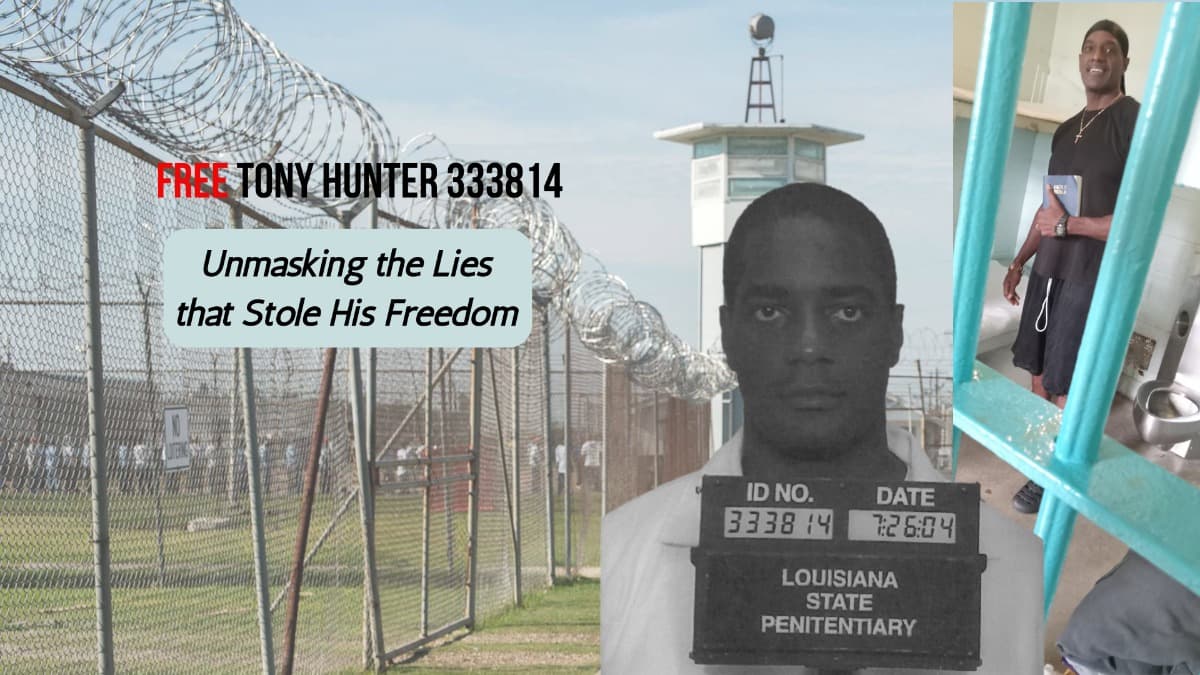
I’m Tony Hunter (DOC #333814)—a father of five, a son, a husband, and once an Olympic-hopeful sprinter. I’ve missed birthdays, school nights, and ordinary dinners. A wrongful conviction took my everyday life—but not my hope. I didn’t do this, and I’m asking you to stand with me as I fight to prove it. Today I’m incarcerated for a triple homicide and attempted robbery, serving three consecutive life sentences plus 49 years—with no possibility of parole.
I have spent decades behind bars—first at Angola and now at Elayn Hunt Correctional Center—while continuing to fight to clear my name. Your support helps me bring the truth to light and come home to my family.

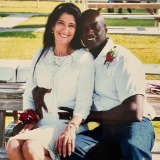
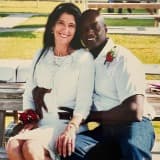
Me with my mom, and five children
Summary
Police focused on me because a single witness, Emma Rodgers, reported a red truck with a headlamp out near the scene. I had rented a Ford F-150; when a recurring card charge failed, police asked Enterprise to let them impound it and then arrested me for not returning the truck. Their full forensic work-up found no DNA, no fingerprints, no hairs or fibers, no blood, nothing tied to the triple murder. My F-150 didn’t have double-stacked headlamps and all lights worked, so Emma’s description didn’t match my truck.

When I was arrested, they put me in an isolation cell and planted known informant Christopher Wiggins in the cell with me. After detectives put my name on TV, two incentivized informants (Clarence Kennedy, Vaccara Comanche) suddenly “remembered” confessions they could not have heard and shifted their stories to fit the prosecution. All three informants (Clarence Kennedy, Vaccara Comanche, and Christopher Wiggins), statements contradicted each other, the crime scene evidence, and other facts of the case. Wiggins later admitted I never confessed and said he’d been promised a reduction he didn’t receive. Kennedy received an illegally lenient sentence—25 years with 20 suspended—right before my trial. Vaccara Comanche echoed the same jailhouse rumors and changed details as the case evolved.
Glen Nelson later admitted police told him he could “go home” if he helped build a case against me—and that he joined a jailhouse scheme to implicate me. The State then leaned on Clarence Kennedy and Vaccara Comanche, who claimed they overheard me “confess” to Nelson through a protected glass window. The jury never heard that Nelson had shot at me two months before the murders—and that I wouldn’t be talking with someone who’d just tried to kill me. The prosecution didn’t call Nelson during the trial and blocked the defense from airing information about him, keeping that context out of the courtroom.
Proverbs 19:9 (NIV): "A false witness will not go unpunished, and the one who pours out lies will perish"
Exodus 20:16 (NIV): "You shall not give false testimony against your neighbor".
Parish recreation-yard logs that could have disproved their timelines were never produced. This wasn’t evidence; it was pressure, payoffs, and a narrative built to convict.
Exculpatory evidence withheld (Brady / Napue)
Corey Smith—owner of the .22-caliber pistol—gave a second statement identifying Keith Norman (who is white) as the last person to possess the murder weapon, saying he believed Norman stole it and sold it for drugs. The State never questioned Norman, withheld that statement from the defense and never mentioned Norman during Smith’s trial testimony. That’s a Brady violation (suppression of exculpatory evidence). Allowing informant testimony, the State knew or should have known was false or misleading is a Napue violation. My attorney obtained the Smith material after trial but failed to act within statutory deadlines; the court denied my second post-conviction application on procedure—but the substance remains: the jury was deprived of powerful exculpatory and impeachment evidence.
Jody Rucks’s statement (inducements & fabrication)
During Trial Kennedy said Jody Rucks was in the top bunk during the time he overheard the supposed conversation with Nelson. In a sworn statement, Jody Rucks reports that Kennedy told him he’d robbed a white woman and would get less time if he testified against me. Rucks says he told Kennedy and Comanche he wouldn’t lie; he explains Kennedy later claimed Rucks was present and “sleeping” during a supposed exchange between Nelson and me—something Rucks calls untrue, “just like the lie Comanche asked me to tell.” Rucks’s statement shows inducements, pressure to fabricate, and exposes the informant-driven narrative.
Professor Robert M. Bloom’s conclusion (informant unreliability)
After reviewing my case, Professor Robert M. Bloom concluded that multiple factors around the jailhouse informants created a serious risk of fabrication and false testimony: lack of external corroboration, media contamination, the volume of cases in which they were “providing information,” their status as career offenders facing long sentences at the prosecutor’s discretion, obvious incentives to implicate me, and the absence of a cautionary jury instruction. In his words, these conditions “created serious risks that the informants’ testimony was fabricated and/or false.”
OCC Pod-10 affidavits (the “window” story is physically impossible)
On December 2, 2022, Willie Campbell and Keith Davis (OCC Pod-10) swore they didn’t know me and had no stake in my case, but described conditions proving the State’s “yard-to-window confession” story can’t happen: the glass is very thick, you can’t hear through it, and any attempt to talk would be loud and obvious to everyone, including security. Their affidavits contradict the prosecution’s central jailhouse account.
Why Actual innocence
The “Actual Innocence” filing and counsel error.
My stand-alone Actual Innocence filing was denied because it did not include new scientific evidence; under Louisiana law, expert opinion alone isn’t treated as “new scientific evidence.” My counsel should have anticipated that and built the record differently—that was ineffective assistance. But the lack of “new science” doesn’t change what matters most: the jury never saw exculpatory and impeaching facts that would have changed the result.
What the appellate court already said.
According to the Louisiana Second Circuit on my direct appeal, the testimony of the three jailhouse informants was “the only evidence that directly linked Tony Hunter with the crime.” When the only direct link is tainted, the verdict cannot stand.
What the jury never heard (and why it matters).
- Withheld gun evidence (Brady Violation) & false testimony (Napue Violation): The State suppressed Corey Smith’s second statement naming Keith Norman (white) as the last person with the .22 that killed the victims, and allowed testimony that was false or misleading to stand.
- Inducements & fabrication: Jody Rucks’s sworn statement shows promised benefits, direct pressure to lie, and fabricated details attributed to me.
- Media contamination & no guardrails: Professor Robert M. Bloom’s conclusions explain how detectives’ media tactics contaminated witnesses and how jurors received no cautionary instruction about jailhouse informants—making false testimony more likely to be believed.
- Physical impossibility: The OCC Pod-10 affidavits (Campbell & Davis) show the State’s “yard-to-window confession” story was physically impossible: thick glass, no way to hear, any attempt would be loud and obvious to everyone.
How the law lets the court fix this now.
Even if one piece (like Bloom’s expert analysis) isn’t “new science,” the cumulative effect of withheld exculpatory evidence, impeachment proof, affidavits, and newly discovered material can—and should—be considered in a subsequent PCR. Taken together, these materials undermine confidence in the verdict and support my actual innocence.
Bottom line.
When the only direct link was jailhouse testimony—and we now show inducements, fabrication, media contamination, missing jury safeguards, physical impossibility, and suppressed gun evidence pointing to Keith Norman—the verdict is unreliable. I am actually innocent, and this record warrants full evidentiary hearing and relief, when we present newly discovered evidence in the next PCR before March of 2026.
Call to action
We’re raising $7,500 to finish critical post-conviction work—drafting and filing motions, obtaining records and transcripts, expert review, and targeted investigation. Please contribute and share this page today. Every gift moves me closer to my family—and to justice.
If donating isn’t possible right now, you can still help: buy and share my upcoming book, "Free Tony Hunter #333814". Your purchase spreads the truth to new readers and grows awareness of my case. The book will be available on Amazon and at innocentmanconvicted.com—and leaving a review multiplies its reach. Coming soon!
Two ways to stand with me:
-
Donate to the legal fund.
-
Buy the book and tell a friend.
Campaign Update — September 27, 2025
Since August 2021, family and supporters have contributed $97,100 toward legal fees, investigation, and expert work—funding records retrieval, on-the-ground interviews, expert analyses, and motion drafting. Paired with the withheld exculpatory evidence discovered in March 2025, these efforts have brought us very close to bringing me home.
Some supporters also add funds to my Louisiana DOC commissary, Tony Hunter DOC#333814, so I can supplement meals that are mostly starch and sugar—no fruit, and usually only one vegetable and one meat serving a week. Your generosity fuels both my legal fight and my basic nutrition.

Click to Download the Full Report

Proverbs 19:17 "Whoever is kind to the poor lends to the LORD, and he will reward them for what they have done".
Matthew 25:35 "For I was hungry and you gave me something to eat... whatever you did for one of the least of these brothers and sisters of mine, you did for me".
How you can help right now
- Donate to cover the remaining legal and expert costs for the PCR filing
- Share this campaign to keep momentum growing
- Follow ongoing updates at www.innocentmanconvicted.com
Thank you for your support in bringing me home!
Matthew 25:36 (ESV) "I was naked and you clothed me, I was sick and you visited me, I was in prison and you came to me".

Hebrews 13:3 (NIV) "Continue to remember those in prison as if you were together with them in prison. Also remember those who are mistreated, as if you yourselves were suffering with them"

The photo you see was taken after I was attacked and beaten at Angola (Louisiana State Penitentiary). I suffered a concussion and several cuts—another reminder of the danger I face while fighting to prove my innocence.