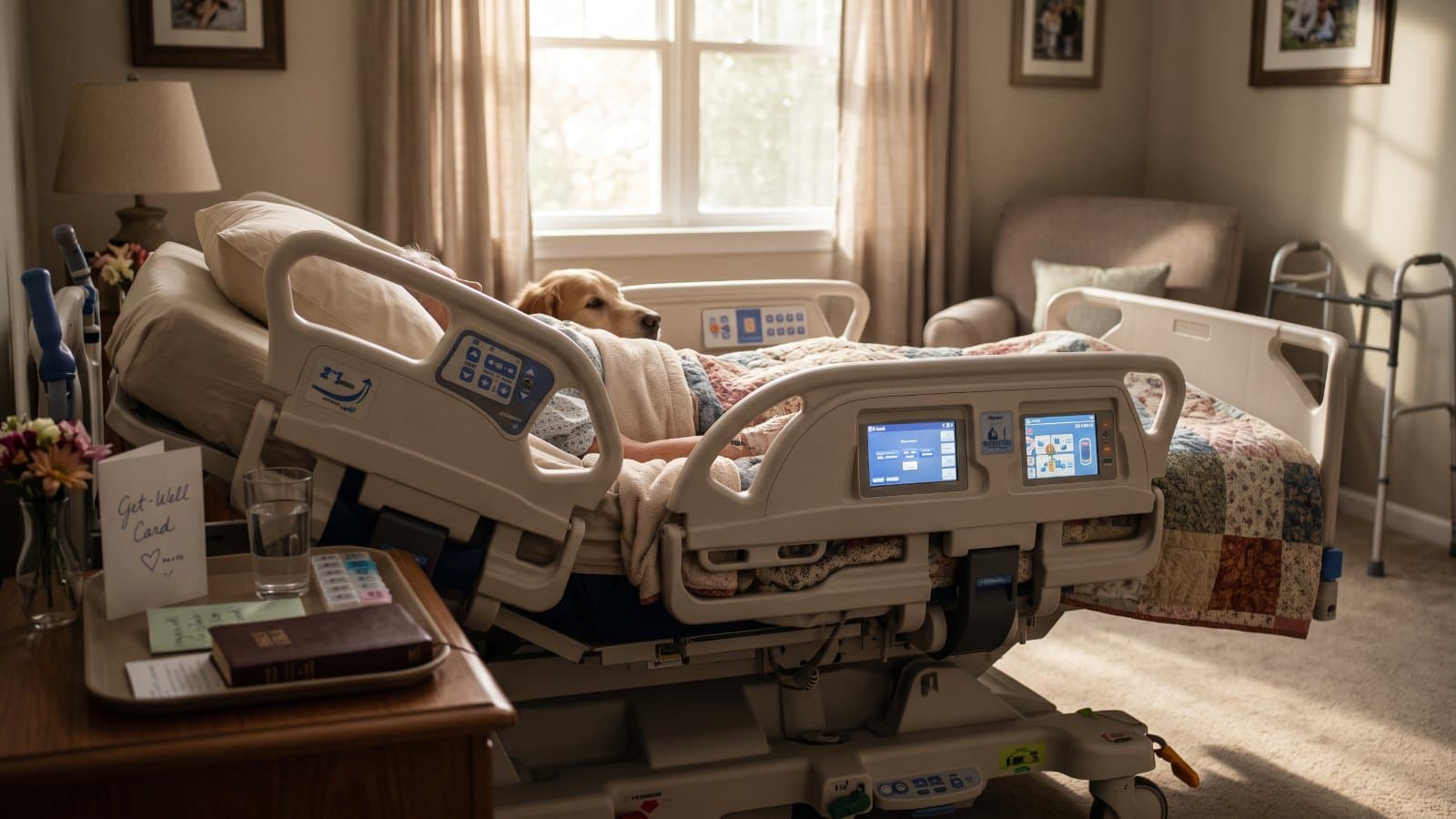

Urgent Clinical Appeal: Specialized Neuro-Recovery System for Scott Jones
Patient Location: Keck Hospital of USC, 1500 San Pablo St, Los Angeles, CA 90033 - Room 7217
Campaign Goal: $47,735 (Full Turnkey Procurement, White-Glove In-Room Installation & Technical Calibration)
The Immediate Critical Need
Scott Jones is currently an inpatient at Keck Hospital of USC (Room 7217), battling brain cancer and undergoing specialized recovery following complex neurosurgery.
Having successfully transitioned out of the acute Intensive Care Unit (ICU) to an advanced sub-acute neuro-recovery floor, Scott is at a critical crossroads in his healing. While ICU beds are strictly reserved for short-term, life-support interventions and unstable medical emergencies, sub-acute floors are standardly outfitted with basic hospital beds designed for general medical care. However, Scott's specific neuro-oncology profile requires an advanced, therapy-grade recovery system in his current room to safely bridge this rehabilitation phase without risk of setback or readmission to intensive care.
Why Standard Sub-Acute Hospital Beds Are Inadequate & Dangerous
Standard floor beds are built for general utility, lacking the advanced, automated mechanics required to manage post-craniotomy brain cancer recovery:
Intracranial Pressure (ICP) Regulation: Managing intracranial pressure and preventing dangerous cerebral fluid shifts requires uncompromised, digitally calibrated head-of-bed elevation. Standard mechanical beds lack the precision needed to prevent torso collapse and sudden intra-abdominal pressure spikes that elevate ICP.
Severe Pressure Ulcers & Skin Breakdown: Due to tumor-related neurological immobility, Scott cannot independently shift his body weight. Standard hospital mattresses create high, persistent interface pressure over bony prominences, leading rapidly to tissue breakdown, pressure ulcers, and life-threatening secondary infections.
Traumatic Manual Repositioning: Without automated lateral rotation, floor nursing staff must manually pull and log-roll Scott every two hours. For a healing neurosurgical patient, this constant physical handling creates severe head motion, triggers blood pressure fluctuations, and places mechanical shear on cranial surgical incisions.
Balance Deficits & Transfer Hazards: Tumor-induced vestibular and motor deficits make conventional transfers hazardous. Standard beds offer no motorized transition to an upright posture, significantly increasing fall risk and physical strain on both the patient and nursing staff
The Medical Solution: Brand-New Stryker Critical Care System
To furnish Scott's current hospital room with the precise therapy required for his continuous neuro-recovery, his team has identified the brand-new Stryker Critical Care Bed System (Stryker InTouch/ProCutty platform with the Isolibrium therapeutic surface):
Automated Timed Lateral Rotation: Delivers gentle, programmable side-to-side turning cycles on a customized schedule, eliminating the need for traumatic manual log-rolling while keeping the head, neck, and spine in stable, undisturbed alignment.
Continuous Active Pressure Ulcer Reduction: The integrated therapeutic surface continuously alternates air pressure and redistributes body weight, managing microclimate heat and moisture to protect skin integrity.
Precision Digital Angle Control: Continuous digital monitoring maintains the exact angle of elevation required around the clock to support stable cerebral perfusion and pressure regulation.
Motorized Saefe-Assist Articulation: Transitions smoothly between recline and seated postures under power, protecting cranial surgical incisions from sudden strain or torque.
Certified In-Room Installation & Technical Calibration: Sourced through an authorized clinical distributor to include certified, on-site setup directly inside Room 7217. Biomedical technicians will assemble the heavy-frame unit, perform electrical safety and ground checks, and precisely calibrate all digital angles, rotation timing cycles, and weight-redistribution pressure sensors to his clinical care protocol before use.
Two Ways to Contribute
Every dollar raised directly funds the procurement, expedited delivery, and clinical commissioning of this critical system:
Direct Campaign Contribution: Make a gift through this platform to fund the full equipment acquisition, sales tax, institutional freight, and certified in-room installation and calibration in Room 7217.
Direct Payment to the Equipment Supplier: Benefactors wishing to disburse funds directly can make a payment toward the open equipment invoice with the specialized medical distributor coordinating delivery, in-room technical setup, and calibration. To donate directly to the Equipment Supplier, please contact GMG Medical Solutions at (858) 263-4894 and provide the invoice number (1421).
Your urgent support equips Scott's hospital room with the specialized technology he needs to safely continue his brain cancer recovery and avoid preventable setbacks.