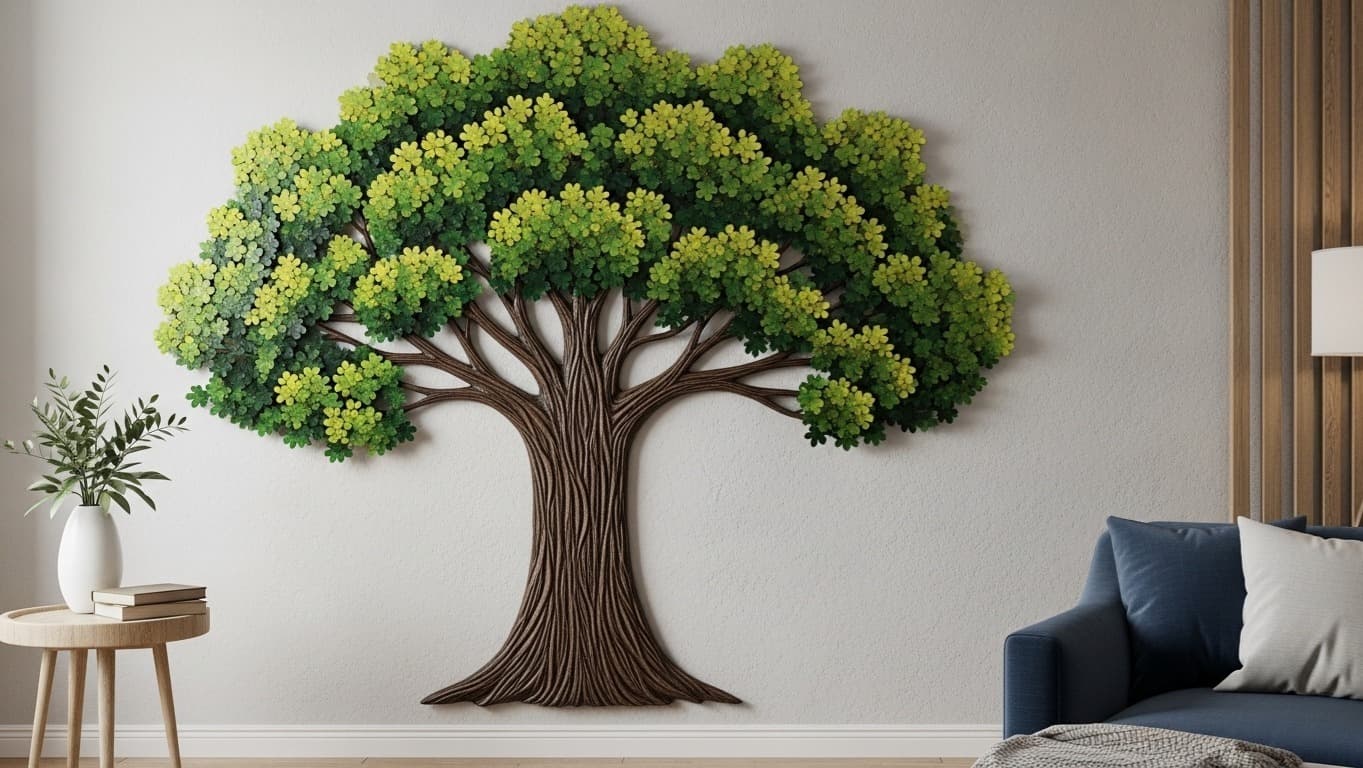


Bringing Nature Indoors with 3D Textured Tree Wall Art
Among the many subjects explored in contemporary wall art, the tree holds a uniquely powerful place. Tree wall art connects us to something fundamental in our relationship with the natural world. Trees are among the oldest living organisms on earth, and their forms, branching, reaching, rooted, carry a symbolic weight that has resonated across cultures and centuries.
When trees are rendered through three-dimensional texture, this symbolic power is amplified by the physical presence of the work. A 3D textured tree painting is not just a representation of a tree. It is a surface that has been built up in layers, carved and shaped, that mimics the organic growth of the subject it depicts. The raised ridges of thick paint suggest bark and branch. The layered depths of the canvas evoke the complexity of foliage. The artwork has a physical relationship with its subject that flat imagery cannot achieve.
The visual impact of 3D tree art in an interior space is immediate and significant. Because the texture catches light and casts shadow, the piece seems to breathe and shift as the light in the room changes. In the morning, the raised surfaces catch the cool light and appear pale and spare. By afternoon, warm light creates depth in the shadows between the textured ridges. In lamplight, the entire surface glows with a warmth that feels almost organic. This dynamic quality ensures that the artwork remains visually engaging over time.
From a design perspective, tree wall art is remarkably versatile. In a biophilic interior, which prioritizes natural materials and connections to the living world, textured tree art reinforces the overall design intention with particular eloquence. In a more minimal, contemporary space, a single large tree piece introduces nature reference without the complexity of actual plants, creating a calm, grounded focal point that suits the overall aesthetic.
Color is an important consideration in selecting tree wall art. Earth tones, warm greys, deep ochres, and soft whites are the most naturalistic choices and tend to integrate seamlessly with a wide range of interior palettes. More interpretive pieces in blues, greens, or abstracted tones offer greater visual drama and work well when the goal is to make a stronger design statement.
For those building a larger wall display that incorporates natural imagery, understanding how multiple pieces work together is essential. The insights offered in diptych wall art and functional design are particularly relevant when combining tree art with other nature-inspired works to create a cohesive, multi-piece arrangement.
3D textured tree art represents a meeting point between craft, nature, and design that has broad and enduring appeal. It brings the outdoors in with visual depth and tactile presence, creating the kind of warm, grounded atmosphere that makes a house feel genuinely like a home.
FAQ
Q: What interior styles suit tree wall art best? A: Tree wall art works beautifully in biophilic, Japandi, Scandinavian, and contemporary interiors. It also suits more traditional spaces where natural imagery has always been a decorative staple.
Q: How do I choose the right size of tree art for my wall? A: As a general rule, the artwork should occupy no more than two-thirds of the wall width. For a sofa or bed wall, the piece should ideally be no wider than the furniture beneath it.
Q: What color palette works best with tree wall art? A: Neutral earth tones, warm whites, and soft greys are the most versatile choices. They integrate with most interior palettes while maintaining the natural reference of the subject.
Q: Can tree wall art work in a contemporary urban apartment? A: Absolutely. In spaces where actual greenery may be limited, textured tree art provides a powerful natural reference that softens the urban environment and creates warmth.