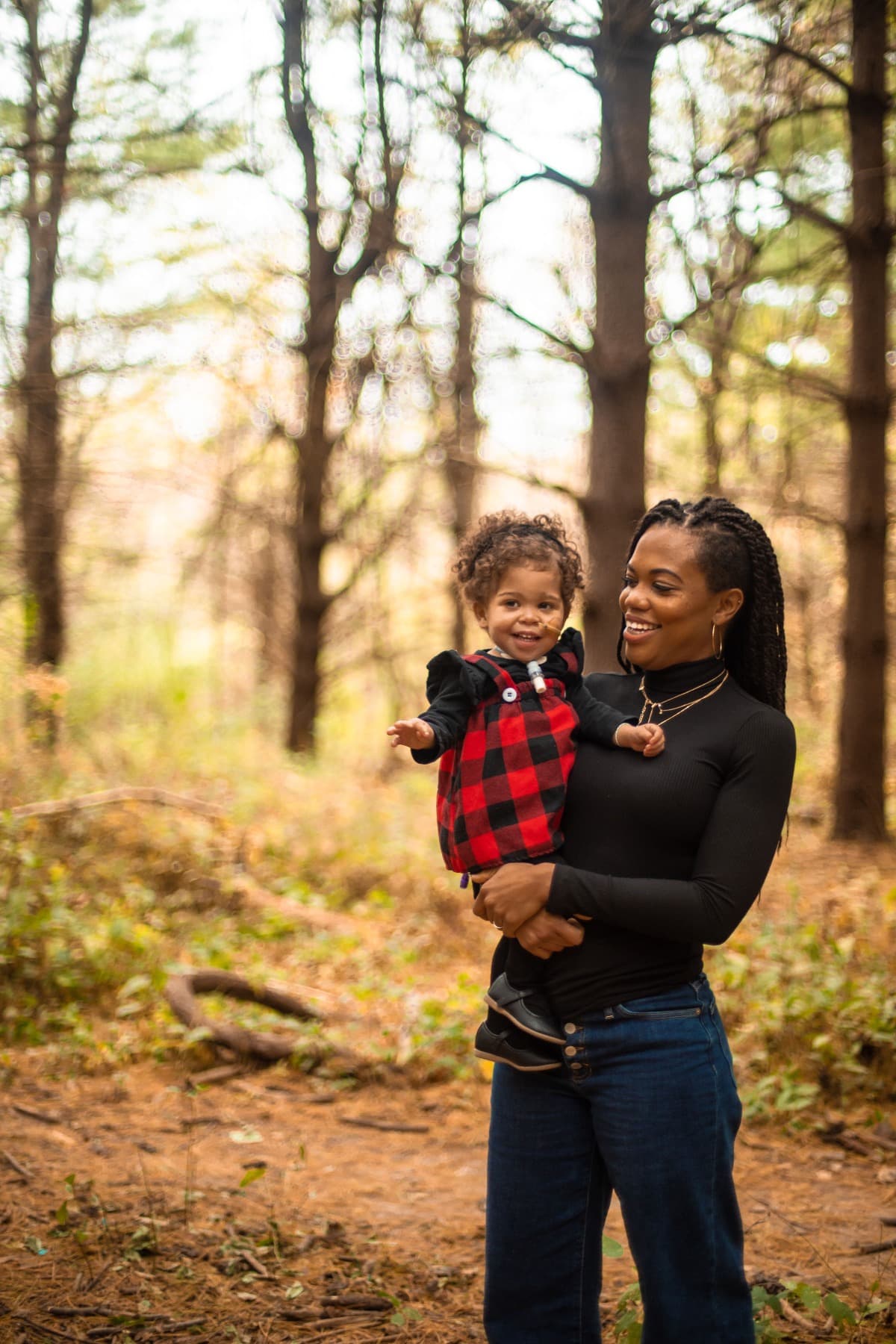


Our story: 14 weeks into my pregnancy, it was discovered that our baby had an abdominal wall difference called an omphalocele. This meant that some of the baby's organs were protruding outside of their belly into a sac. There was no way of knowing how this would affect her until she arrived, so we spent the rest of my pregnancy preparing for an inevitable NICU stay and hoping for the best.
Birdie was delivered at 39 +1 via c-section. When she arrived, it quickly became apparent that she needed respiratory support. After trying many methods, we decided to do a tracheostomy when she was 2 months old.
Birdie also had a VSD (a small hole in her heart) that was closed around 4 months. At 6 1/2 months, Birdie came home! She is now almost 3 years old and has grown into such a spirited, intelligent kiddo. She loves musical instruments, books and hanging out with her mama and papa. Watching her grow stronger and healthier has been a true joy!
After being in the NICU, adjusting to being a medical mom at home was incredibly difficult. Two weeks into being home, I expressed how hard it was to a psychologist and she said that what I was feeling was totally normal for trach parents. I was shocked. The fact that the terror and anxiety I was feeling was considered ‘par for the course’ seemed absolutely insane to me. Why was there not more mental health support for these families? Where were they expected to place their trauma and grief? I was determined to find a way to contribute to our collective healing.
The work that has continually moved me is helping parents heal from the chronic stress and trauma that is inflicted on our minds and bodies during critical care stays with our children and once we've gone home. In the spring, I spoke at a pediatric conference on the importance of trauma-informed care for critical care families and over the past year have increasingly realized I want to contribute to this type of trauma-informed healing.
I am now preparing to take this passion to the next level by training in and teaching trauma-informed yoga and meditation with the goal of working specifically with critical care families! Trauma-informed yoga and meditation help build resilience responses in people that are experiencing perpetual fatigue and exhaustion by accessing healing and rest for the nervous system. It also helps expand our capacity for neuroplasticity and can help us widen our window of tolerance to build more resilience and more rest into our day. The goal is to work with our local children's hospital to create a space for parents who are working to heal from chronic stress and hyper-arousal. This is an absolute need for critical care families.
Two weeks ago, I began my trauma-informed meditation training!
In total, there are three steps to the training:
-Trauma-informed meditation training
-Yoga teacher training
-Trauma-informed yoga training
Throughout our journey, my family has been asked countless times “What can I do to help?”. If that is a question you've asked or wondered, helping our family pay for the cost of these trainings would be an excellent way to support not just us, but the families who will receive trauma-informed care in the future.
If you feel so moved, I am endlessly grateful for any support you are able to share. Any amount would be appreciated!