Spotfund logo
Spotfund logo
Start Fundraising
PricingContact SupportStart Fundraising

Fundraise for

  • Medical Fundraising
  • Emergency Fundraising
  • Memorial Fundraising
  • Education Fundraising
  • Nonprofit Fundraising
  • Animal Fundraising
  • Community Fundraising

Featured topics

  • Easy Fundraising Ideas for Individuals
  • Creative Fundraiser Dinner Ideas
  • Raising Money for Medical Expenses
  • *spotfund for NIL Collective Fundraising
  • Giving Tuesday Fundraising 2025NEW

Trending in

  • Medical
  • Memorial
  • Emergency
  • Nonprofit
  • Family
  • Sports
  • Business

Featured topics

  • *spotfund as a Recurring Donation Solution
  • Matching Gift CampaignsPOPULAR
  • Why Recurring Donations Are Important for Nonprofits
  • How it works
  • Common questions
  • Success stories
  • For brands and nonprofits
  • How do I withdraw money?
  • *spotfund blog
  • Reviews from people like you
  • Compare *spotfund to others

FHIR Terminology Server Guide For Healthcare

FHIR Terminology Server Guide For Healthcare

Fundraising for

Vertex PR Hub

Fundraising forVertex PR Hub
Vertex PR Hub

Vertex PR Hub

New York

$0of $500 goal
0
Donors
0
Comments
0Share Arrow
Shares
Donation protected
👍 0% fee

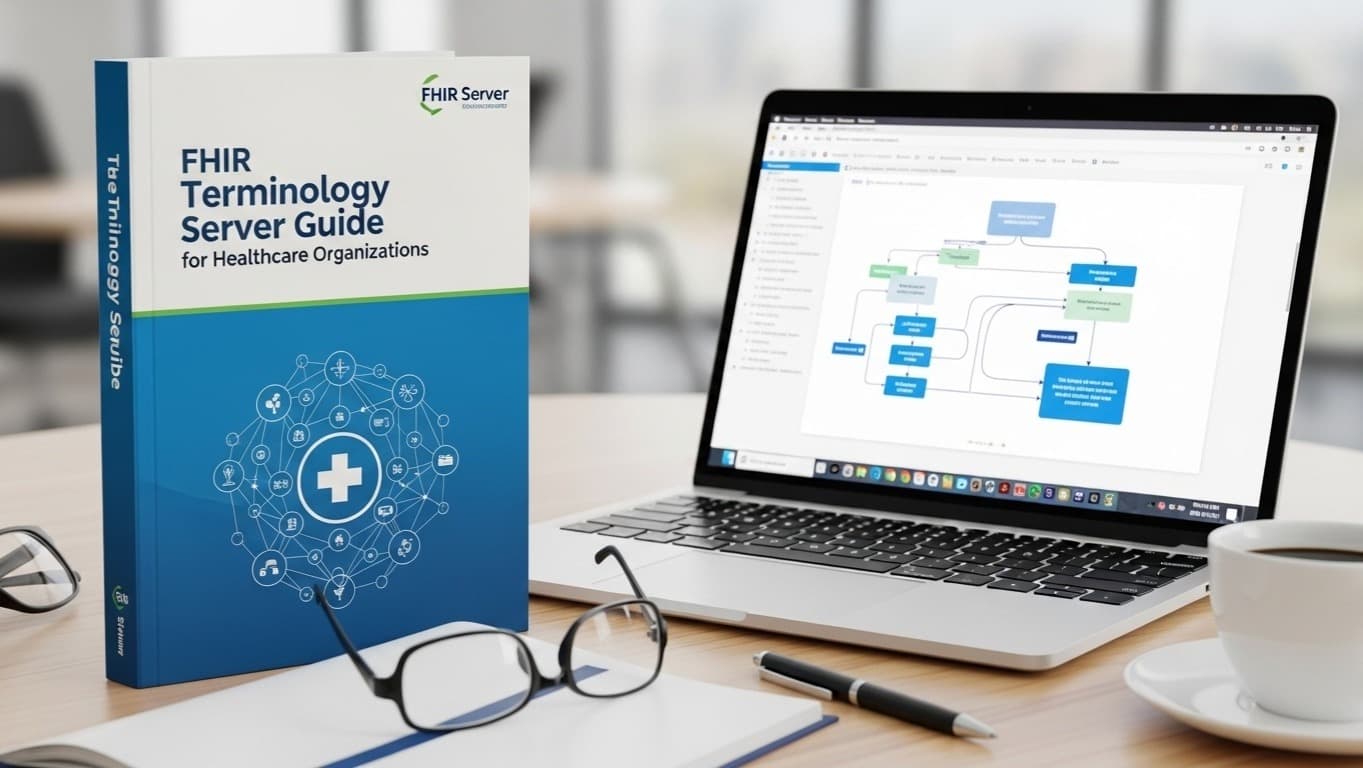
FHIR Terminology Server Guide for Healthcare Organizations


Healthcare organizations across the United States face a persistent challenge: clinical data encoded with inconsistent terminology. One electronic health record system might use a local code set for diagnoses, while a payer relies on ICD-10-CM, and an analytics platform expects SNOMED CT. This fragmentation creates friction in care coordination, billing accuracy, population health reporting, and research. A FHIR Terminology Server addresses this core interoperability hurdle by providing a unified, standards-based approach to managing clinical vocabularies.

A FHIR Terminology Server is specialized server technology designed for the healthcare industry. It stores, maintains, and serves standardized clinical terminologies such as SNOMED CT, ICD-10, LOINC, and RxNorm through HL7 FHIR-compliant APIs. Rather than distributing static code files that quickly become outdated, this solution offers dynamic, real-time access to authoritative terminology content. It acts as a single source of truth for clinical codes, ensuring that every system in your ecosystem—from EHRs and billing platforms to patient portals and data warehouses—interprets medical concepts consistently.

At its heart, a clinical terminology server built on HL7 FHIR R4 supports four essential operations that power reliable data exchange. The $lookup operation retrieves detailed information about a specific code, including its display name, definition, and properties within a FHIR code system. The $validate-code operation checks whether a given code is valid within a specified value set or code system, returning a clear true or false result along with helpful diagnostics. The $expand operation takes a FHIR value set definition and returns the full list of codes it contains, often with filtering options to manage large terminologies. Finally, the $translate operation facilitates mapping between different code systems using ConceptMap resources, supporting tasks like converting local lab codes to LOINC. These operations form the backbone of healthcare terminology management, enabling applications to query, validate, and transform coded data on demand.

Understanding the distinction between a terminology server and a static code file download is crucial. Static files require manual download, parsing, and integration into each application. Updates demand re-downloading and re-deploying across every system, a process prone to version drift and human error. In contrast, a terminology as a service model centralizes this complexity. Applications make lightweight API calls to the server, which handles versioning, updates, and complex terminology logic. This shift reduces development overhead, ensures all systems reference the same terminology version, and allows organizations to respond swiftly to regulatory changes or new clinical guidelines.

Consider a practical use case. A regional hospital network needs consistent ICD-10-CM codes across its billing department and population health analytics team. Without a centralized approach, the billing system might use a 2022 code set while analytics relies on 2023 updates, leading to mismatched reports and claim denials. By implementing a FHIR Terminology Server, both systems query the same live source. When a clinician documents a diagnosis, the EHR uses $validate-code against the current ICD-10-CM value set to ensure accuracy. The billing system retrieves the official code description via $lookup for claim submission. Simultaneously, the analytics platform uses $expand to pull the full hierarchy of diabetes-related codes for a quality measure. All teams work from synchronized terminology, improving revenue cycle integrity and care insight.

Deployment flexibility is a key consideration for healthcare IT leaders. Cloud-hosted terminology servers offer rapid provisioning, automatic scalability, and managed updates, reducing the burden on internal infrastructure teams. This model is well-suited for organizations seeking agility and predictable operational expenses. On-premises deployments provide greater control over data residency and network configuration, which may be preferred by institutions with strict security policies or legacy integration requirements. Many modern solutions support hybrid approaches, allowing sensitive terminologies to remain on-premises while leveraging cloud-based expansion services. The choice depends on your organization's specific compliance, performance, and operational needs.

Comparing manual code management to a dedicated FHIR Terminology Server highlights significant advantages. Manual processes involve downloading ZIP files from multiple sources, writing custom parsers for each format, scheduling update workflows, and troubleshooting inconsistencies across environments. This approach consumes considerable developer time and introduces risk of errors. A terminology server streamlines this by offering a unified API for all supported code systems. It handles complex tasks like hierarchy navigation, property retrieval, and cross-system mapping natively. Teams spend less time maintaining code libraries and more time building features that improve patient care. The server also provides audit trails for terminology queries, supporting compliance with healthcare regulations.

Quality of service and materials directly impact clinical workflows. A robust terminology server delivers high availability and low-latency responses, ensuring that point-of-care applications are not delayed during code validation. It maintains rigorous update schedules aligned with official terminology releases from bodies like the U.S. National Library of Medicine or SNOMED International. Comprehensive documentation and developer support accelerate integration, while features like caching and bulk operations optimize performance for large-scale deployments. When evaluating solutions, prioritize platforms that demonstrate commitment to terminology accuracy, API reliability, and adherence to HL7 FHIR standards.

TermHub exemplifies this category of healthcare infrastructure, providing a dedicated platform for browsing, querying, and managing clinical terminologies via FHIR-native interfaces. Organizations seeking to modernize their terminology strategy can explore how such solutions integrate with existing systems to reduce interoperability friction. For teams ready to move beyond fragmented code management, a free signup offers a practical first step toward standardized, scalable terminology services.

Frequently Asked Questions

What is the primary benefit of using a FHIR Terminology Server over maintaining local code files?

A FHIR Terminology Server ensures all your applications access the same, up-to-date clinical codes through standardized APIs. This eliminates version mismatches, reduces manual update efforts, and supports real-time validation and expansion of value sets across your healthcare ecosystem.

Which clinical terminologies can a typical FHIR Terminology Server support?

Most servers support major standards including SNOMED CT for clinical findings, ICD-10-CM for diagnoses, LOINC for laboratory observations, and RxNorm for medications. Many also accommodate regional extensions, custom code systems, and mappings between these vocabularies.

How does a terminology server handle updates to clinical code sets?

The server provider manages the ingestion of new terminology releases from authoritative sources. Once updated on the server, all connected applications immediately access the current version through API calls, removing the need for manual redistribution and integration at each endpoint.

Is implementing a FHIR Terminology Server complex for existing healthcare IT infrastructure?

Integration is designed to be straightforward using RESTful APIs that align with HL7 FHIR R4. Developers can start with basic operations like $lookup and $validate-code, then gradually adopt more advanced features. Comprehensive documentation and sandbox environments typically support the onboarding process.

Can a terminology server support both cloud and on-premises deployment models?

Yes, many modern solutions offer flexible deployment options. Cloud-hosted instances provide ease of management and scalability, while on-premises deployments cater to organizations with specific data governance requirements. Hybrid configurations are also possible to balance control and agility.

How does terminology validation improve billing and claims accuracy?

By using the $validate-code operation against current ICD-10-CM or CPT value sets, applications can verify codes at the point of entry. This reduces claim rejections due to invalid or outdated codes, streamlining revenue cycle management and minimizing administrative follow-up.

What role does a terminology server play in clinical decision support?

Decision support rules often rely on precise code sets to trigger alerts or recommendations. A terminology server ensures these rules reference validated, current codes. Operations like $expand allow dynamic retrieval of relevant code groups, supporting context-aware interventions without hard-coding terminology logic.

How are terminology queries secured in a healthcare environment?

Reputable terminology servers implement standard FHIR security practices, including OAuth 2.0 for authentication, TLS encryption for data in transit, and granular access controls. Audit logging tracks terminology usage, supporting compliance with HIPAA and other healthcare privacy regulations.

Can a terminology server help with mapping between different code systems?

Yes, using the $translate operation and ConceptMap resources, a terminology server can facilitate mappings between systems like local lab codes and LOINC, or between SNOMED CT and ICD-10. This supports data aggregation, reporting, and interoperability across disparate systems.

What should healthcare organizations evaluate when selecting a terminology server provider?

Key considerations include support for required terminologies and FHIR operations, update frequency and reliability, API performance and uptime guarantees, deployment flexibility, quality of documentation and support, and alignment with your organization's security and compliance requirements.

Smiley Face

Be the first to donate and pin
your name here   📌

Organizer

Vertex PR Hub

Vertex PR Hub is the organizer of this fundraiser

FHIR Terminology Server Guide For Healthcare
Vertex PR Hub

Vertex PR Hub

New York

Fundraising for

Vertex PR Hub

Fundraising forVertex PR Hub
Donation protected
👍 0% fee

FHIR Terminology Server Guide for Healthcare Organizations


Healthcare organizations across the United States face a persistent challenge: clinical data encoded with inconsistent terminology. One electronic health record system might use a local code set for diagnoses, while a payer relies on ICD-10-CM, and an analytics platform expects SNOMED CT. This fragmentation creates friction in care coordination, billing accuracy, population health reporting, and research. A FHIR Terminology Server addresses this core interoperability hurdle by providing a unified, standards-based approach to managing clinical vocabularies.

A FHIR Terminology Server is specialized server technology designed for the healthcare industry. It stores, maintains, and serves standardized clinical terminologies such as SNOMED CT, ICD-10, LOINC, and RxNorm through HL7 FHIR-compliant APIs. Rather than distributing static code files that quickly become outdated, this solution offers dynamic, real-time access to authoritative terminology content. It acts as a single source of truth for clinical codes, ensuring that every system in your ecosystem—from EHRs and billing platforms to patient portals and data warehouses—interprets medical concepts consistently.

At its heart, a clinical terminology server built on HL7 FHIR R4 supports four essential operations that power reliable data exchange. The $lookup operation retrieves detailed information about a specific code, including its display name, definition, and properties within a FHIR code system. The $validate-code operation checks whether a given code is valid within a specified value set or code system, returning a clear true or false result along with helpful diagnostics. The $expand operation takes a FHIR value set definition and returns the full list of codes it contains, often with filtering options to manage large terminologies. Finally, the $translate operation facilitates mapping between different code systems using ConceptMap resources, supporting tasks like converting local lab codes to LOINC. These operations form the backbone of healthcare terminology management, enabling applications to query, validate, and transform coded data on demand.

Understanding the distinction between a terminology server and a static code file download is crucial. Static files require manual download, parsing, and integration into each application. Updates demand re-downloading and re-deploying across every system, a process prone to version drift and human error. In contrast, a terminology as a service model centralizes this complexity. Applications make lightweight API calls to the server, which handles versioning, updates, and complex terminology logic. This shift reduces development overhead, ensures all systems reference the same terminology version, and allows organizations to respond swiftly to regulatory changes or new clinical guidelines.

Consider a practical use case. A regional hospital network needs consistent ICD-10-CM codes across its billing department and population health analytics team. Without a centralized approach, the billing system might use a 2022 code set while analytics relies on 2023 updates, leading to mismatched reports and claim denials. By implementing a FHIR Terminology Server, both systems query the same live source. When a clinician documents a diagnosis, the EHR uses $validate-code against the current ICD-10-CM value set to ensure accuracy. The billing system retrieves the official code description via $lookup for claim submission. Simultaneously, the analytics platform uses $expand to pull the full hierarchy of diabetes-related codes for a quality measure. All teams work from synchronized terminology, improving revenue cycle integrity and care insight.

Deployment flexibility is a key consideration for healthcare IT leaders. Cloud-hosted terminology servers offer rapid provisioning, automatic scalability, and managed updates, reducing the burden on internal infrastructure teams. This model is well-suited for organizations seeking agility and predictable operational expenses. On-premises deployments provide greater control over data residency and network configuration, which may be preferred by institutions with strict security policies or legacy integration requirements. Many modern solutions support hybrid approaches, allowing sensitive terminologies to remain on-premises while leveraging cloud-based expansion services. The choice depends on your organization's specific compliance, performance, and operational needs.

Comparing manual code management to a dedicated FHIR Terminology Server highlights significant advantages. Manual processes involve downloading ZIP files from multiple sources, writing custom parsers for each format, scheduling update workflows, and troubleshooting inconsistencies across environments. This approach consumes considerable developer time and introduces risk of errors. A terminology server streamlines this by offering a unified API for all supported code systems. It handles complex tasks like hierarchy navigation, property retrieval, and cross-system mapping natively. Teams spend less time maintaining code libraries and more time building features that improve patient care. The server also provides audit trails for terminology queries, supporting compliance with healthcare regulations.

Quality of service and materials directly impact clinical workflows. A robust terminology server delivers high availability and low-latency responses, ensuring that point-of-care applications are not delayed during code validation. It maintains rigorous update schedules aligned with official terminology releases from bodies like the U.S. National Library of Medicine or SNOMED International. Comprehensive documentation and developer support accelerate integration, while features like caching and bulk operations optimize performance for large-scale deployments. When evaluating solutions, prioritize platforms that demonstrate commitment to terminology accuracy, API reliability, and adherence to HL7 FHIR standards.

TermHub exemplifies this category of healthcare infrastructure, providing a dedicated platform for browsing, querying, and managing clinical terminologies via FHIR-native interfaces. Organizations seeking to modernize their terminology strategy can explore how such solutions integrate with existing systems to reduce interoperability friction. For teams ready to move beyond fragmented code management, a free signup offers a practical first step toward standardized, scalable terminology services.

Frequently Asked Questions

What is the primary benefit of using a FHIR Terminology Server over maintaining local code files?

A FHIR Terminology Server ensures all your applications access the same, up-to-date clinical codes through standardized APIs. This eliminates version mismatches, reduces manual update efforts, and supports real-time validation and expansion of value sets across your healthcare ecosystem.

Which clinical terminologies can a typical FHIR Terminology Server support?

Most servers support major standards including SNOMED CT for clinical findings, ICD-10-CM for diagnoses, LOINC for laboratory observations, and RxNorm for medications. Many also accommodate regional extensions, custom code systems, and mappings between these vocabularies.

How does a terminology server handle updates to clinical code sets?

The server provider manages the ingestion of new terminology releases from authoritative sources. Once updated on the server, all connected applications immediately access the current version through API calls, removing the need for manual redistribution and integration at each endpoint.

Is implementing a FHIR Terminology Server complex for existing healthcare IT infrastructure?

Integration is designed to be straightforward using RESTful APIs that align with HL7 FHIR R4. Developers can start with basic operations like $lookup and $validate-code, then gradually adopt more advanced features. Comprehensive documentation and sandbox environments typically support the onboarding process.

Can a terminology server support both cloud and on-premises deployment models?

Yes, many modern solutions offer flexible deployment options. Cloud-hosted instances provide ease of management and scalability, while on-premises deployments cater to organizations with specific data governance requirements. Hybrid configurations are also possible to balance control and agility.

How does terminology validation improve billing and claims accuracy?

By using the $validate-code operation against current ICD-10-CM or CPT value sets, applications can verify codes at the point of entry. This reduces claim rejections due to invalid or outdated codes, streamlining revenue cycle management and minimizing administrative follow-up.

What role does a terminology server play in clinical decision support?

Decision support rules often rely on precise code sets to trigger alerts or recommendations. A terminology server ensures these rules reference validated, current codes. Operations like $expand allow dynamic retrieval of relevant code groups, supporting context-aware interventions without hard-coding terminology logic.

How are terminology queries secured in a healthcare environment?

Reputable terminology servers implement standard FHIR security practices, including OAuth 2.0 for authentication, TLS encryption for data in transit, and granular access controls. Audit logging tracks terminology usage, supporting compliance with HIPAA and other healthcare privacy regulations.

Can a terminology server help with mapping between different code systems?

Yes, using the $translate operation and ConceptMap resources, a terminology server can facilitate mappings between systems like local lab codes and LOINC, or between SNOMED CT and ICD-10. This supports data aggregation, reporting, and interoperability across disparate systems.

What should healthcare organizations evaluate when selecting a terminology server provider?

Key considerations include support for required terminologies and FHIR operations, update frequency and reliability, API performance and uptime guarantees, deployment flexibility, quality of documentation and support, and alignment with your organization's security and compliance requirements.

Organizer

Vertex PR Hub

Vertex PR Hub is the organizer of this fundraiser

$0of $500 goal
0Donors
0Comments
0Share ArrowShares
Smiley Face

Be the first to donate and pin
your name here   📌

★★★★★ Trustpilot Reviews

Ready to start?

Join the thousands like you finding help on *spotfund.

Start FundraisingHow it works
Spotfund Balloons