
Rhode Island River Restoration (RIRR) began with a simple observation: sometimes the waterways we pass every day are still being shaped by infrastructure built generations ago.
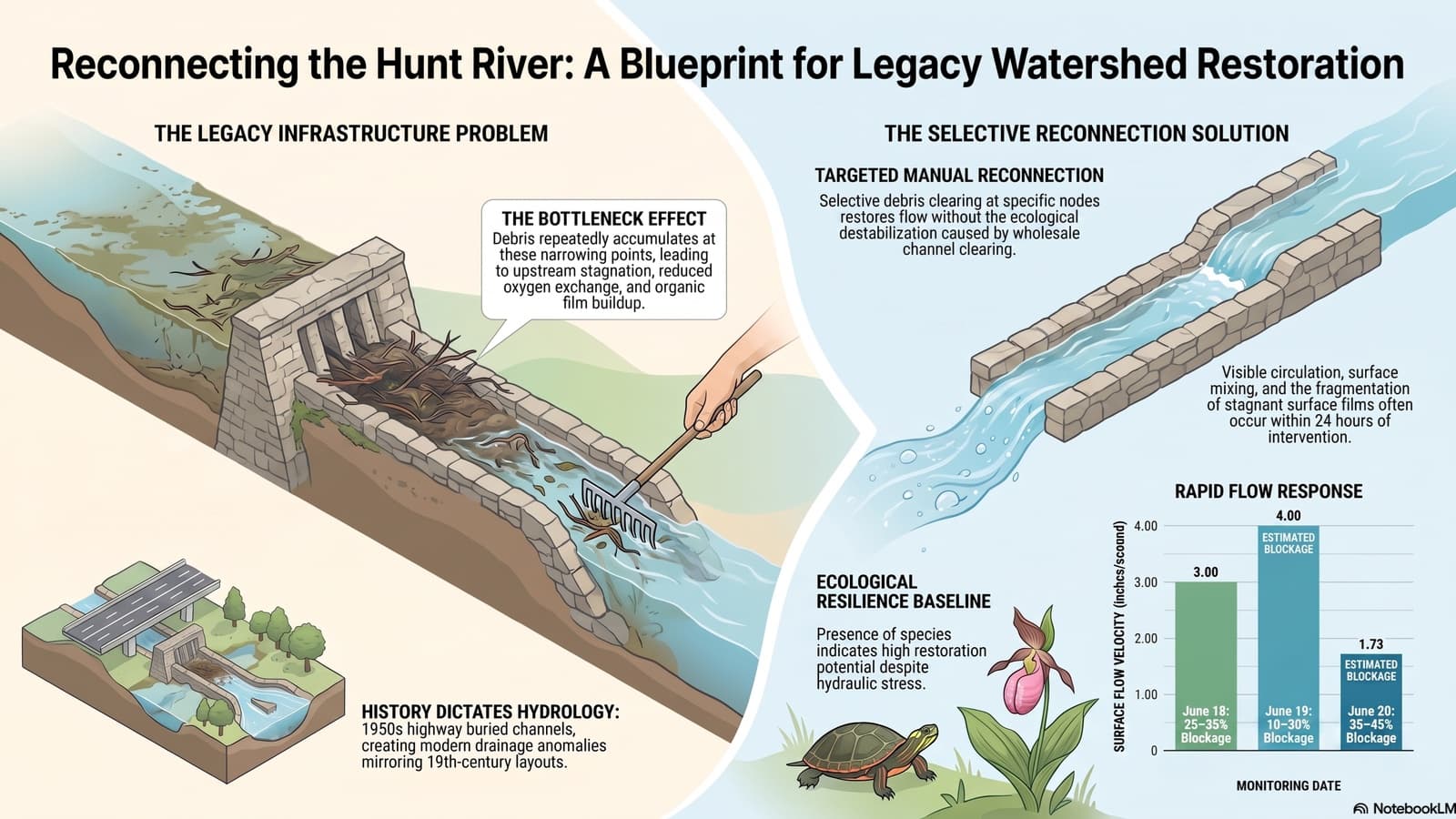
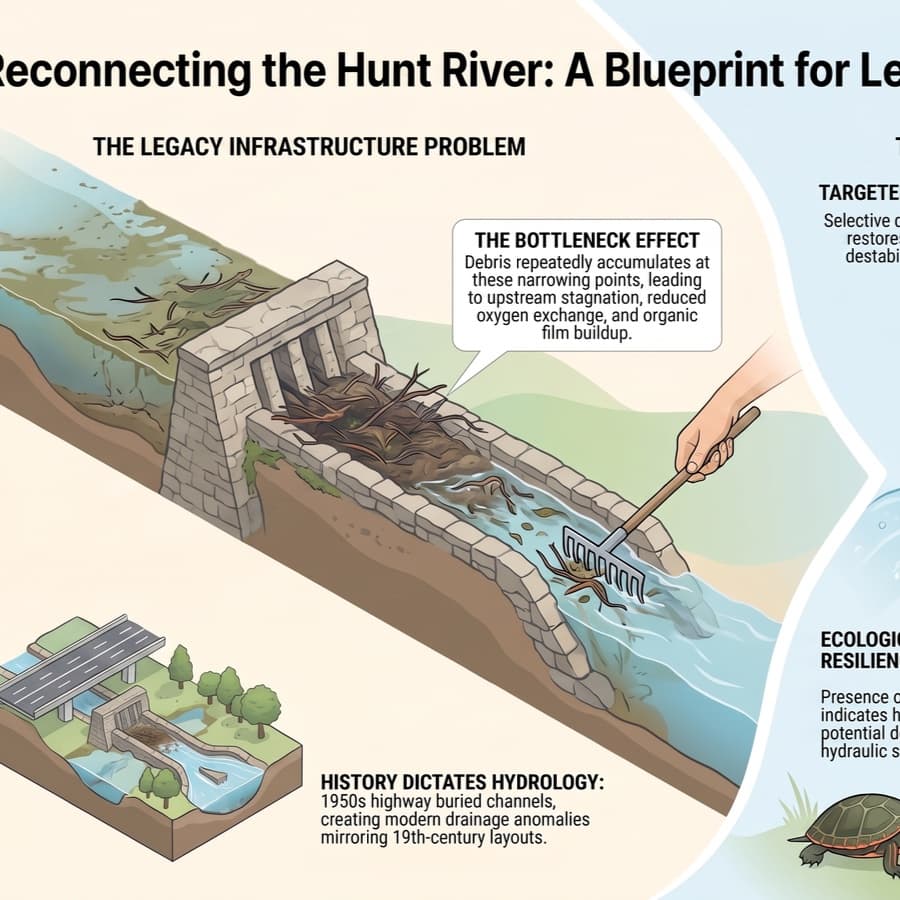
Our first pilot investigation is taking place along the Hunt River in Davisville, North Kingstown, within a historic mill landscape where old stonework, channels, impoundments, and outlets continue to influence how water moves through the watershed today.
Since May 2026, RIRR has been documenting this system through repeated field observations, photography, water-quality measurements, historical research, mapping, and carefully controlled observations of hydraulic connectivity.
What we found changed the direction of the project.
The former mill system contains a steep primary spillway that continues to discharge water downstream, while a separate historic secondary channel can become seasonally disconnected. Our observations show that this secondary pathway can reconnect under certain water conditions, raising an important restoration question:
Could this existing pathway be safely restored or adapted to improve seasonal ecological and fish passage around the primary spillway?
Answering that requires more than simply moving debris or increasing flow. RIRR is now moving into the next phase of the project: understanding how the entire system functions before recommending restoration.
Funds raised will help support improved water-quality and hydrologic monitoring equipment, GIS and mapping work, fish and freshwater mussel habitat assessments, sediment and site investigations, field supplies, documentation, and the technical work needed to develop responsible restoration alternatives.
Our larger goal extends beyond one river.
Rhode Island contains countless waterways influenced by historic mills, dams, culverts, roads, and other legacy infrastructure. RIRR is working toward a statewide framework for identifying places where water may still move, but aquatic life may no longer be able to move with it.
The Hunt River is our starting point.
With community support, we can turn months of field observations into stronger scientific evidence, collaborate with watershed organizations, agencies, researchers, and local communities, and determine what responsible restoration could look like here and elsewhere across Rhode Island.
Every contribution helps us move from observation → assessment → collaboration → restoration.
Real action. Real results. Real restoration.
Help us reconnect Rhode Island’s rivers—from headwaters to the Bay. 🌿💧