Spotfund logo
Spotfund logo
Start Fundraising
PricingContact SupportStart Fundraising

Fundraise for

  • Medical Fundraising
  • Emergency Fundraising
  • Memorial Fundraising
  • Education Fundraising
  • Nonprofit Fundraising
  • Animal Fundraising
  • Community Fundraising

Featured topics

  • Easy Fundraising Ideas for Individuals
  • Creative Fundraiser Dinner Ideas
  • Raising Money for Medical Expenses
  • *spotfund for NIL Collective Fundraising
  • Giving Tuesday Fundraising 2025NEW

Trending in

  • Medical
  • Memorial
  • Emergency
  • Nonprofit
  • Family
  • Sports
  • Business

Featured topics

  • *spotfund as a Recurring Donation Solution
  • Matching Gift CampaignsPOPULAR
  • Why Recurring Donations Are Important for Nonprofits
  • How it works
  • Common questions
  • Success stories
  • For brands and nonprofits
  • How do I withdraw money?
  • *spotfund blog
  • Reviews from people like you
  • Compare *spotfund to others

Why Businesses Are Moving From AI Prototypes To Real Applica

Why Businesses Are Moving From AI Prototypes To Real Applica

Fundraising for

Vertex PR Hub

Fundraising forVertex PR Hub
Vertex PR Hub

Vertex PR Hub

New York, New York

$0of $878 goal
0
Donors
0
Comments
1Share Arrow
Shares
Donation protected
👍 0% fee

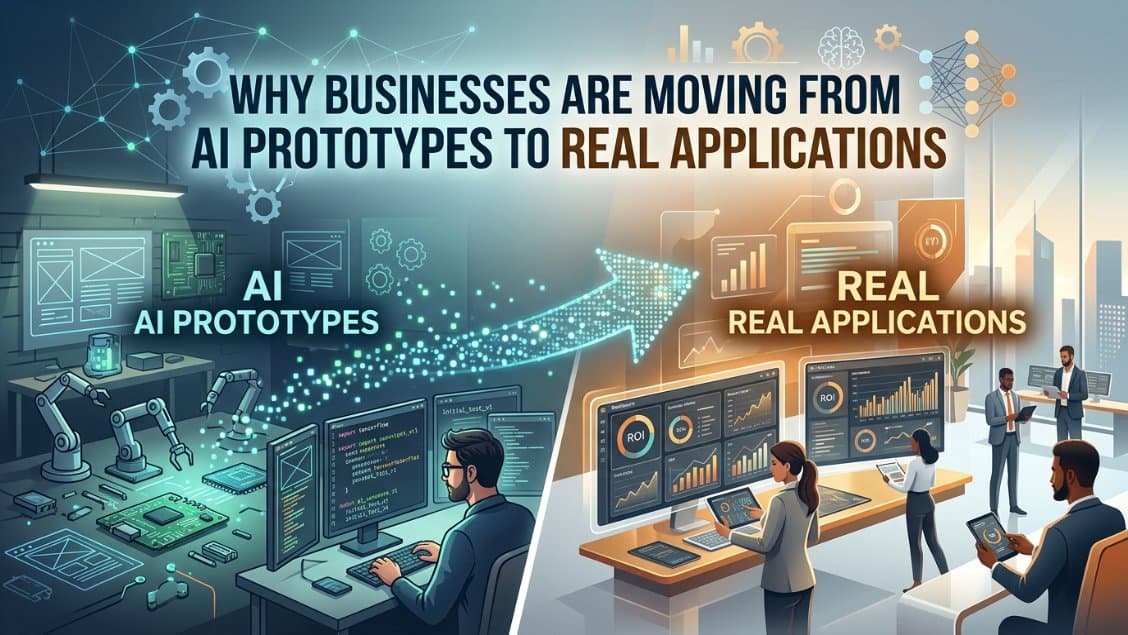
Artificial intelligence has dramatically changed the way software gets built. Teams that once needed weeks of planning and development can now create interfaces, workflows, and functional prototypes in a matter of hours. Prompt-based tools have made the earliest stages of product creation significantly faster and more accessible.

But while building an AI-generated prototype is easier than ever, many organizations are discovering a different challenge. Generating a first version of an application and creating software that supports real business operations are not the same thing. As AI adoption matures, companies are beginning to focus less on experimentation and more on building applications that people actually use every day.

Why AI-generated software is expanding rapidly

The rise of AI-assisted development has lowered the barrier to creating software. Teams no longer need to start with a blank screen or lengthy technical specifications before seeing results. Instead, they can describe an outcome and receive a functional starting point.

This approach changes the development process significantly. A product manager can describe an internal dashboard, an operations team can request a reporting system, or a support team can outline a workflow and immediately begin testing ideas. The speed of iteration allows organizations to validate concepts much earlier than before.

AI also changes expectations. When software can appear within hours instead of weeks, teams become less willing to wait months for internal tools and operational systems. As a result, organizations increasingly expect faster delivery and more flexibility throughout the development process.

The difference between a prototype and a real application

A prototype serves an important purpose. It demonstrates possibility and helps teams answer a simple question: can this idea work?

Production software solves a much larger problem. Real applications need live databases, user permissions, integrations, security controls, and workflows that continue functioning as teams grow and processes change. Those requirements often appear only after the excitement around a first version starts to fade.

This is where many AI projects encounter friction. A generated interface may look impressive initially, but organizations soon discover that long-term success depends on factors beyond visual output. Reliability, maintainability, and adaptability become far more important than the speed of initial generation.

Why operational flexibility matters more than generation speed

Many early AI development experiences focused heavily on speed. Generate a layout, create functionality, export code, and move on. While this works for simple experiments, operational software rarely remains unchanged.

Business systems evolve continuously. Reporting dashboards become approval systems. Internal workflows expand into customer-facing portals. Data sources change, requirements shift, and additional teams begin using the same applications in new ways.

For this reason, many organizations increasingly look for systems that support both rapid creation and long-term adaptability. Some teams now use platforms such as an AI app generator to create an initial application structure through prompts and then continue refining interfaces around real operational workflows rather than treating generation as the final step.

The distinction is important because AI itself does not remove change. If anything, AI accelerates the pace at which software requirements evolve.

Who builds software inside organizations is changing

AI is also reshaping who participates in application creation. Building internal tools traditionally required dedicated engineering resources, which often created development bottlenecks and long prioritization cycles.

Today, operations specialists, analysts, and product teams increasingly participate directly in shaping applications. AI systems allow non-engineering teams to contribute ideas and workflows earlier in the process without waiting for complete implementation cycles.

This shift does not eliminate developers. Instead, it changes how developers spend their time. Rather than focusing primarily on repetitive interface creation, engineering teams can dedicate more effort toward architecture, governance, and solving more complex technical challenges.

The future may belong to organizations that iterate faster

The ability to create software quickly no longer represents a competitive advantage by itself. As AI tools become more widely available, generating applications will continue becoming easier.

What may separate successful organizations from others is their ability to improve, adapt, and operationalize those applications over time. Teams that build systems capable of evolving with their business processes are likely to gain more value than teams focused only on initial generation speed.

The future of AI software development may ultimately be less about creating impressive first versions and more about creating systems people continue using long after the first prompt.

Final thoughts

AI has made software creation significantly more accessible and dramatically reduced the effort required to start building. However, the most important challenge no longer revolves around creating an initial version of an application.

The larger challenge is turning generated ideas into systems that continue delivering value as organizations change. As AI development evolves, the companies seeing the greatest success may be those that focus not only on generating software quickly but also on building applications that remain useful over time.

Smiley Face

Be the first to donate and pin
your name here   📌

Organizer

Vertex PR Hub

Vertex PR Hub is the organizer of this fundraiser

Why Businesses Are Moving From AI Prototypes To Real Applica
Vertex PR Hub

Vertex PR Hub

New York, New York

Fundraising for

Vertex PR Hub

Fundraising forVertex PR Hub
Donation protected
👍 0% fee

Artificial intelligence has dramatically changed the way software gets built. Teams that once needed weeks of planning and development can now create interfaces, workflows, and functional prototypes in a matter of hours. Prompt-based tools have made the earliest stages of product creation significantly faster and more accessible.

But while building an AI-generated prototype is easier than ever, many organizations are discovering a different challenge. Generating a first version of an application and creating software that supports real business operations are not the same thing. As AI adoption matures, companies are beginning to focus less on experimentation and more on building applications that people actually use every day.

Why AI-generated software is expanding rapidly

The rise of AI-assisted development has lowered the barrier to creating software. Teams no longer need to start with a blank screen or lengthy technical specifications before seeing results. Instead, they can describe an outcome and receive a functional starting point.

This approach changes the development process significantly. A product manager can describe an internal dashboard, an operations team can request a reporting system, or a support team can outline a workflow and immediately begin testing ideas. The speed of iteration allows organizations to validate concepts much earlier than before.

AI also changes expectations. When software can appear within hours instead of weeks, teams become less willing to wait months for internal tools and operational systems. As a result, organizations increasingly expect faster delivery and more flexibility throughout the development process.

The difference between a prototype and a real application

A prototype serves an important purpose. It demonstrates possibility and helps teams answer a simple question: can this idea work?

Production software solves a much larger problem. Real applications need live databases, user permissions, integrations, security controls, and workflows that continue functioning as teams grow and processes change. Those requirements often appear only after the excitement around a first version starts to fade.

This is where many AI projects encounter friction. A generated interface may look impressive initially, but organizations soon discover that long-term success depends on factors beyond visual output. Reliability, maintainability, and adaptability become far more important than the speed of initial generation.

Why operational flexibility matters more than generation speed

Many early AI development experiences focused heavily on speed. Generate a layout, create functionality, export code, and move on. While this works for simple experiments, operational software rarely remains unchanged.

Business systems evolve continuously. Reporting dashboards become approval systems. Internal workflows expand into customer-facing portals. Data sources change, requirements shift, and additional teams begin using the same applications in new ways.

For this reason, many organizations increasingly look for systems that support both rapid creation and long-term adaptability. Some teams now use platforms such as an AI app generator to create an initial application structure through prompts and then continue refining interfaces around real operational workflows rather than treating generation as the final step.

The distinction is important because AI itself does not remove change. If anything, AI accelerates the pace at which software requirements evolve.

Who builds software inside organizations is changing

AI is also reshaping who participates in application creation. Building internal tools traditionally required dedicated engineering resources, which often created development bottlenecks and long prioritization cycles.

Today, operations specialists, analysts, and product teams increasingly participate directly in shaping applications. AI systems allow non-engineering teams to contribute ideas and workflows earlier in the process without waiting for complete implementation cycles.

This shift does not eliminate developers. Instead, it changes how developers spend their time. Rather than focusing primarily on repetitive interface creation, engineering teams can dedicate more effort toward architecture, governance, and solving more complex technical challenges.

The future may belong to organizations that iterate faster

The ability to create software quickly no longer represents a competitive advantage by itself. As AI tools become more widely available, generating applications will continue becoming easier.

What may separate successful organizations from others is their ability to improve, adapt, and operationalize those applications over time. Teams that build systems capable of evolving with their business processes are likely to gain more value than teams focused only on initial generation speed.

The future of AI software development may ultimately be less about creating impressive first versions and more about creating systems people continue using long after the first prompt.

Final thoughts

AI has made software creation significantly more accessible and dramatically reduced the effort required to start building. However, the most important challenge no longer revolves around creating an initial version of an application.

The larger challenge is turning generated ideas into systems that continue delivering value as organizations change. As AI development evolves, the companies seeing the greatest success may be those that focus not only on generating software quickly but also on building applications that remain useful over time.

Organizer

Vertex PR Hub

Vertex PR Hub is the organizer of this fundraiser

$0of $878 goal
0Donors
0Comments
1Share ArrowShares
Smiley Face

Be the first to donate and pin
your name here   📌

★★★★★ Trustpilot Reviews

Ready to start?

Join the thousands like you finding help on *spotfund.

Start FundraisingHow it works
Spotfund Balloons