
Spotfund logo
Spotfund logo
Start Fundraising
PricingContact SupportStart Fundraising

Fundraise for

  • Medical Fundraising
  • Emergency Fundraising
  • Memorial Fundraising
  • Education Fundraising
  • Nonprofit Fundraising
  • Animal Fundraising
  • Community Fundraising

Featured topics

  • Easy Fundraising Ideas for Individuals
  • Creative Fundraiser Dinner Ideas
  • Raising Money for Medical Expenses
  • *spotfund for NIL Collective Fundraising
  • Giving Tuesday Fundraising 2025NEW

Trending in

  • Medical
  • Memorial
  • Emergency
  • Nonprofit
  • Family
  • Sports
  • Business

Featured topics

  • *spotfund as a Recurring Donation Solution
  • Matching Gift CampaignsPOPULAR
  • Why Recurring Donations Are Important for Nonprofits
  • How it works
  • Common questions
  • Success stories
  • For brands and nonprofits
  • How do I withdraw money?
  • *spotfund blog
  • Reviews from people like you
  • Compare *spotfund to others

How To Ask For Donations On Social Media Without Sounding

How To Ask For Donations On Social Media Without Sounding

Fundraising for

Jassica Winfrt

Fundraising forJassica Winfrt
Jassica Winfrt

Jassica Winfrt

Ursa, Illinois

$0of $20 goal
0
Donors
0
Comments
1Share Arrow
Shares
Donation protected
👍 0% fee

How to Ask for Donations on Social Media Without Sounding Pushy

The best donation posts on social media are clear, specific, and human. They explain the need, show the impact of giving, and make it easy to take one simple action without guilt or pressure.

Why Donation Asks Can Feel Pushy

People usually do not dislike donation requests themselves. They react badly when the message feels vague, overly urgent, guilt-driven, or centered on the organization instead of the result.

Pushy:

“We desperately need your money today.”

Better:

“A $25 gift helps provide meals for one family this week.”

The second version works better because it is concrete. It shows the donor exactly what their money does instead of relying on pressure.

On social media, this matters even more because people scroll quickly. A strong post should be easy to understand in a few seconds. The goal is not to explain everything at once. The goal is to make the next step simple.

A Simple Formula That Works

A strong donation post usually answers four questions:

  • What is happening?

  • Why is help needed now?

  • What will a donation do?

  • What should people do next?

A simple structure looks like this:

What is happening:

“This week, 100 families in our community need emergency meal kits.”

Why help is needed:

“Our team can deliver them, but we need help covering the cost.”

What the impact will be:

“$25 provides one meal kit for one family.”

What to do next:

“If you’re able, tap the link in bio to give.”

Put together, it becomes:

“This week, 100 families in our community need emergency meal kits. $25 provides one kit for one family. If you’re able, tap the link in bio to help us deliver them.”

This is stronger than a generic line like “Support our mission” because it gives people a real reason to care.

Donation Message Examples for Social Media

Instagram Caption

“This week, we’re raising funds for 100 meal kits.
$25 covers one kit for one family.
If you can help, the link is in our bio.
Thank you for being part of this.”

Instagram Story Sequence

Story 1:

“100 meal kits needed this week.”

Story 2:

“$25 = one kit for one family.”

Story 3:

“Can you help us reach 100?”

Sticker: “Donate”

Story 4:

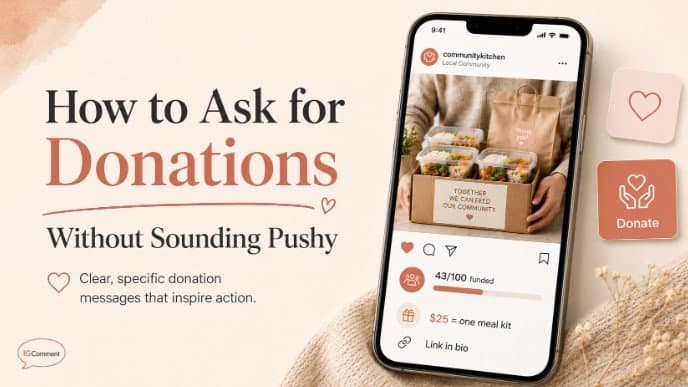
“Already funded: 43/100. Thank you.”

Facebook Post

“Last month, Maria and her two children moved into temporary housing after a difficult week. A care kit with food, hygiene items, and basic supplies helped them get through those first days.

This week, we want to provide 100 more kits to families in the same situation.

A $25 gift covers one kit. If you’re able to help, use the link below.

Thank you for supporting families when they need it most.”

LinkedIn Post

“We’re working with local partners to deliver 100 emergency care kits to families in need this week.

Each $25 gift funds one complete kit. If your company is looking for a practical way to support the community, we’d be glad to connect.

Donation link: yoursite.org/give

Partnership inquiries: hello@yoursite.org”

X Post

“We’re $500 away from funding 100 meal kits for families this week.

$25 = one kit.

If you can help, donate here: yoursite.org/give”

Thank-You Post

“Because of you, 100 meal kits are now on their way to families who need them this week.

Every gift, share, and message helped make this possible. Thank you for showing up for this community.”

How to Keep the Tone Respectful

A good donation post invites people in. It does not corner them.

Use language like:

  • “If you’re able”

  • “Help us”

  • “Join us”

  • “Support this effort”

  • “Every gift helps”

  • “Sharing this post helps too”

Avoid language that sounds like blame or pressure:

  • “If you don’t give, this won’t happen”

  • “We need your money right now”

  • “Don’t let these families down”

  • “Only you can save us”

You can create urgency without guilt. A line like “We’re 72% funded and need 28 more kits by Friday” is direct without being manipulative. It gives people a reason to act while still letting them choose.

Make the Post Easy to Act On

A donation post should lead to one obvious next step. Do not ask people to donate, share, comment, sign up, and watch a video all at once. Pick one primary action.

Good calls to action are short and direct:

  • “Give today if you can.”

  • “Tap the link in bio to help.”

  • “Help fund the work.”

  • “Support clean water.”

  • “We’re $500 away from our goal.”

The donation page should also be simple. It should load quickly on mobile, show suggested amounts, and explain what each gift does.

Examples:

  • “$25 = one care kit”

  • “$50 = two families supported”

  • “$100 = four kits delivered this week”

When people do not have to guess, they are more likely to follow through.

Platform-Specific Tips

Different platforms call for different levels of detail.

  • Instagram: keep the message short and visual.

  • Stories: break the ask into simple steps.

  • Facebook: use a short story with a clear explanation.

  • LinkedIn: sound professional, practical, and specific.

  • X: be brief and direct.

  • Pinned posts and bios: use them to keep the main campaign link easy to find.

A post can also be supported by comments, updates, and visible reactions. Real engagement helps a campaign feel active and trustworthy. Relevant Instagram comments can support that when they are natural, specific, and aligned with the campaign voice.

A Simple 5-Day Fundraising Sequence

A donation campaign usually works better as a short series than as one repeated ask.

Day

Message

Day 1

Many families in our area are facing their first week in temporary housing without basic supplies. This week, we’re preparing care kits to help them start safely.

Day 2

Our goal is 100 care kits by Friday. $25 funds one complete kit.

Day 3

43/100 kits funded. Thank you to everyone who has given, shared, or commented.

Day 4

Can we reach 75 kits today?” + Sticker: “Give here”

Day 5

Because of you, 100 kits are ready to be delivered. Thank you.


This approach works because each post adds something new. It is not the same message repeated over and over.

What Works Best

Shorter, clearer messages often perform better than long, crowded ones. People may be willing to help, but they can still drop off if the process feels unclear or difficult.

The most useful lessons are simple:

  • Keep the message short.

  • Explain the impact.

  • Make the next step obvious.

  • Show proof that the effort is real.

  • Follow up with thanks and results.

Donors are more likely to respond when they quickly understand what their gift does and how to give.

Final Example

“We’re raising funds to deliver 100 care kits to families this week.
A $25 gift covers one kit.
If you can help, tap the link in bio.
If you can’t give right now, sharing this post still helps.”

This kind of post is direct, respectful, and easy to read. It does not lean on guilt. It gives people a clear way to help and a clear way to move on if they cannot.




Smiley Face

Be the first to donate and pin
your name here   📌

Organizer

Jassica Winfrt

Jassica Winfrt is the organizer of this fundraiser

How To Ask For Donations On Social Media Without Sounding
Jassica Winfrt

Jassica Winfrt

Ursa, Illinois

Fundraising for

Jassica Winfrt

Fundraising forJassica Winfrt
Donation protected
👍 0% fee

How to Ask for Donations on Social Media Without Sounding Pushy

The best donation posts on social media are clear, specific, and human. They explain the need, show the impact of giving, and make it easy to take one simple action without guilt or pressure.

Why Donation Asks Can Feel Pushy

People usually do not dislike donation requests themselves. They react badly when the message feels vague, overly urgent, guilt-driven, or centered on the organization instead of the result.

Pushy:

“We desperately need your money today.”

Better:

“A $25 gift helps provide meals for one family this week.”

The second version works better because it is concrete. It shows the donor exactly what their money does instead of relying on pressure.

On social media, this matters even more because people scroll quickly. A strong post should be easy to understand in a few seconds. The goal is not to explain everything at once. The goal is to make the next step simple.

A Simple Formula That Works

A strong donation post usually answers four questions:

  • What is happening?

  • Why is help needed now?

  • What will a donation do?

  • What should people do next?

A simple structure looks like this:

What is happening:

“This week, 100 families in our community need emergency meal kits.”

Why help is needed:

“Our team can deliver them, but we need help covering the cost.”

What the impact will be:

“$25 provides one meal kit for one family.”

What to do next:

“If you’re able, tap the link in bio to give.”

Put together, it becomes:

“This week, 100 families in our community need emergency meal kits. $25 provides one kit for one family. If you’re able, tap the link in bio to help us deliver them.”

This is stronger than a generic line like “Support our mission” because it gives people a real reason to care.

Donation Message Examples for Social Media

Instagram Caption

“This week, we’re raising funds for 100 meal kits.
$25 covers one kit for one family.
If you can help, the link is in our bio.
Thank you for being part of this.”

Instagram Story Sequence

Story 1:

“100 meal kits needed this week.”

Story 2:

“$25 = one kit for one family.”

Story 3:

“Can you help us reach 100?”

Sticker: “Donate”

Story 4:

“Already funded: 43/100. Thank you.”

Facebook Post

“Last month, Maria and her two children moved into temporary housing after a difficult week. A care kit with food, hygiene items, and basic supplies helped them get through those first days.

This week, we want to provide 100 more kits to families in the same situation.

A $25 gift covers one kit. If you’re able to help, use the link below.

Thank you for supporting families when they need it most.”

LinkedIn Post

“We’re working with local partners to deliver 100 emergency care kits to families in need this week.

Each $25 gift funds one complete kit. If your company is looking for a practical way to support the community, we’d be glad to connect.

Donation link: yoursite.org/give

Partnership inquiries: hello@yoursite.org”

X Post

“We’re $500 away from funding 100 meal kits for families this week.

$25 = one kit.

If you can help, donate here: yoursite.org/give”

Thank-You Post

“Because of you, 100 meal kits are now on their way to families who need them this week.

Every gift, share, and message helped make this possible. Thank you for showing up for this community.”

How to Keep the Tone Respectful

A good donation post invites people in. It does not corner them.

Use language like:

  • “If you’re able”

  • “Help us”

  • “Join us”

  • “Support this effort”

  • “Every gift helps”

  • “Sharing this post helps too”

Avoid language that sounds like blame or pressure:

  • “If you don’t give, this won’t happen”

  • “We need your money right now”

  • “Don’t let these families down”

  • “Only you can save us”

You can create urgency without guilt. A line like “We’re 72% funded and need 28 more kits by Friday” is direct without being manipulative. It gives people a reason to act while still letting them choose.

Make the Post Easy to Act On

A donation post should lead to one obvious next step. Do not ask people to donate, share, comment, sign up, and watch a video all at once. Pick one primary action.

Good calls to action are short and direct:

  • “Give today if you can.”

  • “Tap the link in bio to help.”

  • “Help fund the work.”

  • “Support clean water.”

  • “We’re $500 away from our goal.”

The donation page should also be simple. It should load quickly on mobile, show suggested amounts, and explain what each gift does.

Examples:

  • “$25 = one care kit”

  • “$50 = two families supported”

  • “$100 = four kits delivered this week”

When people do not have to guess, they are more likely to follow through.

Platform-Specific Tips

Different platforms call for different levels of detail.

  • Instagram: keep the message short and visual.

  • Stories: break the ask into simple steps.

  • Facebook: use a short story with a clear explanation.

  • LinkedIn: sound professional, practical, and specific.

  • X: be brief and direct.

  • Pinned posts and bios: use them to keep the main campaign link easy to find.

A post can also be supported by comments, updates, and visible reactions. Real engagement helps a campaign feel active and trustworthy. Relevant Instagram comments can support that when they are natural, specific, and aligned with the campaign voice.

A Simple 5-Day Fundraising Sequence

A donation campaign usually works better as a short series than as one repeated ask.

Day

Message

Day 1

Many families in our area are facing their first week in temporary housing without basic supplies. This week, we’re preparing care kits to help them start safely.

Day 2

Our goal is 100 care kits by Friday. $25 funds one complete kit.

Day 3

43/100 kits funded. Thank you to everyone who has given, shared, or commented.

Day 4

Can we reach 75 kits today?” + Sticker: “Give here”

Day 5

Because of you, 100 kits are ready to be delivered. Thank you.


This approach works because each post adds something new. It is not the same message repeated over and over.

What Works Best

Shorter, clearer messages often perform better than long, crowded ones. People may be willing to help, but they can still drop off if the process feels unclear or difficult.

The most useful lessons are simple:

  • Keep the message short.

  • Explain the impact.

  • Make the next step obvious.

  • Show proof that the effort is real.

  • Follow up with thanks and results.

Donors are more likely to respond when they quickly understand what their gift does and how to give.

Final Example

“We’re raising funds to deliver 100 care kits to families this week.
A $25 gift covers one kit.
If you can help, tap the link in bio.
If you can’t give right now, sharing this post still helps.”

This kind of post is direct, respectful, and easy to read. It does not lean on guilt. It gives people a clear way to help and a clear way to move on if they cannot.


Organizer

Jassica Winfrt

Jassica Winfrt is the organizer of this fundraiser

$0of $20 goal
0Donors
0Comments
1Share ArrowShares
Smiley Face

Be the first to donate and pin
your name here   📌

★★★★★ Trustpilot Reviews

Ready to start?

Join the thousands like you finding help on *spotfund.

Start FundraisingHow it works
Spotfund Balloons