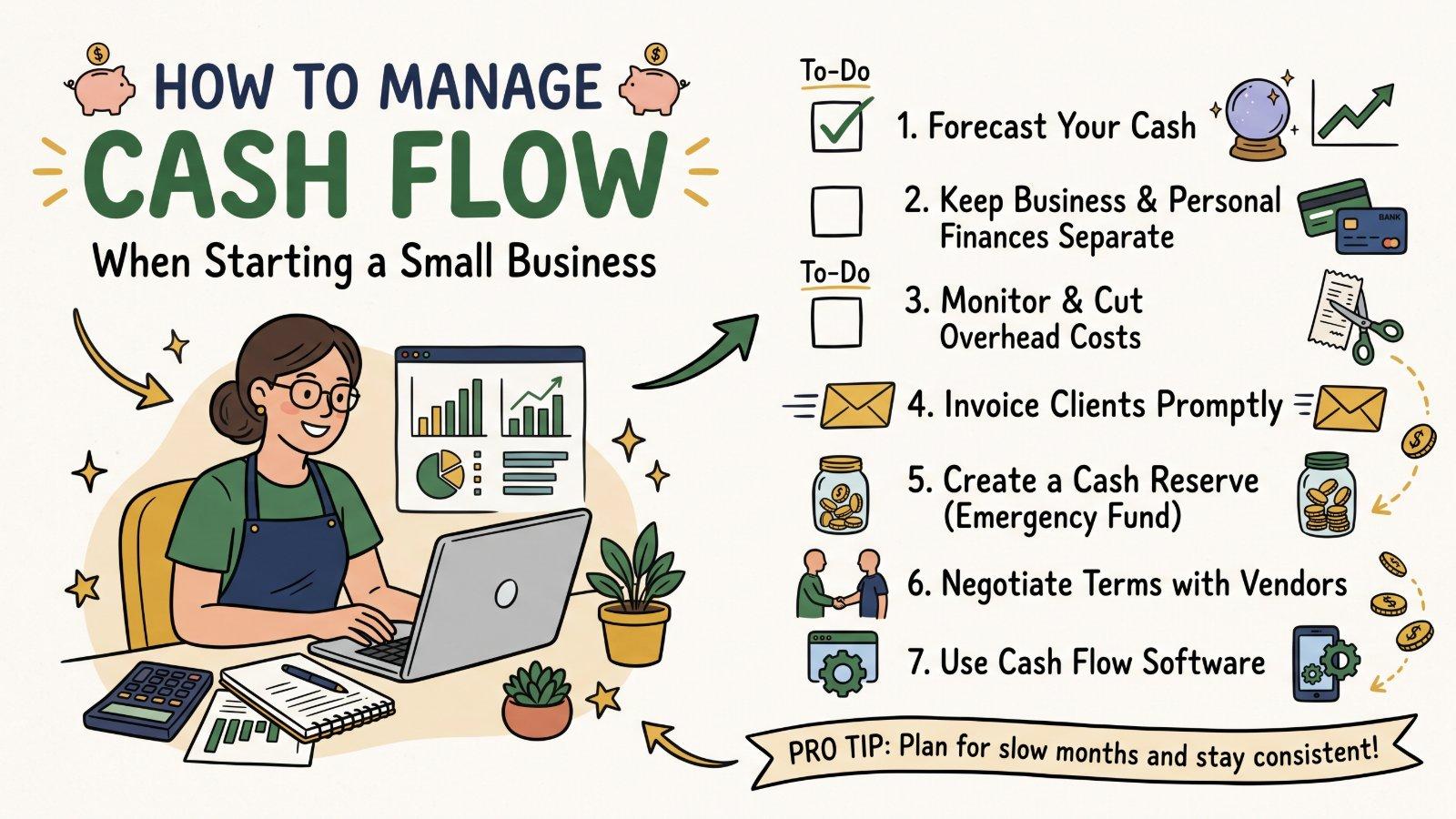

How to Manage Cash Flow When Starting a Small Business
Most new business owners expect their biggest threat to come from slow sales or tough competition. Cash flow tends to be the bigger problem, and it can catch a business that is technically doing fine on paper. This piece walks through why cash flow trips up so many new businesses, and what helps keep it under control in the early months.
A business can have a full order book and still run into trouble if the money coming in doesn't line up with the money going out. That timing gap is usually the real story behind failures that get blamed on the market or bad luck, and it can hit a business with strong sales just as easily as one that's struggling to find customers.
Why Cash Flow Catches New Businesses Off Guard
According to SCORE, 82% of small businesses that fail cite cash flow problems as the reason, more than any other single cause. A new business is especially exposed to this because expenses start well before revenue does, and there's rarely a cushion in place yet to absorb the gap.
A few things tend to drive this early on:
Customers who pay 30, 60, or 90 days after the invoice goes out
Seasonal swings that leave slow months with the same fixed costs as busy ones
Upfront spending on inventory or equipment before any of it has sold
One-off expenses that weren't in the original budget
Start With a Realistic Plan, Not a Guess
A lot of the pressure eases when the numbers are written down before the business opens, rather than tracked reactively once things are already moving. Working through a proper business plan forces you to lay out realistic costs and pricing well before opening day, so gaps show up on paper instead of three months into trading.
That kind of planning also makes it much easier to spot which months will be tight before they happen, instead of finding out the hard way when a payment doesn't land in time. It also gives you a clear baseline to check performance against, so a slow month gets noticed early rather than a few weeks later.
Track the Gap Between Invoiced and Received
Sales and cash aren't the same thing, and treating them as interchangeable is where a lot of new business owners get caught out. A sale only helps cash flow once the payment clears, and until then it sits on the books as a promise rather than money you can spend yet.
Shorter payment terms make a real difference, and so does following up on overdue invoices right away instead of after a few weeks. Deposits on larger orders help too, especially when a single order makes up a big share of a month's revenue.
Build a Buffer Before You Need One
Waiting until cash is already tight to look for options tends to leave the most expensive choices on the table. Setting up a line of credit or a small reserve fund while the business is still stable gives you something to draw on before a gap turns into a crisis.
Some businesses cover a short-term gap with a small business loan. Others use faster options like a fundraiser when the timing is tight, and our own guide to starting a business fundraiser walks through how that works when cash is needed quickly.
What to Watch Month to Month
A few numbers are worth checking on a regular basis rather than only when something feels off:
How many days of expenses the current cash balance would cover
How much is sitting in unpaid invoices, and how old the oldest ones are
Any large one-off costs coming up in the next 60 to 90 days
How this month's cash position compares with what the plan expected
A simple spreadsheet updated weekly catches most problems long before they turn serious, and it takes far less time than dealing with a cash shortage after it has already happened.
Getting Ahead of It
Cash flow problems build slowly instead of showing up as one big crisis, through a string of small timing mismatches that are easy to miss until the account is running low. A buffer ready before it's needed, paired with staying on top of what's owed, tends to be what separates a business that gets through a slow month from one that gets caught out by it.