

At the time, I didn’t know what MD was, so I asked our doctor to describe the symptoms. He mentioned that many boys with DMD have large calf muscles, trouble walking long distances or getting up off the floor, and many other symptoms that described Max perfectly. When I got a final confirmation that Max had DMD, it was the worst day of my life. No parent should hear words like: “your son will die.” As awful as it was to hear that for the first time, our nightmare was only beginning. I learned that as a carrier of the disease, there was a 50 percent chance that my other sons would be affected.
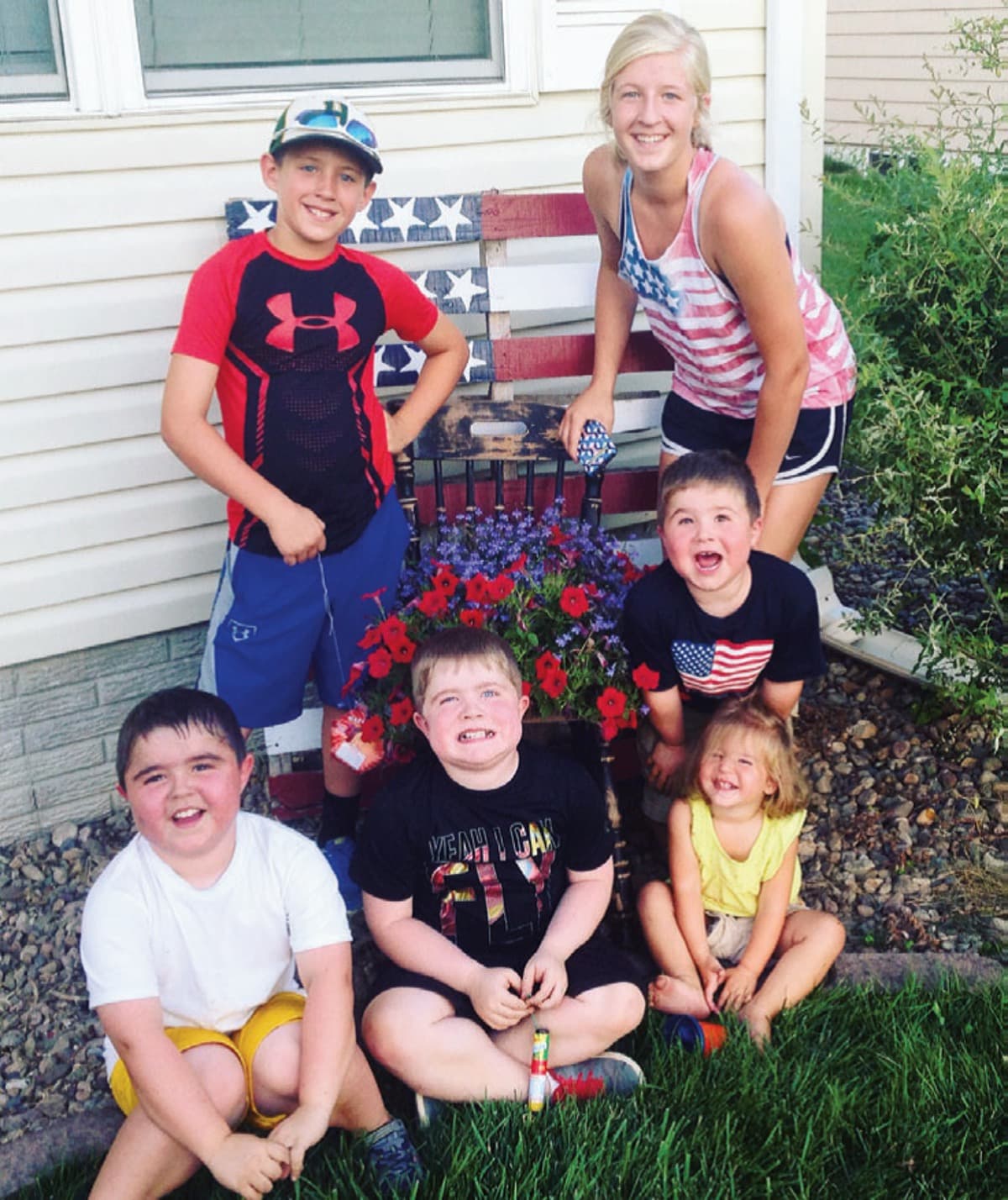
I was pregnant at the time of Max’s diagnosis, and I also started to notice that my two-year-old son Rowen was having difficulty getting up and down the stool he used to brush his teeth. I thought he also might be affected but I wasn’t ready to have him tested right away. After I gave birth to my son Charlie, we had Rowen tested and it confirmed my suspicion that he had DMD. After six months when my baby Charlie was having trouble lifting his head up, we had him tested and results showed that he too had DMD. Within the span of one year, between July 2010 and August 2011, three of our five children were diagnosed with DMD. It was devastating. After an intense period of grieving, my husband Jason and I made a choice to focus on the positive and to do whatever we could to fight for our boys. We started to do research about any possible treatment options that might be available to us.
We learned that the boys had a specific form of DMD caused by a nonsense mutation (nmDMD) and that there was a clinical trial in the U.S. for a drug called Translarna, specifically for patients with this mutation. Max qualified and was able to enroll in the trial. Rowen and Charlie were too young at the time, but have since been able to participate through a sibling access program. We knew going in that Translarna was not a cure, but were hopeful that the drug would help to improve the quality of life for our boys and potentially help to slow the progression of the disease.
Max will be 11 in November, and in many ways he is like any other 10 year old. He loves music and theater and participates in a youth theater group that has rehearsals for two hours in the evening. He is able to go up and down the stairs and stand for long periods of time during rehearsals without any assistance. I’ve also noticed a difference in Max’s fatigue since starting Translarna. Before treatment he would have to rest while putting together a Lego set. Now he is able to complete the set in one sitting. Rowen is seven and our neurologist in Cincinnati has confirmed that his DMD is more severe. He is treated with higher levels of steroids than Max, but he seems weaker and has lost some dexterity in his hands. He now needs a scribe to write for him in school, but he continues to be as active and playful as he can every day. He plays city league baseball with his younger brother, Charlie. With Rowen’s more severe case of DMD, I feel that if he wasn’t on Translarna he would have regressed much further at this point.
Charlie is five and he is the most active of the boys. He loves riding his bike, playing baseball, swimming and swinging on the swing set. He continually amazes us. He starts kindergarten next year and I think he is doing so well because he was able to get on Translarna so young, before the disease really had a chance to progress. With the boys enjoying all these activities this summer, it is devastating to think about what would happen if they lost access to the drug. So Here I Am Trying To Raise The Money , Help Me Help My Kids Live Out There Dreams Most Kids Don’t Live Past 20 With This Disease