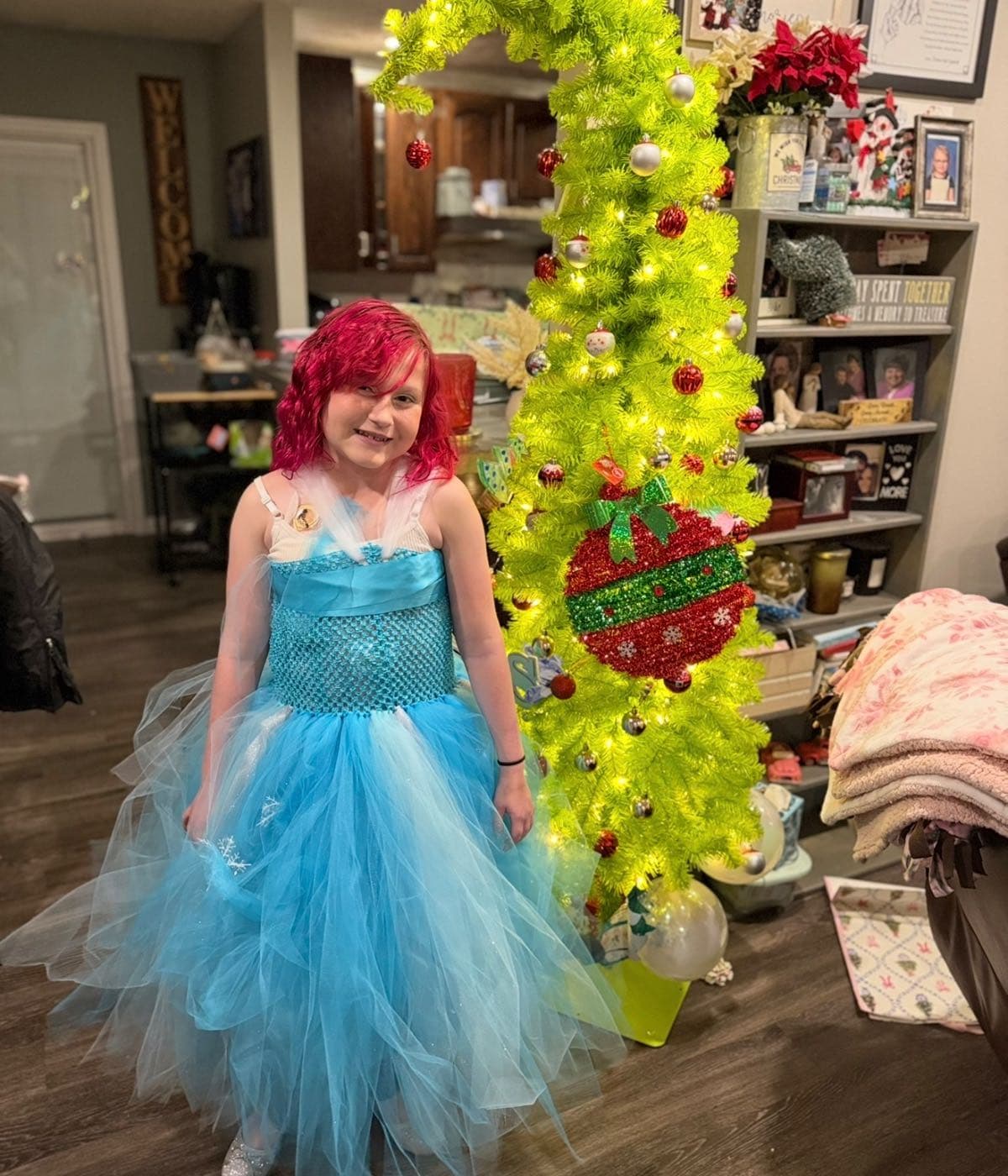

As many of you know, Elizabeth is my 15-year-old niece, and I have had legal guardianship of her for the past six years. Along with caring for her, I also work full-time and have my 7-year-old at home.
Elizabeth has faced more in her 15 years than most people do in a lifetime. She was born with multiple health challenges and has undergone countless procedures and surgeries. She has had open-heart surgery, a portion of her intestine removed, leaving her with Short Bowel Syndrome, a liver transplant, and shortly after her transplant she was diagnosed with Post-Transplant Lymphoproliferative Disorder (PTLD). She later battled liver rejection as well.
Back in June, Elizabeth had a PET scan that showed a couple of concerning spots. Her oncology team decided to lower her immunosuppressant medications and repeat the scan, hoping that would resolve the issue.
Last Friday, our world was shaken up again.
Elizabeth went to the emergency room because she was experiencing blurred and double vision. After being evaluated, she was sent home with instructions to follow up with an optometrist. By Wednesday, her condition had worsened significantly. She was taken to our local emergency room with bloody stools and dangerously low hemoglobin. She was then transferred to UNMC, where her specialists began searching for answers.
On Thursday, she underwent a colonoscopy, which revealed some abnormalities in her colon, but nothing else that explained everything she was experiencing.
Friday (July 31), Elizabeth had another PET scan. The results showed that the spot near her heart had grown. Even more devastating, the scan revealed a lesion in her left cerebellum along with additional new lesions in the left side of her brain. These findings are highly concerning for PTLD involvement.
Elizabeth was able to rest through the weekend, continue blood transfusions as needed, and the nurses and doctors kept her as comfortable as possible. Early next week, she will undergo a biopsy to confirm whether the lesions are PTLD. Those results will take about a week. If confirmed, she will begin chemotherapy. Because of the location of the disease and the intensity of treatment, she will most likely remain inpatient for an extended period while doctors monitor her response and wait for her scans and blood work to improve.
What is PTLD?
Post-Transplant Lymphoproliferative Disorder (PTLD) is a rare type of lymphoma that can develop after an organ transplant. Because transplant patients must take medications to suppress their immune system so their body doesn't reject the new organ, those medications can sometimes allow abnormal white blood cells to grow uncontrollably. PTLD can affect different parts of the body, including the lymph nodes, organs, and in Elizabeth's case, her brain.
How is PTLD treated?
Treatment often begins by reducing immunosuppressive medications, but when that isn't enough, chemotherapy and other targeted treatments are needed. Because Elizabeth's PTLD appears to involve her brain, treatment is more complex and will require close monitoring by her oncology team.
Many have asked how they can help.
The funds raised will help cover transportation and housing expenses while traveling back and forth to Omaha, as well as help offset lost income while I take time away from work to be by Elizabeth's side. Although the Ronald McDonald House is an incredible resource, staying there isn't a realistic option while also caring for my 7-year-old.
If you're unable to donate, we completely understand. We simply ask that you keep Elizabeth in your prayers.
She has overcome impossible odds time and time again. She is one of the strongest people I know, and while this diagnosis is especially frightening because it involves her brain, we have faith that she will face this battle with the same courage she always has.
Thank you for your prayers, your love, your support, and for standing beside Elizabeth as she fights once again.