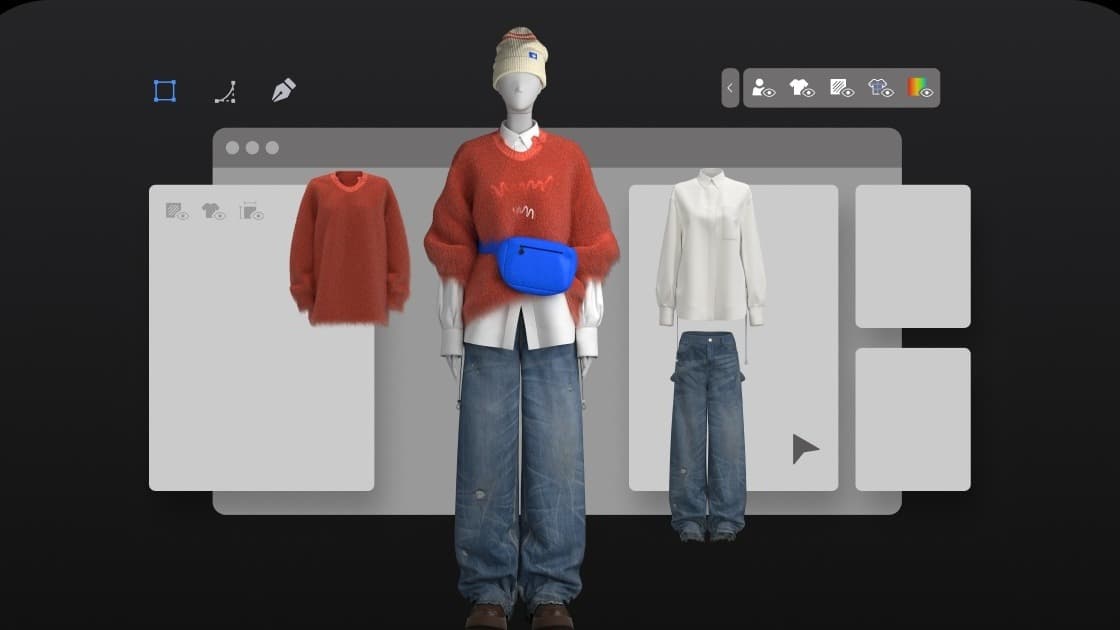


The fashion industry is evolving rapidly, especially with the rise of free fashion design software. In the past, fashion design was mostly limited to physical sketchbooks, fabric samples, and expensive production tools. Designers had to rely heavily on manual processes, which were time-consuming and costly.
However, the introduction of digital tools and especially 3D design technology has completely transformed the industry. Today, designers can create realistic clothing models, test fabric behavior, and simulate entire collections without producing a single physical sample.
This shift has created an important discussion across the fashion world: should designers rely on free tools or invest in paid clothing tools? The answer is not simple, because both options serve different purposes in modern fashion development.
Free vs Paid Tools Overview in Fashion Design
To understand the difference clearly, we need to break down both categories.
✔ Free Tools in Fashion Design
Free fashion design software has become extremely popular among students, freelancers, and beginner designers. These tools offer a simple entry point into the world of digital fashion without requiring any financial investment.
Key advantages include:
- No cost or subscription required
- Easy to learn and beginner-friendly interface
- Ideal for practice and experimentation
- Supports basic design workflow understanding
- Accessible from multiple devices or platforms
Free tools allow users to explore creativity without pressure. This is especially important for those who are just starting their journey in fashion technology.
✔ Paid Tools in Fashion Design
On the other hand, paid software is designed for professionals and large fashion companies. These tools are more advanced and offer industry-level accuracy.
Key advantages include:
- High-quality simulation and rendering
- More accurate fabric and texture behavior
- Faster processing and workflow speed
- Advanced integration with production systems
- Professional-grade 3D design capabilities
Paid tools are widely used in commercial fashion production where precision and scalability matter.
Both free and paid tools play an important role in the fashion ecosystem. Free tools help in learning and experimentation, while paid tools support final production and large-scale design work.
Evolution of Modern Clothing Tools
The concept of clothing tools has completely changed over the years. Earlier, tools were limited to sketching pencils, pattern paper, and sewing machines. Now, digital platforms have replaced many of these traditional methods.
Modern clothing tools now include advanced features such as:
- AI-based pattern generation
- Real-time fabric simulation
- Virtual fashion shows and digital runways
- Automated garment testing and fitting analysis
These innovations are not just improving efficiency; they are redefining how fashion is created and presented globally.
For example, designers can now test how a fabric reacts to movement or lighting without physically stitching it. This level of precision was impossible in traditional methods.
3D Design as the Industry Standard
One of the biggest revolutions in fashion technology is the rise of 3D design. Today, it is no longer an optional skill — it is becoming the industry standard.
3D design allows designers to:
- Create realistic digital clothing models
- Test multiple fabric variations instantly
- Reduce dependency on physical samples
- Improve accuracy in sizing and fitting
- Speed up approval and production processes
Even luxury fashion brands and high-end designers are now adopting digital-first workflows. Instead of making multiple prototypes, they now finalize designs digitally before production.
This shift not only saves time but also significantly reduces production costs and material waste.
Impact on Traditional Design Workflow
The traditional fashion design workflow used to be long and expensive. It typically followed a physical process that involved multiple stages of sampling and revisions.
Traditional Workflow:
Sketch → Sample Creation → Physical Fitting → Adjustments → Final Production
This process often required weeks or even months to complete a single design.
Modern Digital Workflow:
Digital Sketch → 3D Model Creation → Simulation → Virtual Approval → Production
With the help of 3D design tools and free software, this process is now much faster and more efficient.
The modern workflow reduces errors, improves collaboration, and speeds up decision-making across design teams.
Garment Visualization Revolution
Another major breakthrough in fashion technology is garment visualization. This feature allows designers and brands to see how a finished outfit will look before it is physically produced.
With garment visualization, brands can:
- Preview entire fashion collections digitally
- Test different fabrics and color combinations
- Present designs to clients in real-time
- Reduce production waste and unnecessary sampling
This is especially important for sustainability in fashion. By reducing physical samples, companies can significantly reduce material waste and environmental impact.
Future of Fashion Technology
The future of fashion is closely connected with digital transformation. As technology continues to evolve, we are seeing a strong integration of AI and automation in design tools.
Key trends shaping the future include:
- AI + 3D design integration for smart pattern creation
- Cloud-based collaboration for global design teams
- Virtual fashion shows replacing physical runway events
- Automated systems in advanced clothing tools
Free software is also expected to become more powerful in the future. Many features that were once exclusive to paid tools are now gradually becoming available in free versions.
This means the gap between free and paid software is shrinking quickly.
Final Thoughts
The debate between free and paid fashion design software is not about which is better, but about how they complement each other. Free tools provide access and learning opportunities, while paid tools offer advanced precision and production capabilities.
With the rise of 3D design, the fashion industry is becoming more digital, efficient, and sustainable. Designers no longer need to rely only on physical samples; they can now build entire collections in a virtual environment.
The future of fashion belongs to AI-driven systems, smart automation, and fully digital workflows. Designers who adapt to these changes will have a major advantage in the evolving industry.
To explore more about advanced AI-driven fashion innovations, check this resource on best AI clothing pattern makers for designers in 2026.