
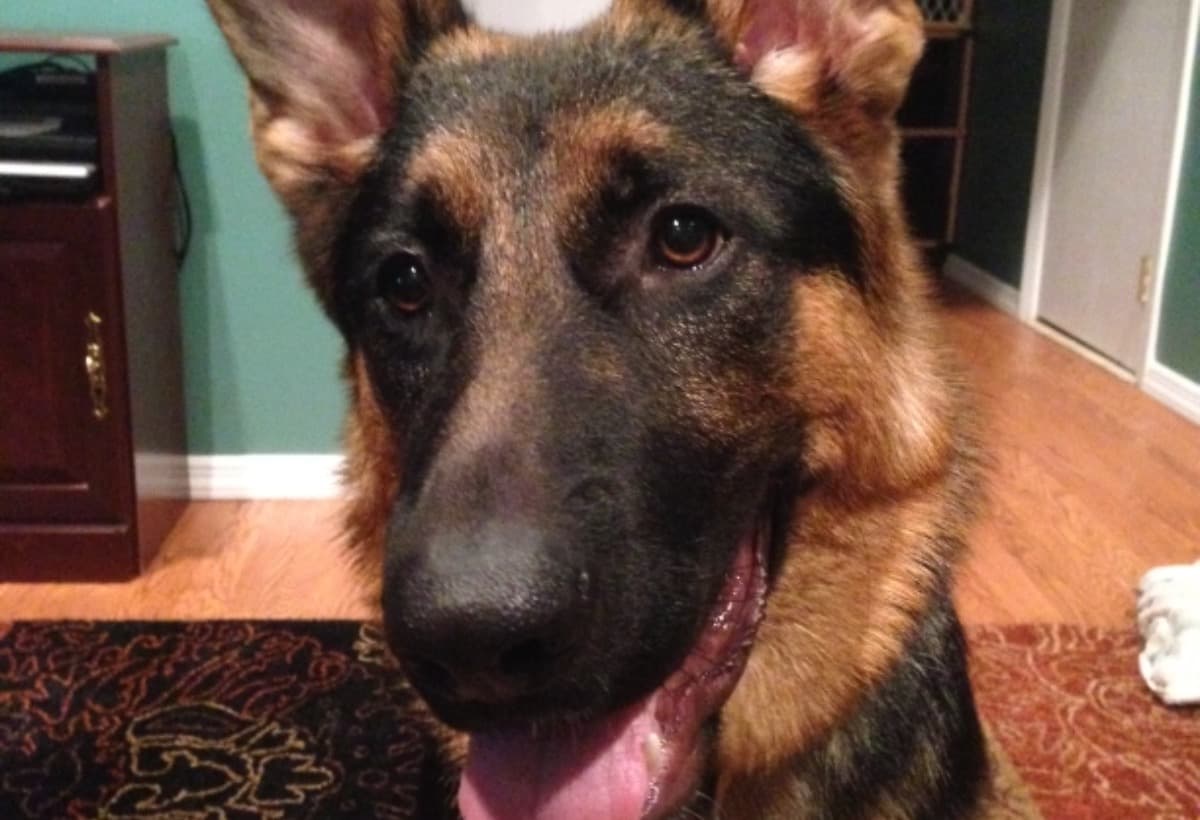


Ralph joined our family as a 8 weeks old puppy in February of 2014. He was by our side as loving and carrying member of the family and a protector ever since. He is a titled Schutzhund competitor in retirement but is still very active boy despite of his age. On October 10th, 2022 he was running around the field doing his favorite thing - chasing ball – when after another throw he came back limping and pulling his back paw up while walking. When the limp didn’t go away and became worse after a couple of days we took him to the vet. That day we will never forget. The diagnosis that was given is complete rapture of the Achilles Tendon. The only treatment is a complicated surgery and lengthy recovery with significant aftercare. While in general the recovery from the surgery itself (healing of operated area) takes 8-10 weeks, additional physical therapy might be necessary. Additionally, given the complexity of the injury (one of the muscles pulled into the tight area, the size, the age and energy level of our boy) he has to on a strict low activity regiment for no less than 6 month with slow introduction of activities thereafter. Our boy may or may not be able to ever run again, but at least there is a high chance that he will be able to walk on all his 4 paws. Right now he walking using 3 paws with his back paw lifter occasionally going plantigrade (flat-footed like a human with toes and ankle on the ground). German Shepherds are known for their high pain tolerance level, and seeing him and knowing how much pain he is in to be that way breaks our hearts
The procedure requires use of veterinary orthopedic surgeon with estimated cost of the surgery alone of $5000-7500. This does not include post-surgery follow-up visits and additional medication that might be needed during recovery.
We are asking all our friends and family to help us to bring our Ralphy up on his feet. We will be grateful for any amount you can contribute.
About the Procedure
Because the muscle contracts when the tendon is ruptured, it results in permanent deformity. Therefore, medical management using a cast or splint will not work, and the injury must be repaired surgically.
The surgical procedure involves removing the tendon’s damaged portions so that the ruptured ends can be reattached together. To reattach the gastrocnemius tendon to the heel bone, bone tunnels are drilled, and special non-absorbable sutures are passed through the tunnels and into the gastrocnemius tendon. If the superficial digital flexor tendon is also ruptured, the ruptured portions are stitched back to one another using heavy suture material in a special suture pattern (locking loop) that pulls the torn tendon ends back together.
After the tendon(s) have been repaired, the patient must keep the ankle (hock) in extension for two months, so that the surgery does not fail.
The hock will be stabilized during this time using one of four methods: placement of a screw through the tibia and heel bone with the hock in extension, with a cast usually also applied to the limb; placement of an external skeletal fixator which consists of a series of pins that penetrate the bone and are fixed together with external bars; placement of a circular fixator ring with wires; placement of a cast. After two months, the method of stabilization of the hock is removed.
The long-term prognosis for dogs that have surgery to repair an Achilles tendon rupture is generally very good. The sooner the rupture is repaired, the better the results will be. If the tear goes without repair for too long, scar tissue formation will make the surgery more difficult and possibly less successful. Additionally, if the dog walks plantigrade (flat-footed like a human with toes and ankle on the ground) for an extended period, further damage can occur and make surgery more difficult.
There is significant aftercare involved with this surgery due to the placement of a cast, possible external fixators or screws, and strict exercise restrictions and rest. The outcome of the surgery also depends on the aftercare of the patient.
(https://topdoghealth.com/library/orthopedic-condition/articles/achilles-tendon-rupture/#Treated)