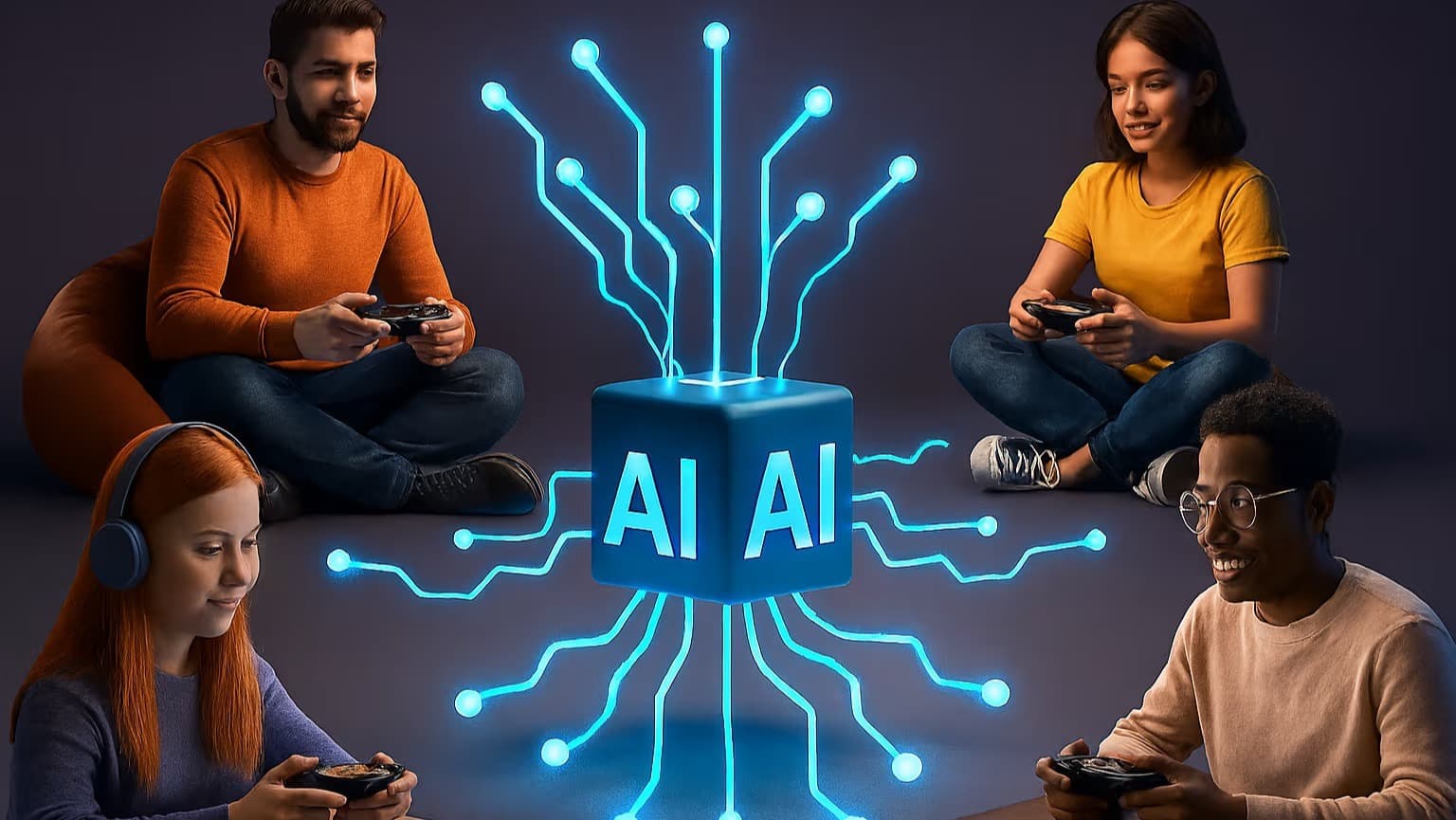


How Astrocade Changed That Without Asking
The Accidental Architect
For many years, the line between the consumer and the developer was a massive, impenetrable wall. You were either a player who enjoyed the finished product or a programmer who spent years learning the complex syntax of software engineering. Most of us were perfectly happy sitting on the couch, letting someone else do the heavy lifting. However, as we move through twenty twenty six, that traditional boundary is completely dissolving. A new wave of interactive technology is quietly transforming every single casual user into a potential artist without ever forcing them to open a textbook or write a single line of code. This shift is happening naturally through a highly intuitive social gaming platform that prioritizes human imagination over technical expertise. People who never had the slightest desire to build a world are suddenly finding themselves at the center of a creative revolution, discovering that the only thing they truly needed was a voice and a place to be heard.
The Democratization of Game Design
The primary reason for this massive transformation is the incredible advancement in generative artificial intelligence. In the past, if you had a brilliant idea for a digital world, you had to hire a team of experts or spend thousands of hours mastering artistic tools. This massive financial and temporal barrier kept millions of spectacular ideas trapped inside people's heads. Today, the modern web has completely leveled the playing field by offering a vast library of Online Free Games that serve as both entertainment and inspiration. When a platform allows you to simply describe a concept in plain language and watch it materialize in real time, the fear of failure completely vanishes. You are no longer fighting against a machine; you are collaborating with a highly intelligent partner that handles the tedious labor while you focus entirely on the fun. This absolute freedom is what allows a person who just wanted to play for five minutes to suddenly realize they have the power to create for a global audience.
Entering the Grid in TRON Lightcycle Arena
To see how a simple concept can evolve into a highly polished and intense competitive experience, we must look at a title that perfectly captures the speed of the modern web. TRON Lightcycle Arena is inspired by the iconic lightcycle battles from science fiction, where players leave glowing trails while trying to trap their opponents. Strategy and quick turns are absolutely key to survive in this vibrant neon arena. When you first launch this specific game, you are immediately struck by the high-velocity movement and the total visual immersion of the computerized world. You must constantly monitor your rivals and perfectly time your directional changes to cut off their path. There are no complicated menus or slow introductory scenes; there is only the pure adrenaline of the race and the satisfying visual glow of the digital trails. It is a perfect example of how a singular, well-executed idea can create an absolute masterpiece of interactive digital action that keeps players coming back for more.
The Power of the Remix Culture
One of the most fascinating aspects of this new creative era is the total lack of ego involved in the process. The modern developer is not a solitary genius working in a dark room; they are part of a massive, living network of inspiration. On the open web, every single game is essentially a starting point for someone else's imagination. You can easily find a project you love, tap a button to clone the logic, and then add your own unique personal twist. This "remix culture" allows players to experiment with established mechanics without the pressure of starting from a blank canvas. It turns the entire act of creation into a giant, collaborative social experiment. This low-stakes environment is exactly what encourages a casual user to try their hand at design. They aren't trying to build the next massive corporate blockbuster; they are just playing with digital building blocks and sharing the results with their closest peers.
Building Human Connection Through Play
At the heart of this technological shift is a profound desire for genuine social interaction. While traditional consoles often feel like isolated boxes, the modern browser allows you to play with friends online and experience the creative process together in real time. You can build a challenging level and immediately watch your friends struggle to solve it, or cooperate to design a massive virtual maze. This immediate feedback loop turns the act of creation into a highly social and deeply rewarding activity. The game is no longer just a static piece of software; it is a shared conversation between the creator and the community. This human-centric approach is what makes the modern web feel so vibrant and alive compared to the sterile, closed ecosystems of the past. It is a global playground where everyone is invited to participate, regardless of their technical background.
The End of the Technical Learning Curve
We are officially entering an era where the "learning curve" for digital creation has effectively dropped to zero. The sophisticated AI models running behind the scenes can interpret vague descriptions and turn them into functional physics, beautiful art, and original music in under a minute. This means that your grandmother, your younger brother, or your local barista could all be successful game designers by tomorrow afternoon. This absolute accessibility is a massive win for human diversity in art. We are seeing games built by people from every walk of life, bringing entirely new perspectives and cultural influences to the digital world. This richness of variety is something that a corporate studio, no matter how large, could never replicate. The internet has finally given the keys to the kingdom to the people who actually use it every day.
Finding Professional Success in the Casual Space
For some, this accidental foray into creation is turning into a highly viable career path. As the audience for these accessible web titles continues to explode, the opportunities for monetization are growing right alongside them. Independent creators are now earning significant rewards for their viral hits, proving that you don't need a massive office or a corporate publisher to find professional success. This decentralized economy is empowering a new generation of entrepreneurs who value freedom and creativity over corporate ladders. They can publish their work instantly to a global audience and see immediate results. This is the ultimate promise of the modern web: a place where raw talent and a good idea are the only things that matter. The barriers are gone, and the opportunities are completely limitless.
The Resilience of the Open Browser
While hardware companies and application stores are constantly changing their rules and restricting access, the open web remains a permanent sanctuary for free expression. A game built for the browser can be played on a high-end computer, a budget tablet, or a five-year-old smartphone. This universal compatibility ensures that no one is left out of the creative conversation. It is a resilient and highly democratic infrastructure that belongs to the community, not a single corporation. This stability is incredibly important for creators who want to ensure their work remains accessible for years to come. The web is the ultimate archive of human ingenuity, and it is the perfect home for the next generation of interactive art.
Reclaiming the Definition of a Developer
We need to stop thinking of "developers" as a separate class of people. In the modern era, everyone is a developer, whether they realize it or not. Every time you tweak a setting, suggest a feature, or remix a public project, you are participating in the creative process. Technology has finally caught up to our natural human instinct to play and build. We are no longer passive observers of digital media; we are the active architects of our own entertainment. This shift is deeply empowering and highly positive for the future of our digital culture. It encourages curiosity, collaboration, and a healthy sense of play in our daily lives. The wall has finally crumbled, and everyone is invited to help build what comes next.
Final Thoughts on the Creative Frontier
In conclusion, the rise of accessible, AI-powered design is the most significant development in the history of interactive media. It has turned a world of players into a world of creators without ever asking for their credentials. By prioritizing ease of use, immediate access, and social connection, the modern web has successfully democratized the art of game design for the entire planet. Whether you want to master the neon turns of a lightcycle arena or build a quiet puzzle in your lunch break, the tools are already in your hands. You don't need to be an expert; you just need to be curious. The future of play is not something you buy; it is something you build together with the rest of the world. The open digital frontier is waiting, and your first creation is only a few words away.